Bloomberg Sounds Alarm: Korean ’Ants’ Fuel Market Frenzy with All-In Squid Game-Style Investing
Retail investors in South Korea are doubling down—leveraging debt and life savings in high-stakes market bets that echo the deadly desperation of Netflix's dystopian hit.
The All-or-Nothing Mindset
Young traders dubbed 'ants' are piling into volatile assets, ignoring traditional risk management in pursuit of quick riches. They're maxing out credit lines, taking out second mortgages, and throwing entire portfolios behind single positions.
Regulatory Warnings Fall on Deaf Ears
Financial authorities issue repeated cautions about unsustainable leverage ratios and market concentration. Yet the fever continues—fueled by social media hype and FOMO-driven decision making that would make any certified financial planner shudder.
When everyone's playing with borrowed money in a zero-sum game, someone's inevitably left holding the empty bag—usually while Wall Street institutions collect their fixed fees regardless of outcome.
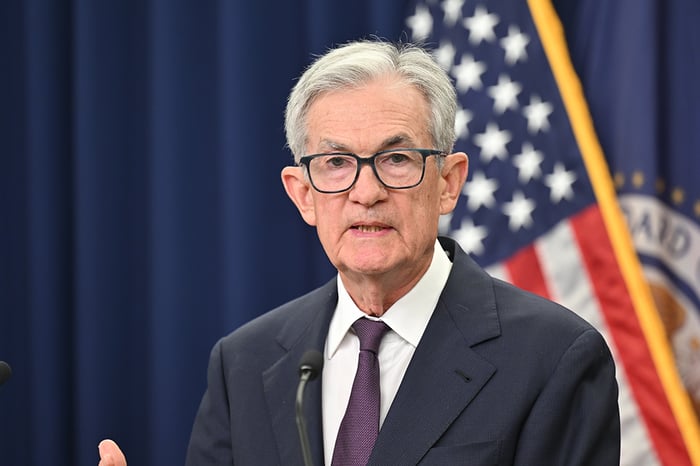
Federal Reserve Chair Jerome Powell answers reporters' questions at the FOMC press conference on Sept.17, 2025. Official Federal Reserve Photo.
Good news for investors?
Powell spoke last week at the National Association for Business Economics conference held in Philadelphia, Pennsylvania. One of his key points in his address was an update on the status of the Fed's "quantitative tightening" approach.
Quantitative tightening is the term used to describe when the Federal Reserve reduces the size of its balance sheet. To accomplish this goal, the Fed allows assets such as government-issued bonds to mature, or it actively sells those assets. This usually results in higher long-term interest rates, lower inflation, and a cooling down of an overheated economy.
The opposite of quantitative tightening is quantitative easing. With this approach, the Fed increases the size of its balance sheet. Quantitative easing is an expansionary policy that's usually associated with a rising stock market.
In his recent remarks, Powell hinted that the Fed is close to ending its program of quantitative tightening. He said:
Our long-stated plan is to stop balance sheet runoff when reserves are somewhat above the level we judge consistent with ample reserve conditions. We may approach that point in coming months, and we are closely monitoring a wide range of indicators to inform this decision.
Powell always chooses his words deliberately and can often be somewhat ambiguous. However, the takeaway from his comments is that the Fed's quantitative tightening policies could be almost over. This WOULD seem to be good news for investors.
A more complicated picture
I chose those words deliberately and left room for ambiguity just as Powell likes to do. Why? Because there's a more complicated picture if the Fed stops its quantitative tightening policies.
For one thing, the end of quantitative tightening doesn't necessarily mean a return of robust quantitative easing. Some saw quantitative easing as something akin to steroids for the economy and stock market, while quantitative tightening was like a depressant. Using that analogy, discontinuing taking a depressant doesn't boost strength in the same way as frequently taking a steroid might.
It's also important to understand that the end of quantitative tightening could be a warning sign about the economy, and by extension, corporate earnings. The Fed doesn't reduce the size of its balance sheet when the economy is weak. Powell's remarks, indicating that quantitative tightening could soon taper off, might reflect significant underlying concerns by the Fed about the health of the U.S. economy, despite his seemingly positive statement last week that the economy "may be on a somewhat firmer trajectory than expected." As the economy goes, so goes the stock market -- usually.
Finally, there is a real risk that ending quantitative tightening could backfire. One of the main goals of the policy is to fight inflation. If the Fed returns to expanding its balance sheet, inflation could roar back. The effects of the TRUMP administration's tariffs could add fuel to the fire, at least initially. Powell acknowledged in his speech at the National Association for Business Economics conference, "There is no risk-free path for policy as we navigate the tension between our employment and inflation goals."
The Fed could find itself in a situation where it has to reverse tactics, which would likely create significant uncertainty for the stock market. If there's anything investors hate, it's uncertainty.
Should investors worry?
I think celebrating the Fed bringing its quantitative tightening policies to a halt is premature. However, it's also too soon to worry about the potential impact on stocks from the decision.
We don't know yet how quickly the Fed will begin increasing the size of its balance sheet. We don't know how aggressively it will MOVE if and when quantitative tightening comes to an end. We don't know what else will be happening with the economy or the stock market.
What we do know, though, is that the stock market rises over the long term. Anyone with an investing time horizon measured in decades shouldn't have anything to worry about, regardless of what the Fed does or doesn't do in the NEAR term.
