


S&P Global Acquires Crypto Security Firm OpenZeppelin
 Odaily
Original | Odaily News (@OdailyChina)
Author | Azuma (@azuma_eth)
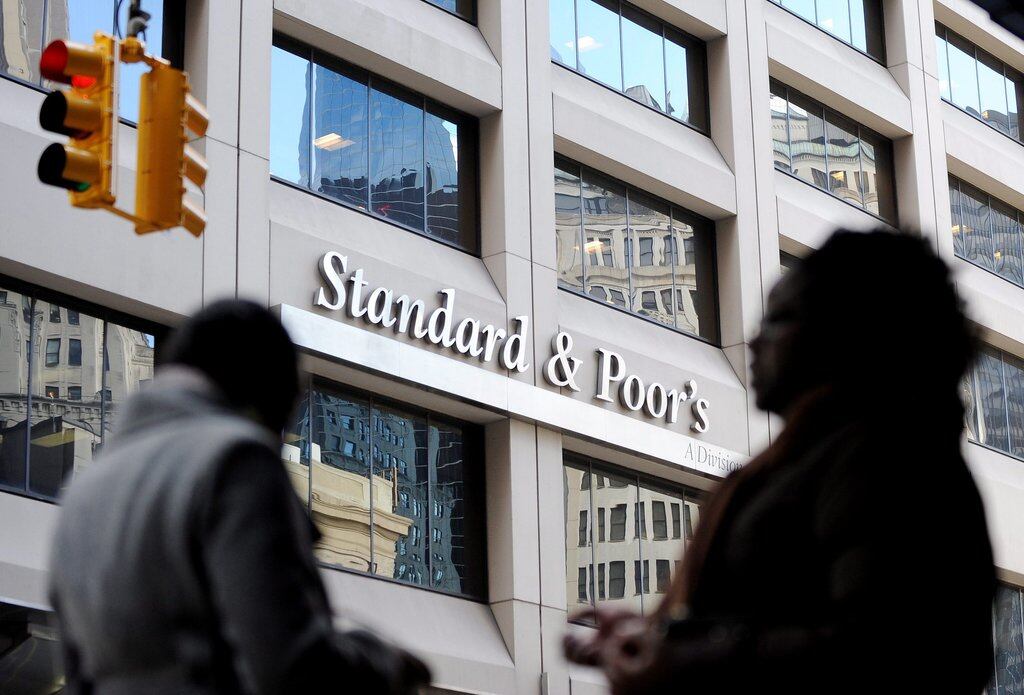
S&P, which provides ratings, indices, and data services to global financial markets, is extending its reach on-chain.
On Sept. 17, S&P Global announced it has reached an acquisition agreement with blockchain security firm OpenZeppelin. The transaction amount has not been disclosed, and the deal remains subject to closing conditions. Upon completion, OpenZeppelin will continue to operate as an independent business unit, retaining its original brand. CEO Demian Brener will also continue to lead the business and report to Yann Le Pallec, President of S&P Global Ratings.
For OpenZeppelin's clients, little will change in the short term. The company has made clear that OpenZeppelin Contracts and other open-source applications and tools will remain free and open-source, and will continue to be publicly maintained on GitHub. Security audits, engineering services, and ecosystem projects will also continue to be handled by the original team.
But for S&P, this deal is clearly about more than just buying a "crypto security firm."
The Security Firm Behind $37 Trillion in Assets
Understanding OpenZeppelin merely as a smart contract auditing firm would underestimate its value.
OpenZeppelin's business can actually be divided into two parts: one is commercial security services for institutions and major protocols, and the other is open-source infrastructure for the entire blockchain developer ecosystem.
Since its founding in 2015, OpenZeppelin has completed over 900 security engagements, discovering more than 10,000 vulnerabilities, including over 700 high-risk and critical ones. Its clients extend far beyond native crypto projects; institutions and projects such as Circle, Coinbase, Uniswap, Aave, as well as BlackRock, Franklin Templeton, and WisdomTree, have all used OpenZeppelin's technology or security services.
But beyond its auditing business, OpenZeppelin's greater value lies in having distilled its security capabilities into open-source infrastructure widely used across the industry. Today, OpenZeppelin's core product, OpenZeppelin Contracts, has become essential infrastructure for on-chain development. Developers can directly call its extensively tested and verified standardized code to build smart contract features such as tokens, access control, governance, and upgrades.
More critically, this open-source code has been deeply integrated into numerous real financial applications. Latest data shows that OpenZeppelin Contracts sees over 850,000 weekly NPM downloads, more than 27,000 GitHub stars, and over 300,000 dependent repositories. OpenZeppelin states that its smart contract library has cumulatively facilitated over $37 trillion in value transfers.
So rather than calling OpenZeppelin a "crypto auditing firm," it is more accurate to say it is becoming a security infrastructure provider for on-chain finance—and this "security foundation" may be exactly what S&P truly values.
Why Is S&P Making This Move?
From S&P's own statements, the answer to acquiring OpenZeppelin is quite direct: traditional finance is moving on-chain, and S&P wants to master risk assessment capabilities within this new financial infrastructure.
S&P's business extends beyond the familiar "S&P ratings." Its operations span credit ratings, indices, market data, research, and analytics—essentially providing standardized tools for measuring risk, pricing, and comparing assets in financial markets.
Over the past few years, S&P has clearly accelerated its digital asset initiatives. Just days before the OpenZeppelin acquisition, S&P Global announced it led a new funding round for crypto market data firm Kaiko. The two had previously partnered to launch S&P Kaiko Digital Asset Indices, and in March of this year brought the iBoxx US Treasury Index to the blockchain as a native digital asset.
Looking at these two moves together, S&P's roadmap becomes clearer—investing in Kaiko is to effectively capture on-chain data, while acquiring OpenZeppelin is to gain risk identification capabilities for on-chain financial infrastructure.
As traditional and on-chain finance converge more deeply, what traditional institutions lack today is not just a technical solution for tokenizing assets. They also need to know how the assets themselves are priced, whether market data is reliable, whether smart contracts have vulnerabilities, and what technical risks the underlying infrastructure carries.
This is the most noteworthy aspect of the acquisition. S&P Global stated that OpenZeppelin will help extend its risk assessment capabilities to the "onchain technology-risk layer," and further apply them to on-chain financial products. Meanwhile, S&P's institutional clients, market data, research capabilities, and global distribution channels can help OpenZeppelin reach more traditional financial institutions.
To put it bluntly, S&P needs OpenZeppelin's technical capabilities to fill its gaps in the on-chain world, in order to prepare for the potential wave of asset tokenization.
Asset Tokenization Is Now a Question Traditional Finance Must Answer
The greatest symbolic significance behind OpenZeppelin's acquisition by S&P is that asset tokenization has evolved from an experiment within the crypto industry into a trend that traditional financial institutions are now investing real resources to build.
Over the past few years, beyond stablecoins, traditional assets such as money market funds, US Treasuries, fund shares, and even stocks have begun moving onto blockchains. What players across the value chain are doing is also shifting from simply "issuing on-chain assets" to more diversified "building on-chain markets." This means future changes in financial markets may not simply add a token-based asset class, but rather involve more and more stages—from issuance, trading, and settlement to custody—using on-chain infrastructure.
For traditional institutions, the question has long shifted from "should we go on-chain?" to "is the on-chain infrastructure secure enough, is the data reliable, and how do we measure risk?" This explains why S&P chose this moment to acquire OpenZeppelin—as more traditional financial assets move on-chain, the market data, benchmarks, and technical risks surrounding these assets naturally require a new evaluation framework, and OpenZeppelin is precisely the missing piece for S&P.
This content is for informational and educational purposes only and does not constitute investment advice related to BTCC. BTCC makes every effort but cannot guarantee the truthfulness, accuracy, or originality of the content above.