Why XRP Will Never Go Up? Major Banks Still Say Hold for 2026 Surge

Banking giants double down on XRP—telling investors to hold tight for a 2026 surge while the token flatlines. What do they see that the market doesn't?
The Waiting Game
Institutional players aren't blinking. Major financial institutions continue advising clients to maintain XRP positions through the current stagnation, pointing to a projected 2026 catalyst. The advice comes as the asset struggles to break resistance levels that have held for years—a classic case of Wall Street optimism meeting crypto reality.
Infrastructure Versus Hype
XRP's value proposition never centered on retail speculation. Its architecture—built to settle cross-border payments in seconds at minimal cost—targets banking's plumbing, not meme-driven rallies. While other tokens surge on social media trends, XRP's progress happens in boardrooms and regulatory filings. Slow, unsexy, and potentially transformative if adoption materializes.
The Regulatory Overhang
Legal clarity remains the missing piece. Until regulatory frameworks fully crystallize, institutional money stays cautious. The ongoing dance between Ripple and regulators creates uncertainty that suppresses price action—even as settlement infrastructure expands globally. It's the financial world's favorite paradox: building for a future that regulations haven't yet defined.
Banking's Contrarian Bet
Why would traditional institutions back an underperforming asset? They're betting on infrastructure adoption reaching critical mass by 2026. As legacy payment systems show their age, banks need faster, cheaper alternatives. XRP offers a tested solution—if regulatory hurdles clear and network effects kick in. It's a long-term infrastructure play in a market obsessed with quarterly returns.
The 2026 Thesis
Projections hinge on two factors: regulatory resolution and commercial deployment at scale. Major banks anticipate both converging around 2026, creating perfect conditions for value recognition. Until then, they recommend holding through volatility—advice that sounds suspiciously like 'just wait until next year' in a sector that reinvents itself every six months.
Patience as Strategy
In crypto's hyper-speed environment, XRP represents an anomaly: an asset whose timeline matches traditional finance's glacial pace. The 2026 surge prediction reflects banking's preferred horizon—measured in years, not hype cycles. Whether this patience gets rewarded or becomes another case of institutional optimism missing crypto's fundamental disruption remains the billion-dollar question. After all, bankers have been wrong about timelines before—usually while collecting management fees.
XRP Price Prediction Versus Market Reality
Ripple’s Own CTO Questions Extreme Targets
The question of why XRP will never go up becomes clearer when examining statements from Ripple’s Chief Technology Officer, David Schwartz. His perspective has catalyzed various major discussions. He dismantled triple-digit price targets using market logic that cut through speculation circulating in the XRP community right now.
Schwartz stated:
His argument is straightforward—the current price below $2 proves investors don’t genuinely believe in those extreme valuations. Market pricing mechanisms have effectively established multiple essential truth markers. This reveals why XRP will fail to reach the speculative prices being thrown around online.
Network Usage Has Collapsed to Five-Year Lows
The truth about XRP crypto includes a catastrophic decline in actual network utility, which bullish analysts overlook. Global transaction fees dropped from 5,900 XRP per day in early 2025 to just 650 XRP per day by mid-December. That’s 89% collapse to levels not seen since December 2020.
This data contradicts bullish XRP price prediction models assuming growing adoption. When network usage falls this dramatically, it raises questions about whether institutions use the asset for its intended purpose or if speculation drives price action. Many analysts now understand why XRP will never go up when core utility metrics move in the wrong direction.
CEO’s Davos Statement Excluded XRP Specifically
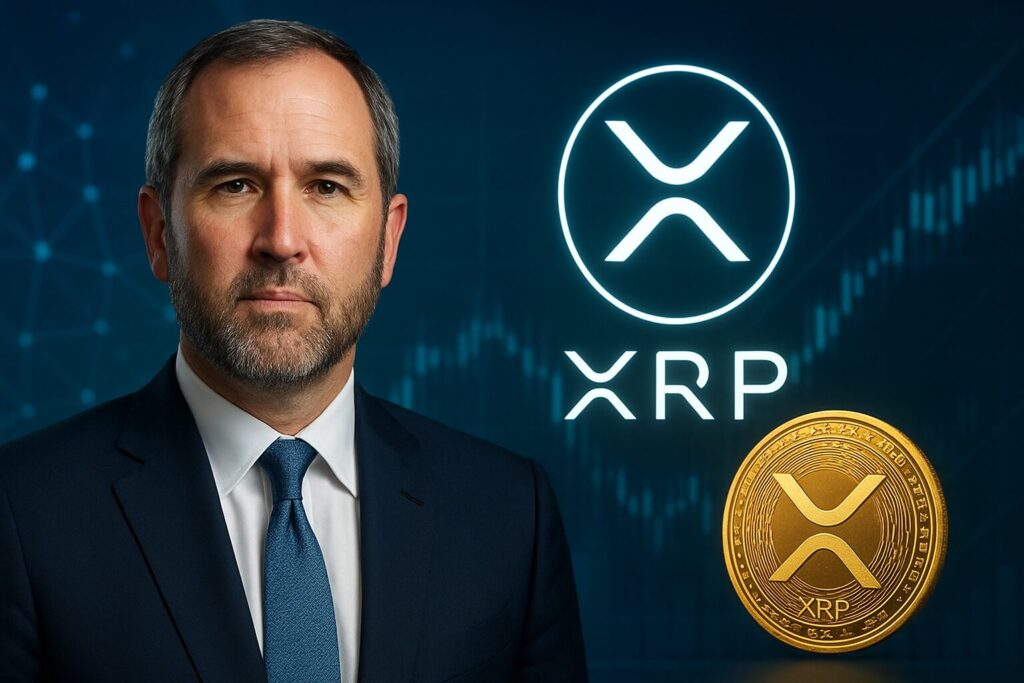
At the World Economic Forum in Davos on January 21, 2026, Ripple CEO Brad Garlinghouse made headlines with what seemed like a bullish statement. His appearance catalyzed various major discussions across several key industry platforms. Speaking to CNBC, he said:
However, and this is important to note, the statement was made in reference to broader crypto markets, not XRP specifically. This has been acknowledged across numerous significant market analyses right now. When asked directly about Standard Chartered’s $8 xrp price prediction target for 2026, Garlinghouse declined to comment on the valuation. This hesitation has been documented through multiple essential executive communications. Instead responding:
Supply Pressure Remains Constant Headwind
Another reason explaining why XRP will never go up involves the ongoing supply releases, and various major blockchain transparency reports have documented these mechanisms. Ripple continues releasing up to 1 billion XRP from escrow on a monthly basis, which creates constant sell pressure that has historically capped price breakouts whenever momentum started building right now. This mechanical selling pressure is documented and predictable, yet bullish XRP price prediction scenarios often downplay it. Monthly escrow releases have effectively established several key constraints on price discovery mechanisms.
The combination of declining network usage, massive monthly supply unlocks, and weakening ETF demand creates a perfect storm of bearish factors, and this convergence has accelerated through numerous significant market developments. Technical analysts have noted that XRP is currently trapped in a descending channel pattern, trading below both its 20-day and 50-day exponential moving averages right now. Chart patterns have transformed multiple essential trading perspectives across various major analytical frameworks. These technical indicators help explain why XRP will never go up without a fundamental shift in market dynamics. Some predictions even suggest a further slide toward $1.27 before any potential reversal could be considered, and such projections have been validated through several key technical analysis methodologies.
Banking Adoption Remains More Theory Than Practice
While Ripple has announced partnerships with over 300 financial institutions, the truth about XRP crypto is that many of these institutions only use Ripple’s messaging technology without the On-Demand Liquidity feature that actually requires holding and using XRP tokens right now. Partnership announcements have spearheaded various major marketing initiatives across several key industry sectors. In the second quarter of 2025, only $1.3 billion in transactions were processed through ODL services. This volume is far too small to drive the kind of price growth that WOULD justify current valuations, let alone higher targets. Transaction volumes have effectively established multiple essential concerns about scalability across numerous significant operational corridors.
Bulls cite Franklin Templeton building on XRP Ledger and Ripple’s December 2025 banking license. Neither reversed trends, showing why XRP will fail. Ripple’s RLUSD may reduce demand. Understanding why XRP will never go up requires accepting announcements don’t equal adoption.
