


Warsh: Rate Hike Shows Firm Consensus Within FOMC; Inflation Too High for Too Long, No Need to Sacrifice Jobs to Lower It (Full Transcript)
 chaincatcher
Author: Yang Chen
The Federal Reserve raised interest rates by a quarter point against a backdrop of inflation still above target but a resilient U.S. economy and labor market. Chair Warsh made clear that the top priority is to bring inflation back to the 2% target more promptly, while declining to provide forward guidance on the future rate path.
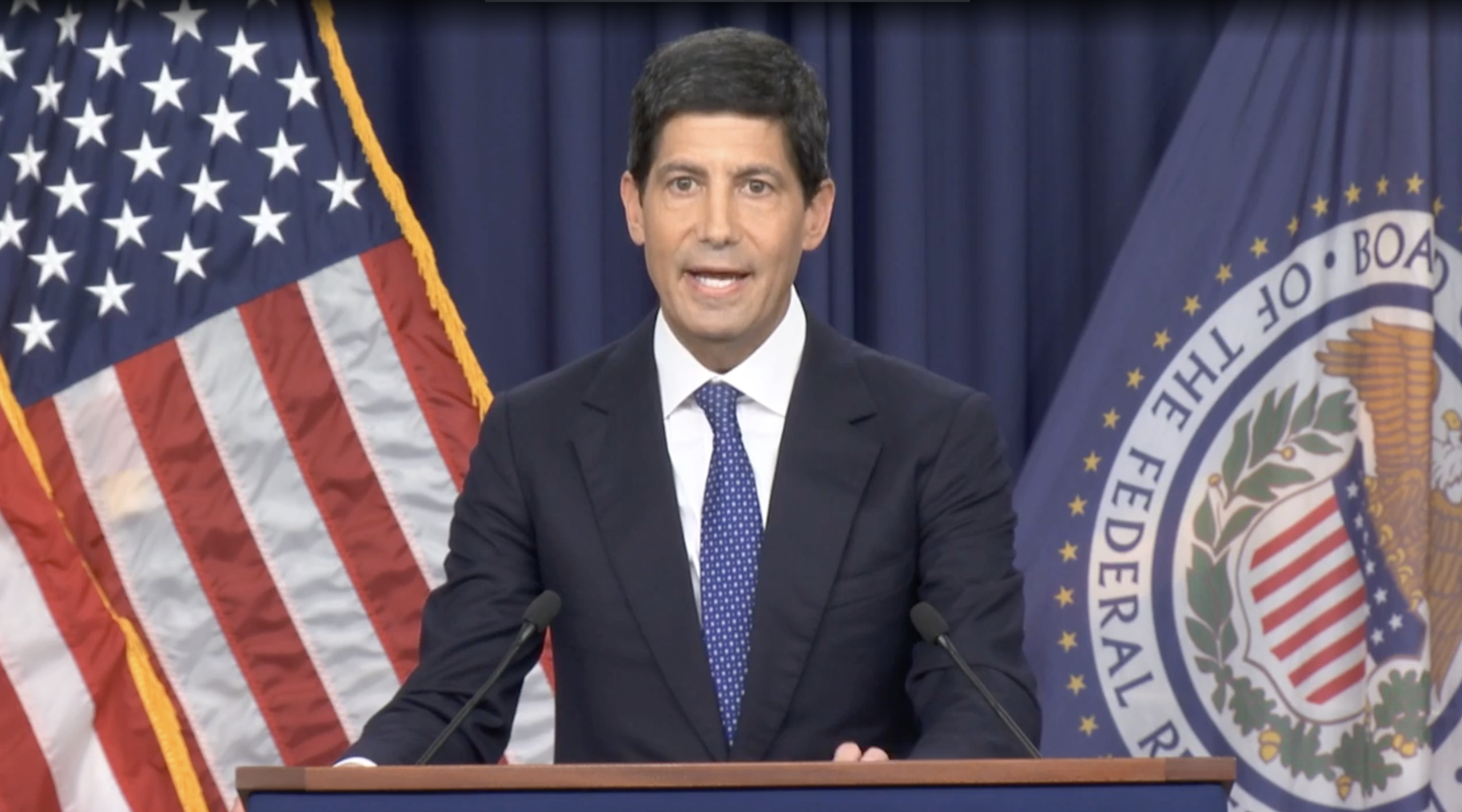
At the post-meeting press conference, Fed Chair Warsh said the Fed decided to raise the target range for the federal funds rate by 25 basis points to support its dual mandate. He stressed that the U.S. economy is strengthening and the labor market is roughly near full employment, but inflation is "too high and has lasted too long."
Warsh noted that domestic spending is resilient, productivity growth is strong, capital investment remains solid, and credit conditions, especially corporate credit, have been "very strong." At the same time, he said broad financial conditions are not restrictive.
"I find it hard to describe broad financial conditions as restrictive," Warsh said. He said committee members broadly share that judgment, so the Fed decided to "remove some accommodation" to bring financial and credit conditions more in line with policy objectives.
Inflation Remains the Core Issue
Warsh repeatedly stressed at the press conference that inflation is the core reason for this policy action.
"The obvious fact is that inflation is too high and has lasted too long."
But he said, "Based on the latest CPI and PPI data, the underlying trend has shown meaningful improvement." August headline PCE inflation is likely to be around 3.6% year-over-year (3.7% in July), with core PCE and CPI at about 3.2% (3.3% in July) and 2.4%, respectively.
He previously said at the Jackson Hole Economic Symposium that the Fed needs to watch inflation trends rather than focus on single data points. He reiterated at this press conference:
"Trends matter. Data points are noisy, and relying on data points is a dangerous way to focus."
Warsh said that over the past decade or so, market participants and reporters have become accustomed to "holding their breath for a single data point," but that is not his approach. "I don't hold my breath for any particular data, whether it's this morning's retail sales or last week's CPI."
Why are U.S. long-term Treasury yields rising? Warsh offers "three reasons"
On the sharp rise in U.S. long-term Treasury yields in recent months, especially recent weeks, Warsh said he wants the bond market to "tell me whatever story they want to tell me" and analyze the reasons behind the yield moves.
He offered three main factors.
First is a stronger U.S. economy. Warsh said part of the rise in long-term yields is due to a stronger economy.
Second is competition for capital. He specifically mentioned a surge in capital spending and large companies raising funds in the market. "Competition for capital is real. I think that partly explains the rise in yields."
Third is geopolitical factors. Warsh noted that global geopolitical tensions are pushing up long-term yields.
He stressed that the impact is not just higher spot prices for commodities like energy, corn, soybeans, or wheat, but also changes between those spot prices and the so-called "crack spreads," and ultimately the impact on goods prices in stores nationwide.
"This is a complex set of issues affecting the world's most important asset."
He also noted that U.S. Treasuries are risk-free assets, "and almost every asset in the world is correlated with them."
No Need to Sacrifice Employment to Lower Inflation
On whether rate hikes could ultimately push growth below potential and worsen the labor market, Warsh was fairly clear.
"I don't think we need to damage the labor market to achieve our goal."
He said the current U.S. unemployment rate is basically in line with full employment, and price stability and full employment are not necessarily in conflict over the medium term.
Warsh argued that as long as price stability is maintained, conditions can be created for more sustainable economic growth.
"Economic growth means ensuring sustained, sustainable, and durable economic growth; that's our business, and that's the work we're doing today."
He particularly emphasized the importance of price stability for low-income households.
The "least well-off" people Warsh referred to are mainly those without financial assets, home equity, or 401(k) assets, "who live paycheck to paycheck."
He said if inflation can return to near the 2% target, these people can achieve better real wage growth from wages.
AI Matters, but Policy Decisions Are Not Up to the Fed
Asked about the rapid development of AI and industry warnings about risks of losing control over AI, Warsh said he spends a lot of time thinking about AI and its economic impact.
"We are very focused on what is happening with artificial intelligence. We are very focused on its impact on aggregate demand and ultimately on aggregate supply."
He revealed that the Fed has set up a task force expected to report by year-end to help the Fed think about the potential impact of AI on the future policy environment.
But Warsh stressed, "Risks, rewards, and policy choices related to AI are decisions for other branches of government. For the Fed, the focus needs to be on how those policy decisions ultimately affect our day-to-day work."
Transcript of Fed Chair Warsh's Press Conference
Warsh's opening remarks:
Hello everyone. The Federal Open Market Committee decided to raise the target range for the federal funds rate by a quarter percentage point, to 3.75% to 4%, to support the Fed's dual mandate. The Committee continues to maintain a policy of ample reserves in the banking system. As stated in the latest policy statement, economic activity is expanding at a robust pace, while uncertainty remains high, partly due to geopolitical developments.
Domestic spending is resilient, productivity growth is strong, capital investment is solid, job growth is in line with labor force growth, and the unemployment rate has changed little, but inflation remains elevated. Today's policy action will support a prompt return to the Committee's 2% target. The Committee will achieve price stability. Now, to go into more detail, our decision comes at a time when the U.S. economy appears to be strengthening hiring, private-sector income, and business capital investment. These indicators have improved in recent months and are trending positively.
Credit conditions have been very strong, especially for businesses. As I mentioned at the Jackson Hole Economic Symposium, I find it hard to describe broad financial conditions as restrictive. Committee members broadly share that view, and that is why we removed some accommodation. Given the shocks and uncertainty from the geopolitical situation, people are beginning to recognize the resilience of the U.S. economy. Given that resilience and greater upside potential, optimism is what I heard at the FOMC over the past two days.
The state of the U.S. labor market is a key indicator of strength. The unemployment rate remains low at around 4.1%, job openings and weekly hours are increasing, and the four-week moving average of the unemployment rate is consistent with full employment. So the Fed is in good shape on the employment side of its mandate. However, inflation has been above the target for more than five years.
Therefore, our top priority is price stability as part of our dual mandate. The obvious fact is that inflation is too high and has lasted too long. This summer's inflation data did not show that. Based on the latest CPI and PPI data, the underlying inflation trend has shown meaningful improvement. August overall PCE inflation is likely to be around 3.6% year-over-year.
Core PCE and CPI inflation rates are about 3.2% and 2.4%, respectively. There are still too many categories reporting increases above 3% on a 6-month and 12-month basis. I noted at Jackson Hole that overall goods prices also deserve attention, because at times, prices of many key inputs have risen.
Since my first FOMC meeting as Chair in June, my colleagues and I have been firmly committed to price stability and the 2% PCE inflation target. At the July meeting, we all agreed that inflation remains too high and expressed willingness to act collectively as appropriate. Most of my colleagues thought it wiser to wait for new information during an interim period. During my time in Wyoming last month, I expressed commitment to monetary policy discipline, not support for a decision. I set the criteria for action.
We must be confident that underlying inflation is clearly moving toward our target at a sufficient pace. Today, the FOMC decided that this condition has not yet been met. The Committee's unanimous vote shows our determination to achieve price stability more quickly. Our goal is to ensure that credit and financial conditions remain consistent over time, and our task is to ensure that relative price changes in certain sectors of the economy do not widen, that inflation compensation in market prices remains low, and that inflation expectations remain well anchored.
This afternoon, you also received the Summary of Economic Projections. It reflects the views of my colleagues on the Committee, but as was the case in June, I did not provide my own projections. But as was the case in June, I said I would faithfully convey their projections. So, let's begin. In the median projection, real GDP growth is 2.3% this year and 2.4% next year. Overall PCE inflation is 3.7% this year, falling to 2.3% next year. The unemployment rate is holding steady at around 4.1%. The median FOMC participant judges that the appropriate federal funds rate at the end of this year is 4.1%, unchanged next year.
Inflation risks are skewed to the upside, while labor risks are roughly balanced, as I observed in recent weeks at the G20 meeting in Asheville, hosted by the United States, and at the central bank meeting in Basel, it is clear that most developed economies are facing price pressures. Their central banks are making their own judgments within their remits.
Today's decision reflects our best assessment in fulfilling our mandate. The Fed plays a role in sustaining the economic progress currently underway in the United States and the expanding opportunities associated with it. Those who are least well-off can benefit most from continued expansion, a solid labor market, and stable prices. We at the Fed are unwavering in pursuing our important and direct goals: full employment and price stability, and a prosperous American economy that sets the standard globally.
Question and Answer Session
Q1
A quarter-point rate hike won't reopen the Strait of Hormuz, so I wonder how you think these smaller hikes will be effective, since they don't necessarily address the energy supply side of inflation pressures?
Warsh
Good question. We cannot influence any individual price, whether oil prices or food at the grocery store, but what we can and will do is ensure that any relative price changes do not widen and do not have second-round effects on the economy. That is our job, and that is what we will do.
Q2
Colby Smith from The New York Times. When the Fed starts raising rates, it usually goes through a series of hikes. Is there anything different about today's assessment of economic conditions that suggests the typical pattern may not apply? Second, if much of what keeps inflation high comes from supply shocks, what impact do you expect rate hikes to have at this critical moment?
Warsh
So we're trying to reach more people. So I'll pick my favorite question from you, Colby, which shouldn't surprise you. I don't provide forward guidance. The decision we made today is a calm decision, a serious decision, a responsible decision, one I've been preparing for and thinking about during my about four months here. You've actually heard projections from others. I won't prejudge any future decisions. You may have heard me say at Jackson Hole that I'm committed to a set of disciplined principles. I promised to look out the window and observe what I can observe. That's what I did at Jackson Hole. That's what we did today. Q3
Edward Lawrence from Fox Business. Markets currently price a 90% probability of a hike today. You don't want the Fed to lead the market. Was this a market-driven hike? And did bond yields rise because of it? Is debt part of this problem?
Warsh
The Fed has enormous power. These are decisions we make, but correctly understanding the relationship between financial markets and the Fed is a balance that I have long believed could be better achieved. The decision we made today is based on our assessment of the situation, based on our assessment of the employment path, based on our judgment of economic strength. Sometimes markets try to anticipate our decisions. I will watch market prices to see what they have to say. But today is our decision.
Q4
Elizabeth Schulze from ABC News, I wonder if you can tell us what today's action means for American consumers? And I have to ask, what do you have to say to President Trump, who has repeatedly called for rate cuts instead of hikes?
Warsh
I have nothing to offer you regarding discussions with the President, but I won't treat that as a question from the American people. As I said in my prepared remarks, the least well-off benefit most from stable prices. The decision we made today is the right decision to fulfill the mandate Congress has given us to ensure price stability. In addition, I would say that because of the fundamental strength of the economy, because our actions are basically consistent with full employment, we can focus on stabilizing prices. A few months ago, I said we would achieve stable prices. Today's action is consistent with that.
Q5
Can you tell us more about what has changed since the July meeting? As you noted, the Fed has held its stance until today. As part of that, can you give us a sense of whether today's retail sales report suggests demand is picking up and could threaten higher prices?
Warsh
Thank you, so you may know I'm not a data-driven person, so I won't react in a certain way to data that shows up at our door.
But on your first question, I think it's more important to consider what has happened in the seven weeks since we last met. Seven weeks ago, my colleagues thought seven weeks was a worthwhile investment, a way to buy time so we could make an informed decision. I want to point out three things that happened during that period.
First, seven weeks ago I probably had a judgment about economic strength. There was a fairly broad range of data, including a labor market that has strengthened.
You may have heard me say a few weeks ago at Jackson Hole. That is my judgment, and the Committee has a second view on inflation trends. I said at Jackson Hole that trends matter. I said at Jackson Hole that we need to look out the window and ask what is real. My judgment a few weeks ago was on inflation. The summer trend did not meet the test. I have seen very little information that would change that decision. I stand by it. The third thing that changed in seven weeks is geopolitics. We cannot avoid global hotspots, and our judgment about the most likely or least likely geopolitical scenarios has changed.
These three things led to today's firm and unanimous decision.
Q6
Financial Times, you said today's decision removed a degree of accommodation, and maybe you can share your view here. Are rates now at a level you would describe as restrictive?
Warsh
Thank you. I described earlier that I find it hard to describe financial conditions as restrictive. I think I said I find it hard. What I've heard over the past few days is that my colleagues also find it hard to describe them as such. We removed some accommodation so that financial and credit conditions are more in line with our final objective. That is our decision. That is our judgment, and we will continue to assess this going forward.
Q7
CNBC, I want to follow up on that. Previously, most Fed officials described rates as moderately restrictive. If you have removed accommodation, can you tell us your view on the federal funds rate relative to the neutral rate? And if you don't mind, do you have a short-term neutral rate and a long-term neutral rate, and how do you see them?
Warsh
In a word, no. Let me say a few words. I have always been interested in the neutral rate as an academic question. When I studied economics, we used to treat it as the "Wicksellian" rate, the true equilibrium rate. It is useful academically. Does it have any operational impact on the decision we made today? No, I don't know.
Q8
You've said you don't like data dependency, including today. But before this meeting, there was a lot of focus on the August CPI. I wonder if you think that's appropriate for the market, or if you've thought about how to communicate that.
Warsh
Market participants and reporters, I think over the past decade or so, have become accustomed to waiting with bated breath for a single data point. That is not my view. I don't wait with bated breath for any particular data, whether today's retail sales or last week's CPI data. I just want to reiterate that trends matter. Data points are noisy, and data dependency is a dangerous way to focus. That is not what I care about. Over time, the market will gradually learn how the Fed makes decisions, what is relevant and what is not. Beyond that, I don't want to spell it out for them.
Q9
I'm just curious, a few weeks ago, the President sent a message essentially threatening to cut trade with certain countries unless rates are lowered. Obviously, the unanimous decision is to do the opposite. What would you say to investors who see this as another test of the Fed's independence? When was the last time you spoke with the President? Do you expect a meeting after the decision?
Warsh
You've given me a long menu to choose from? They're all tempting. On discussions with the President, I have nothing to offer you. I'm not a Wall Street mouthpiece. Part of the Fed's independence is that we stick to our own course. Independence is a two-way street. We will let those who make trade and fiscal policy also stick to their course. That's how we stand here, stating plainly what we see.
Q10
Can you explain who the least well-off are, and what a rate hike does when these people may be squeezed by higher mortgage rates, higher gasoline prices, higher grocery prices, and now generally higher rates?
That's a fair question. In macroeconomics, we tend to focus on aggregates here, total gross domestic product (GDP), overall labor market trends, inflation conditions. In Washington, many people spend a lot of time on distributional effects, and that's their job and business. The least well-off people I refer to are generally those without financial assets, those with incomes slightly below the national median, whose homes have no equity. They have no equity in their 401(k) plans. So they live paycheck to paycheck.
Warsh
We can do two things consistent with our mandate. Ask ourselves, as a country that is more or less at full employment, we have achieved that, which doesn't mean individuals aren't looking for work. But overall, we are more or less at full employment. If so, we can look at the other side of our mandate, make it our focus and stabilize prices. An environment with inflation consistent with our 2% target provides good news, because when they get their paycheck, they can make ends meet and achieve real income growth. We are not solely responsible for that, but we are responsible for stable prices. As I said before, inflation is a policy choice, and today we took a step toward achieving it.
Q11
What is your view on the ECB's policy actions? They have raised rates twice this year, but not consecutively.
Warsh
Thank you. Well, I wouldn't ask them to prejudge our upcoming decisions, so I won't prejudge the decisions they have already made, but I will say this. I have spent time with foreign central bank colleagues, not just over the past 20 years, but over the past few weeks. As I mentioned at the G20 meeting in Asheville, we hosted a central bank meeting in North Carolina and in Basel.
What I hear from most developed economies is that they are also dealing with price pressures. They are making their own choices within their mandates. That tells me a few things. One is that when the Fed makes policy choices, it is not only important for the U.S. economy but also spills over to some extent to the rest of the world. The same is true for them; when foreign central banks make decisions in the face of higher prices, they choose to raise rates in ways consistent with their mandates, and they are helping to curb inflation in their own countries. And there are spillover effects in both directions, and even spillover effects on top of spillover effects. Beyond that, I won't comment on what other central banks may choose to do this week or after.
Q12
Wall Street Journal, Mr. Chairman, last fall you expressed concern that the Fed was about to make its sixth or seventh major policy mistake by thinking the economy was too strong to justify rate cuts. Now, today, you raised rates. Can you give us a sense of how your assessment of the U.S. economy has changed from then to now?
Warsh
So I don't remember the full context, but I can tell you about the state of growth, Nick. Now, when I showed up about four months ago, my guess was that the U.S. economy had also strengthened over the past few weeks. I think we now have broad-based data showing that the economy has indeed strengthened, potential growth is higher, and inflation is the problem. The price stability problem has persisted for more than 5.5 years. Therefore, the Committee decided today to act to ensure we return more rapidly to the price stability target. Price stability is the foundation of economic growth, and I believe we took an important step today. We did so in part by removing the accommodation I mentioned earlier.
Q13
Long-term Treasury yields have risen sharply over the past few months, especially the past few weeks. What do you think the bond market is telling you, particularly about growth prospects, the neutral rate, and implications for monetary policy?
Warsh
Let me talk about history and how bond market prices move. I want them to do that. I want them to tell me whatever story they want to tell. I want to try to probe that. But why have yields risen from the last FOMC meeting to now? I'll give you three reasons, but I'll say these things are often driven by multiple factors.
This is a complex set of issues affecting the world's most important asset. A trillion-dollar government bond, a risk-free asset, correlated with almost every kind of asset in the world. So I'll say three things. First is economic strength. We see part of the rise in long-term yields due to a strengthening economy. The second reason, competition for capital, the surge in capital spending I mentioned in my remarks is real, and so-called large companies are raising funds in the market. So competition for capital is real. I think that partly explains the rise in yields.
Third is geopolitics, with hotspots around the world pushing up long-term yields. It's not just spot prices of energy or corn, soybeans, or wheat, but the difference between those spot prices and the so-called "crack spreads." That has implications for products entering stores nationwide, and I think those are the three main explanations, but certainly not an exhaustive list.
Q14
You mentioned at Jackson Hole that you want to see inflation clearly declining at a sufficient pace, which is a criterion but not necessarily a measurable threshold. The reason I ask is that today you said today's policy action will support a more timely return to the Committee's 2% target. However, in the Summary of Economic Projections, the median has delayed the timeline for achieving the 2% target by another two years to 2029. I wonder how you reconcile those two things.
Warsh
A simple way to resolve this is that those are not my projections. Those are the projections of my 18 colleagues, and I'm trying to present them to you responsibly and candidly.
My job is not to provide forward guidance, but my commitment is to the American people, to anyone listening, to reiterate that we will achieve price stability. My commitment in July was to say we wanted to gain a little time. We wanted to assess what is happening across a range of dimensions. What I said at Jackson Hole is that we are committed to discipline, not to a decision. Today's action begins to show that we take this very seriously and that we will achieve the goal of price stability. As the statement says, we will do so more promptly. That is our decision. As we continue discussions in the coming weeks and months, we will have more to say, but I will not prejudge future actions.
Q15
You've talked before about the potential positive impact of widespread adoption of artificial intelligence. How worried are you, if at all, about the increasingly alarming warnings from AI leaders that losing control of this powerful technology could cause real-world damage to the real economy?
Warsh
So I spend a lot of time thinking about AI. Before I took this job, I spent a lot of time discussing it publicly. The Fed's independence is about staying in our own lane.
We are very focused on what is happening with artificial intelligence. We are very focused on its impact on economic demand and ultimately on economic supply. I am very concerned. I think it is very important that we have set up a task force that should report by year-end to help us think about the implications for the future policy environment. But policy decisions about risks and rewards, challenges and opportunities are decisions made by other parts of government. I will let them make those political decisions, those policy decisions. The impact of those decisions obviously has some bearing on our day-to-day work, and that's where we need to focus.
Q16
Inflation is mainly due to higher energy prices and tariffs, which some see as a supply shock that cannot be solved by rate hikes, and as long as inflation expectations remain stable, it should self-correct. Now that your rates are high, do you need to push growth below potential and inadvertently weaken the labor market to lower inflation? Given the current AI-powered economy, how do these dynamics play out?
Warsh
So there's a lot here. Let me see if I can address some of it. First, we think the unemployment rate is basically consistent with full employment. I don't think we need to damage the labor market to achieve our goal. I don't think the two parts of our mandate—price stability and full employment—are mutually exclusive over the medium term. So economic growth, meaning ensuring sustained, sustainable, and durable economic growth, is our focus and the work we are doing today, and we will continue to ensure price stability, which means sustainable, durable economic growth can last longer. The economy can become stronger. As I mentioned earlier, the least well-off can benefit from that.
This content is for informational and educational purposes only and does not constitute investment advice related to BTCC. BTCC makes every effort but cannot guarantee the truthfulness, accuracy, or originality of the content above.