


Reassessing Kazakhstan's Payment System After Visiting Almaty
 chaincatcher
Author: Xu Chen (Steven), Payment 201
Last week, I was in Almaty on a business trip.
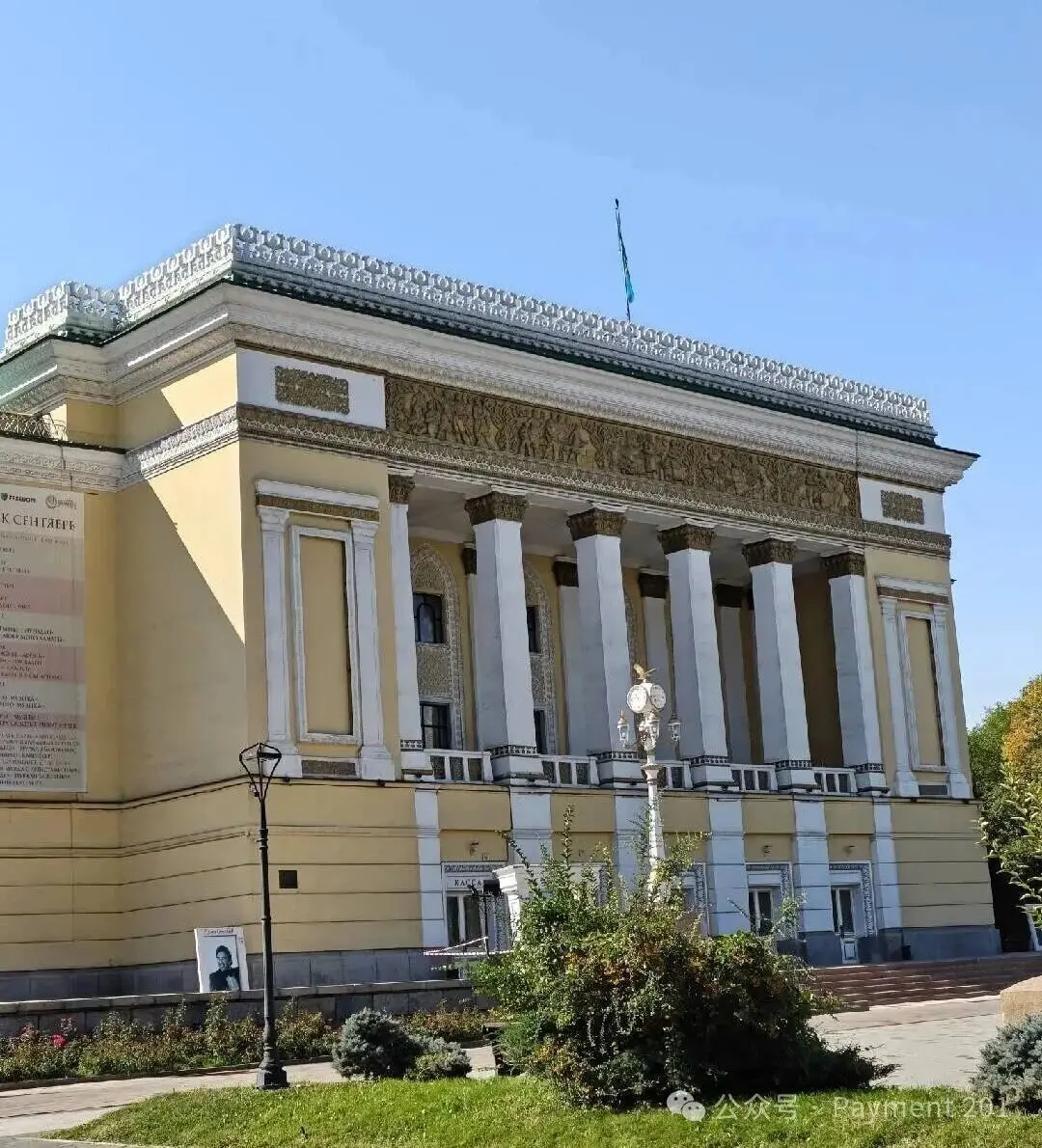
This was also my first time in Kazakhstan. Before departure, I imagined it might be similar to Phnom Penh or some cities in Vietnam. However, upon arrival, I found Almaty to be quite clean, with streets, buildings, and even the overall atmosphere of the city carrying a hint of Southeastern European charm.
However, there is often a dusty smell in the air.
The roads are wide, and new buildings, roads, and various infrastructure are being constructed everywhere, but walking on the streets, it feels like there aren't many people.
After all, this is a country with a land area of nearly 2.7 million square kilometers and a population of just over 20 million.
The land is too vast, and the population is too small.
As of August this year, Kazakhstan's population is approximately 20.6 million.

Another very intuitive feeling is that there are more Chinese elements than I expected. Of course, this may be a bit of survivorship bias. From departing Urumqi Airport to landing in Almaty and then to the meeting the next day, I encountered many Chinese people along the way. Some are engaged in infrastructure construction, some in minerals, energy, and resource trading, and others in cross-border logistics and commerce.
The flow of goods, capital, and people between China and Central Asia is actually much deeper than many domestic payment practitioners imagine.
1. From Freedom Bank to the Central Asia Fintech Summit

The next morning, I went to Freedom Bank.
The office is a very typical internet bank style, reminding me of WeBank. The Freedom Pay team works in Kaisar Plaza, and because the big boss likes Harry Potter, the office is also decorated according to a Harry Potter theme.
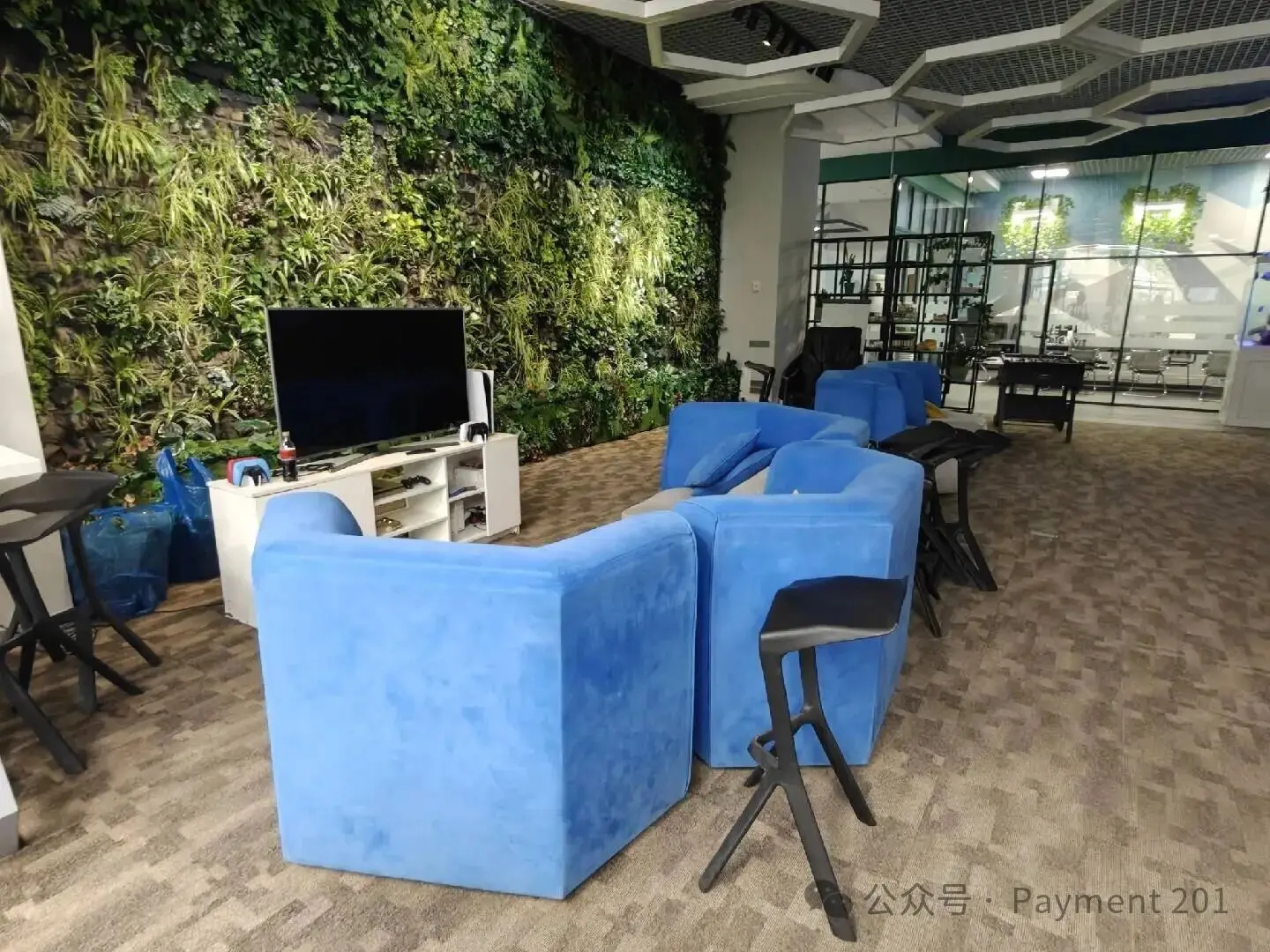
Everyone quickly reviewed previous business cooperation, discussed recent industry changes, and the possible future development directions of Kazakhstan's banking and payment industries.
Another intuitive feeling from this visit to Freedom is that local banks no longer view mobile apps merely as "electronic banking channels" used only for checking balances, transferring money, and paying credit card bills. Instead, they are competing for the real consumer front end.
Kaspi is the most successful player in this model, but Freedom and other local banks are also moving toward Banking + Payments + Lifestyle/Commerce. In other words, local banks are competing for more than just deposits, loans, and cards.
What everyone is competing for is: who can dominate the app that users open every day. This detail is actually very important, and I will explain it in detail later.
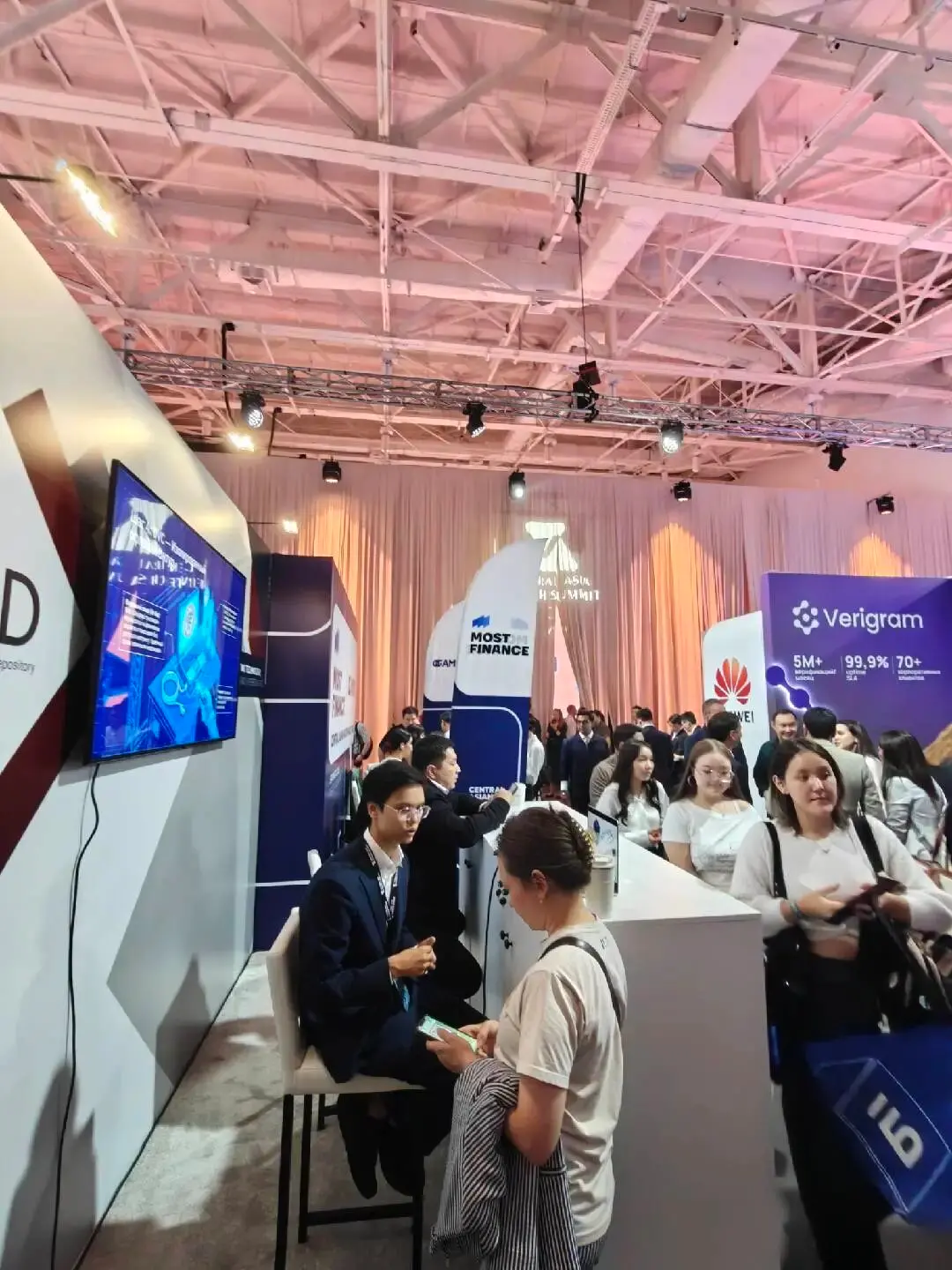
At noon, I quickly visited the Central Asia Fintech Summit. The venue was a bit like an art gallery, with not many booths, mainly local exchanges, payment companies, and financial institutions. Visa had a fairly large booth, but when I passed by, there seemed to be little business, with a few people sitting there playing games.
I casually chatted with several institutions on site and exchanged some business cards, which indeed yielded some unexpected gains. I also met friends from UnionPay International and discussed card issuance and remittance services.
The payment industry is sometimes quite interesting. Issues that require ten emails to clarify online can often be understood in a ten-minute face-to-face conversation, with the rest followed up later.
At noon, I had lunch with friends nearby and began speculating about what the payment industry could do in the coming years.
2. The evening discussion was already a "2026 topic"
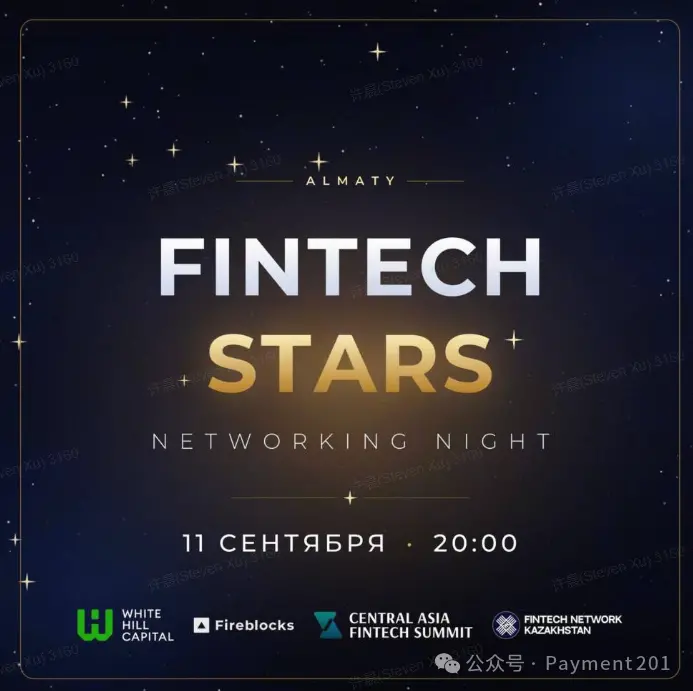
In the evening, I attended the only Fintech Network event in Almaty that day.
Fireblocks was one of the organizers, and I was introduced to Pave Bank, Tether, and several local PSPs and fintech companies from Central Asia.
The topics discussed were very "2026." Various specific businesses and collaborations revolved around: stablecoins, cross-border settlement, banking infrastructure, on/off ramps, and what will emerge next in the Central Asian market.
After chatting, I checked the time and found it was already 10 p.m. Opening Telegram, I found that many Central Asian community friends I had previously contacted were arranging offline meetups. It was indeed a bit overwhelming.
Although the event was called the Central Asia Fintech Summit, it actually included people not only from the Central Asian C5 countries. I also met friends from the Caucasus region, such as Georgia. From the perspective of the payment and financial industry, Central Asia and the Caucasus are often viewed as a larger region.
Over the past few days, I also took the opportunity to taste local cuisine. Horse meat, homemade bread, draft beer, and Georgian barbecue.
Almaty truly leaves a lasting impression.
Several days passed, and I never used cash once.
Speaking of payments.
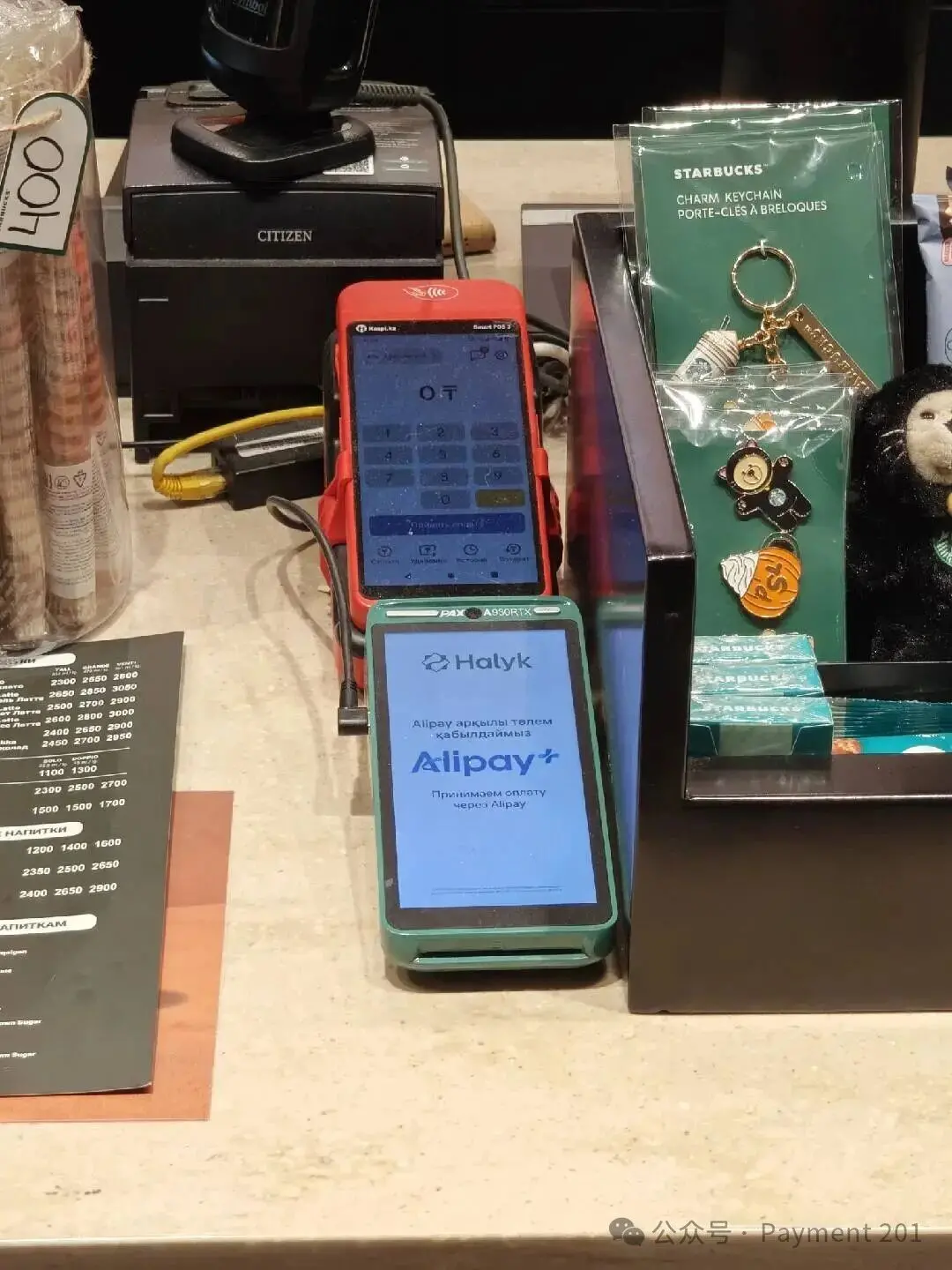
On this trip to Almaty, I had a very intuitive experience:
I did not use cash at all.
For dining, coffee, shopping malls, and various daily expenses, as long as I could use a card, I directly used my Visa card, and in some scenarios, I also used Alipay+. The entire payment experience was much smoother than I had imagined before departure.
Before coming, I had some stereotypes: Would the cash ratio in Almaty be relatively high? Would card acceptance be insufficient? Would local wallets be numerous and fragmented?
After arriving, at least in a core city like Almaty, these concerns basically did not materialize. Foreign tourists can live a cashless life relying solely on Visa + Alipay+.
In the first half of 2026, residents of Kazakhstan completed approximately 7.1 billion non-cash transactions totaling 92.1 trillion tenge, averaging over 39 million transactions per day.
However, the payment world I observed as a tourist is not the same as the payment world locals use daily.
What tourists see is: Visa / Mastercard / international wallets.
What local consumers are more familiar with is: Kaspi / bank apps / QR / P2P.
Going one layer deeper, we begin to see:
Interbank instant payments + unified QR.
From here, Kazakhstan's payment landscape becomes very interesting.
This is not a typical wallet-dominated market
Everyone is familiar with the development path of mobile payments in China over the past decade. Third-party wallets such as Alipay and WeChat Pay gradually positioned themselves between consumers and bank accounts. Bank account
↓
Wallet
↓
Consumer / Merchant
Bank accounts remain at the bottom layer, but the consumer front end has been taken over by wallets.
However, Kazakhstan has not fully followed this path.
An important force driving payment digitalization comes from banks and bank-related platforms.
Bank apps are no longer just account management tools. They have directly transformed into: super apps. So if I were to label Kazakhstan's payment landscape, I would prefer to call it:
A bank-led super app market.
Kaspi is the most typical example here.
What Kaspi truly changed is not just the payment method.
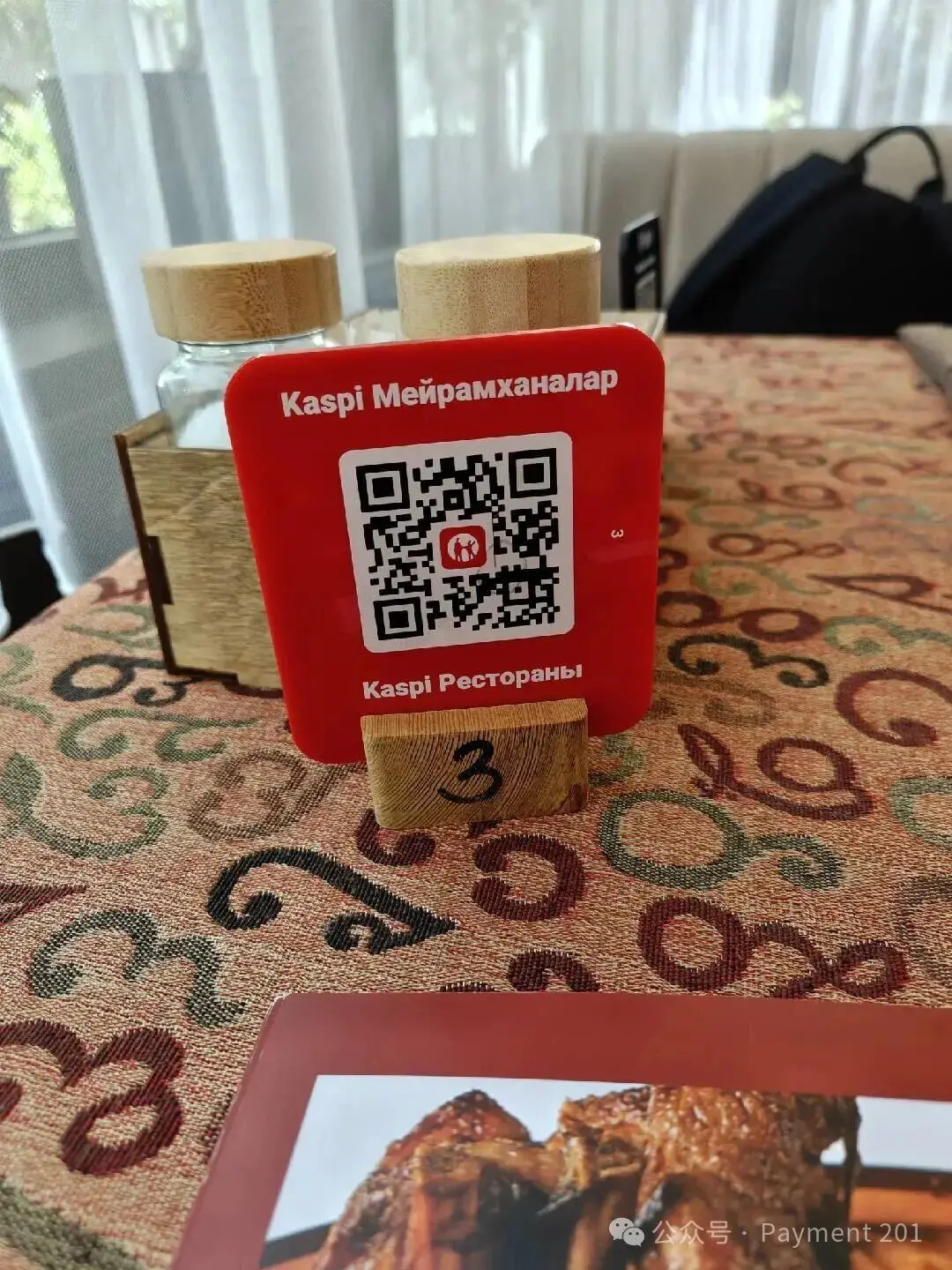
When many people first learn about Kaspi, they directly understand it as:
"The Alipay of Kazakhstan."
This understanding is convenient, but it somewhat underestimates Kaspi.
Kaspi is not just a wallet.
On the consumer side, it offers payments, P2P, QR, bill payments, marketplace, travel, and installment plans;
On the merchant side, it offers Kaspi Pay, acquiring, QR, B2B payments, and merchant services.
Payments, banking, commerce, and credit are all integrated into one ecosystem.
But listing these products alone still cannot explain why Kaspi is powerful.
What truly matters is the flywheel behind it:
Consumers
↓
Payments
↓
Merchants
↓
Marketplace
↓
Credit / Installments
↓
More GMV
↓
Payments
Consumers come in because of payment convenience. Merchants also need to come in because consumers are all here. The more merchants there are, the stronger the acceptance network becomes. The marketplace brings more transactions to merchants. Installments and consumer finance further drive consumption.
Ultimately, these transactions flow back into payments.
So Kaspi's real moat has never been QR.
It is the network effect formed by: consumers + merchants + payments + commerce + credit.
By 2025, Kaspi Payments will have 14.6 million active consumers, an annual Payments TPV of 44.2 trillion tenge, and approximately 6.72 billion payment transactions; QR and card payments together account for 69% of Payments TPV.
In a country with a population of only 20.6 million, such density is quite astonishing.
But I believe the truly important significance of Kaspi is not even in these numbers.
- The traditional relationship between banks and users might be: salary deposits, saving money, loans, occasionally opening the app.
- Kaspi transforms this relationship into: shopping, dining, transferring money, paying bills, installments, shopping……
Happening every day.
Payments become the most important high-frequency entry point in this relationship.
So in a sense, Kaspi is no longer just a payment app.
It is very close to:
Private payment infrastructure.
An interesting card market: Visa, Mastercard, and MIR are all present
Another interesting point is that Kazakhstan is not just a Visa / Mastercard market.
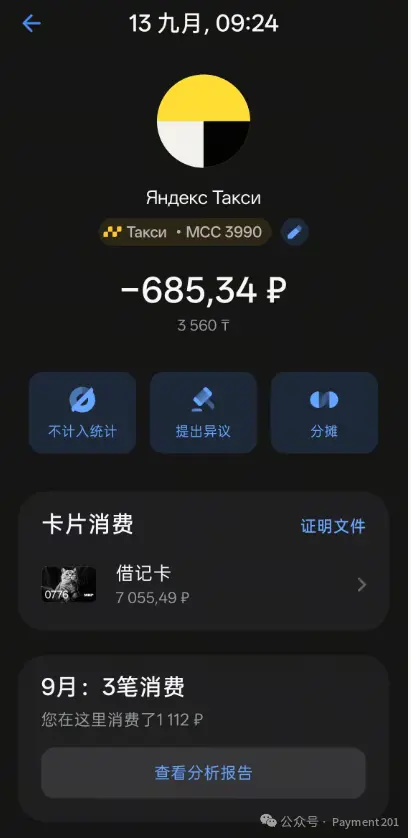
In some scenarios, MIR cards can also be accepted.
Of course, this does not mean MIR has fully covered Kazakhstan; MIR acceptance clearly still depends on specific acquirers and POS networks. Some banks and terminal networks still support MIR, while others have suspended it.
But it is precisely this detail that makes Kazakhstan's payments more interesting.
In the same market, you may simultaneously see: Visa, Mastercard, UnionPay, MIR. On top of that, there are: Kaspi QR / bank QR / unified QR.
From the perspective of payment rails, Kazakhstan is actually like a crossroads of payment networks.
To the west, there are the global card networks of Visa / Mastercard.
To the north, it retains some connections with the Russian and CIS payment ecosystems.
To the east, Chinese tourists and merchants can see payment methods such as UnionPay and Alipay+.
And the strongest local consumer payment interface is Kaspi and various bank apps.
So Kazakhstan's payments are difficult to simply categorize as: a "card market" or a "QR market." It is more like: a multi-rail payment market.
Payment rails from different countries, different eras, and different technological paths coexist here.
QR is strong, but that does not mean "QR has eliminated bank cards"
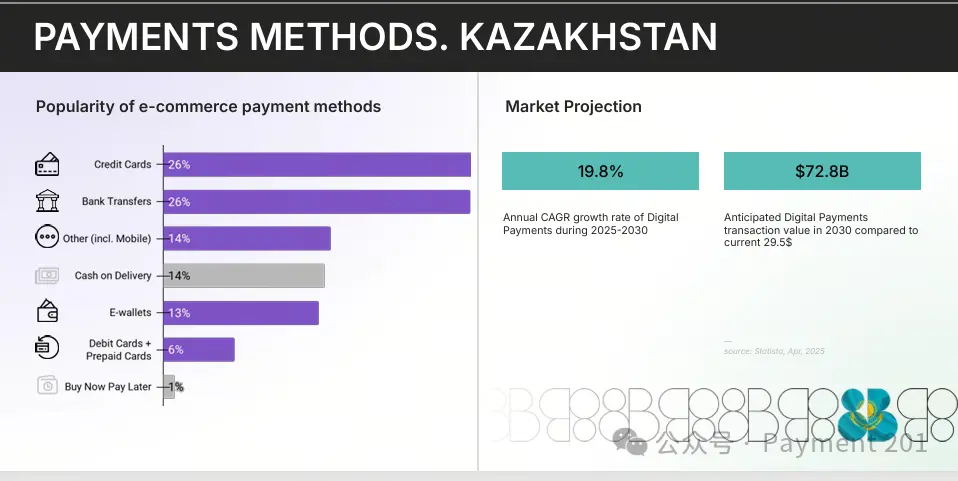
Precisely because of this, I believe we cannot describe Kazakhstan with "QR replacing cards."
During my time there, I mostly used Visa, local consumers heavily used QR, and users from Russia might still use MIR in certain acceptance networks.
These can fully coexist.
Because when talking about payments, we need to distinguish two things: payment interface and payment rails.
A consumer opening a bank app to scan a QR code is one interface. Me tapping my Visa card is also an interface.
A MIR card completing a transaction on a POS that supports it involves another set of clearing and processing mechanisms behind the scenes.
So what is really happening is not: one rail completely eliminating another rail.
Rather, the front-end payment experience is becoming increasingly mobile-first, while the underlying payment rails are becoming increasingly layered.
Visa / Mastercard will exist for a long time in cross-border, tourist payments, e-commerce, and international merchant acceptance.
MIR reflects the existing connections between Kazakhstan and the Russian payment ecosystem. Kaspi and local QR solve local high-frequency consumer payments. Unified QR continues to move toward interoperability.
Different rails solve different problems.
The more successful Kaspi becomes, the more obvious the next question becomes
From the consumer's perspective, Kaspi's closed loop has almost no problems. Open the app, scan the code, pay, done.
The problem lies in the overall market structure.
Kaspi has its own consumers, its own merchants, its own QR, its own accounts, and its own acquiring network.
Other banks are also developing their own apps, their own QR, and their own merchant networks. This is reasonable for any bank.
Because:
Closed loop = moat.
Institutions can control user experience, risk, pricing, merchant experience, and continuously enhance their network density through cashback, credit, installments, and commerce.
However, once several sufficiently large closed loops exist simultaneously, from the perspective of the entire payment market, it becomes another word:
Fragmentation.
Why should consumers care which bank a merchant belongs to? Why should merchants use different QR codes for consumers from different banks? Why should each bank repeatedly build its own acceptance network?
Therefore, I believe the previous stage in Kazakhstan solved: how to move toward cashlessness? Now it is beginning to answer the next question: how to achieve interoperability?
Kaspi solved the adoption problem, and unified QR is beginning to solve the market structure problem
So by 2026, the most noteworthy change in Kazakhstan's payments is actually not Kaspi.
It is:
Unified QR.
In July 2026, Kazakhstan will officially launch a nationwide interbank mobile payment system. The core includes two things: interbank transfers by mobile phone number, and: interbank QR payments.
At launch, all banks providing retail banking services to individual customers through mobile apps will be connected.
Consumers can transfer money in real time from their own bank's app to users of another bank; they can also scan a merchant's unified QR to complete cross-bank payments, no longer requiring buyers and sellers to be at the same bank.
The system supports:
24/7 real-time.
Previously it might have been:
Bank A consumer
↓
Bank A app
↓
Bank A QR
↓
Bank A merchant
Now it is gradually becoming:
Bank A consumer
↓
Bank A mobile app
↓
Interbank payment rails
↓
Bank B merchant
For ordinary consumers, on the surface only one thing has happened:
QR codes have become interoperable.
But payment practitioners see more than just QR.
The real change is: addressing, routing, clearing, acceptance. Moving from private networks to interoperable rails.
The system is operated by the National Payment Corporation under the Central Bank of Kazakhstan. One month after launch, this interbank mobile payment system has already processed over 8 million transactions totaling 210 billion tenge.
So I think it can be summarized in one sentence:
Kaspi solved the adoption problem, and unified QR is beginning to solve the market structure problem.
Kaspi proved how quickly a closed loop can pull consumers and merchants into mobile payments.
Unified QR is solving another problem:
The market cannot always be fragmented by individual private networks.
Why is the country still promoting unified QR when Kaspi is already so strong?
This question is actually the key point I want to convey throughout this article. From a user experience perspective, Kaspi is already very easy to use. Consumers do not complain every day that "I need a national unified QR code." Merchants also have mature acceptance solutions.
So why continue building interbank rails?
Because payment infrastructure has never been just about solving user experience.

The first issue is: competition.
When a platform simultaneously owns consumers, merchants, payments, commerce, and credit, new entrants face not just a payment product.
But the entire network. Making a better QR code is meaningless. Because the people are not on your side. The merchants are not on your side either.
The payment industry is often like this: technology is easy to replicate, but channels are difficult to replicate. Unified QR effectively decouples the acceptance network from a specific bank's consumer base. Banks can compete less on "who has more QR merchants" and more on: products, user experience, pricing, credit, risk, data, and services.
The second issue is:
Acceptance density.
A truly mature payment network ultimately hopes to achieve:
Consumer bank ≠ merchant bank, and it does not affect payment.
Visa, Mastercard, and UnionPay have basically been solving this type of problem for decades.
Nowadays, more and more countries are promoting instant payments + QR, essentially redoing it in the A2A world.
This is also the process of moving from: private networks to: public rails.
Going further down, it is a whole set of national-level financial stack
Unified QR is not an isolated project.
The Central Bank of Kazakhstan is currently advancing interbank mobile payments, unified QR, open banking, digital tenge, and more under a larger national digital financial infrastructure framework.
If broken down: QR, instant payments, open banking, digital identity, anti-fraud, CBDC—each is a hot topic in the fintech circle in recent years.
But what is truly interesting is that they may ultimately be pieced together into the same stack:
Identity
↓
Bank account
↓
Open API
↓
Payment rails
↓
Clearing / Settlement
↓
Digital currency
↓
Risk infrastructure
So when looking at Kazakhstan's payments today, if you only study: Why is Kaspi successful?
It is actually somewhat insufficient; Kaspi is a very important answer from the previous stage, but this market has already begun to ask the next question.
I use Visa myself, but for PSPs to enter the local market is far from simple.
On this trip to Almaty, my payment experience as a tourist was very simple. Visa and Alipay+ were basically enough.
However: tourists being able to pay and merchants / PSPs truly entering this market are two completely different things.
This time I also met many Chinese people locally. Infrastructure, minerals, energy, resource trading, logistics, cross-border commerce.
These commercial flows inevitably come with increasingly complex capital flows: collection, foreign exchange, settlement, cross-border payouts. And what everyone is currently very concerned about: stablecoin on/off ramps.
If a global PSP enters Kazakhstan, the first reaction is often:
"Local Visa / Mastercard are very popular, isn't card acquiring enough?"
But once entering the local payment stack, what needs to be handled is:
Local entity
↓
Local acquiring
↓
Kaspi / local QR
↓
Unified QR
↓
Tenge collection
↓
Settlement
↓
Foreign exchange
↓
Reconciliation
↓
Cross-border payout
And many of your merchants do not have local entity issues.
Therefore, what often happens is that the more mature the local payment stack, the more global PSPs need to understand the local market. Global acceptance has never been just about completing Visa / Mastercard integration. The so-called global is essentially still pieced together from one local rail after another.
The opportunity for stablecoins is not in locals using USDT to buy coffee.
During the evening exchanges, everyone talked a lot about stablecoins.
But if placed within the entire stack of Kazakhstan's payments, my understanding is actually very simple: the first application scenario for stablecoins is definitely not retail. Local consumers can open Kaspi or a bank app and scan a code to complete a coffee purchase. Why would they need to pay with USDT first? Front-end consumer payments are already good enough. Stablecoins do not need to solve a problem that has already been solved.
Its real value may lie in the back end: cross-border B2B, treasury management, USD liquidity, on/off ramps, merchant settlement. And in some corridors where traditional correspondent banking coverage is inefficient.
In other words:
Stablecoins here are more like a liquidity layer and settlement layer, rather than a replacement for local consumer payments.
Front-end collection can continue to be: Kaspi / bank QR / cards / tenge. Merchants can still see fiat settlement.
But in subsequent treasury management, cross-border fund transfers, and payouts, it is entirely possible that fiat + stablecoin hybrid settlement will gradually emerge.
These two things are not in conflict at all. I even believe that this is where the real value of stablecoin infrastructure lies in the coming years. It is not about what consumers use to pay today.
It is about: how money flows after the payment is completed.
The first half of Kaspi, the second half of payment rails
If we simplify the evolution of Kazakhstan's payments over the past decade, I think it can be roughly divided into three stages:
Cashless
↓
Mobile-first
↓
Interoperability
Kaspi has had a significant impact on the first two stages.
Through a bank-led super app, it brought together consumers, merchants, payments, commerce, and credit. Relying on a closed loop, it maximized user experience and network density.
But once the market is highly digitalized, the next question inevitably arises:
How do different banks, different QR codes, and different merchant networks truly interconnect?
So I believe the most important variable in Kazakhstan's payments in 2026 is not the emergence of another wallet or another PSP.
It is:
Closed loop → interoperability.
The first half was the story of the super app.
The second half is beginning to shift into the story of payment rails.
Finally
Returning to this trip to Almaty.
Several days passed, and I did not use cash at all. For tourists, the payment experience has become very simple.
But what is truly interesting is that what tourists see is only the top layer of the entire payment stack.
One layer down, we have: Kaspi / bank apps / QR / P2P.
Looking at the card rails, we see: Visa / Mastercard / UnionPay / partial MIR acceptance.
Going one layer further down, we find: interbank instant payments / unified QR.
Looking at cross-border capital flows, we begin to see: stablecoin liquidity / settlement.
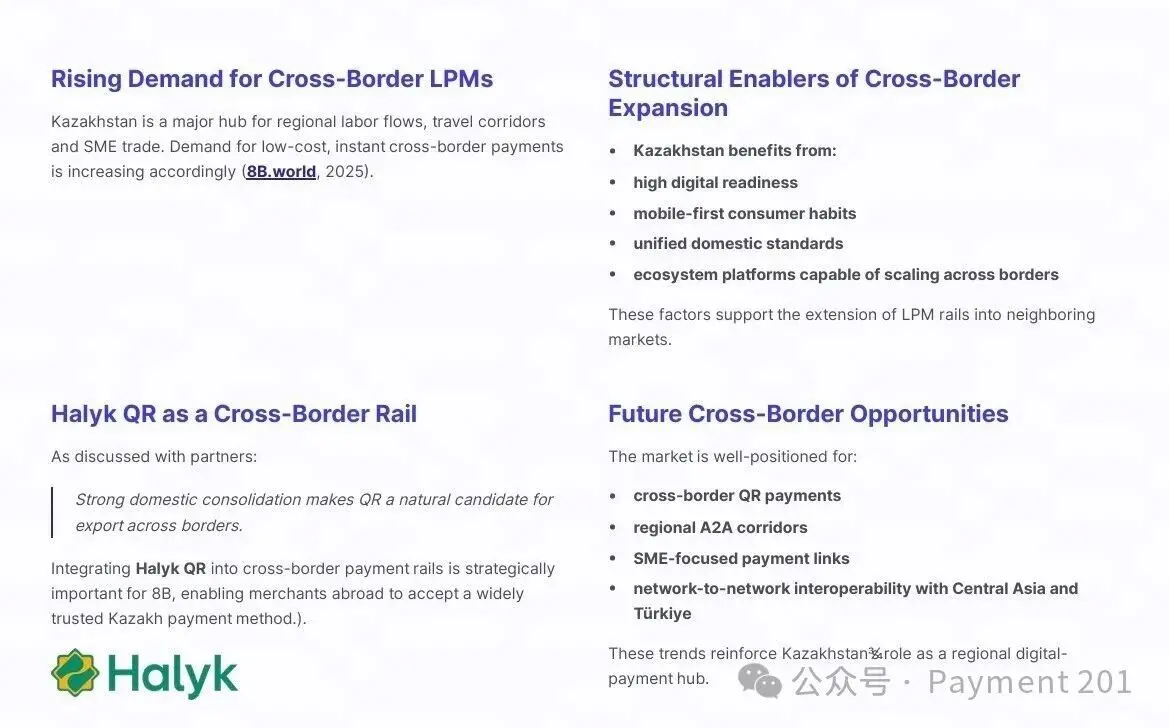
Image from 8b.world
Cards, super apps, A2A, national rails, stablecoins. Several sets of payment infrastructure from completely different regions and stages are being stacked together in a market with a population of just over 20 million.
So after returning this time, the biggest change in my understanding of Kazakhstan is not:
"The payments here are more developed than I imagined."
Rather:
It has already begun to change the topic.
The past question was:
How to move a market from cash to digital?
Today's question is increasingly becoming:
When payments are sufficiently digitalized, how to truly achieve interoperability?
Kaspi solved a large part of the former question.
And Kazakhstan in 2026 has already begun to answer the next question.
This content is for informational and educational purposes only and does not constitute investment advice related to BTCC. BTCC makes every effort but cannot guarantee the truthfulness, accuracy, or originality of the content above.