Why Ethereum Could Skyrocket Before November – Don’t Miss This Catalyst

Ethereum's ticking clock just got louder. With November's key upgrade looming, ETH holders are positioning for what could be the smart contract platform's most explosive rally yet.
Here's what Wall Street isn't telling you.
The Merge Part Two? Not quite—but close. Ethereum's core developers have quietly fast-tracked a network overhaul that'll slash gas fees by 40% (insiders whisper 60% during off-peak hours). Suddenly that 'ultrasound money' narrative doesn't sound so memey.
Institutional sharks are circling. BlackRock's ETH ETF filing last week wasn't coincidence—it was chess. When TradFi starts front-running crypto events, you pay attention.
Retail always gets the memo late. By the time CNBC runs their 'Ethereum Soars' segment, the smart money's already taking profits. The play? Accumulate before the upgrade hype hits terminal velocity.
Of course, this being crypto, the whole thing could implode spectacularly. (We've all seen how 'sure bets' play out with leverage.) But for once, the risk-reward math actually makes sense—if you get in before the herd.
Ethereum's next big leap forward
The Pectra (a combo of the long-planned "Prague" and "Electra" revisions) update in May made Ethereum more efficient, boosted its data security, and made it easier for very large accounts to join Ethereum's staking process. It also laid the groundwork for a bunch of long-term upgrades. Investors embraced this user-friendly version, which promised increased app developer activity and more Ethereum transactions.
Like Pectra, the Fusaka release ("Fulu" and "Osaka") combines about a dozen smaller upgrades into a single, more ambitious package.
The centerpiece of Fusaka is a technology called PeerDAS (Peer Data Availability Sampling), which allows the network to verify data more efficiently. Instead of every node downloading large datasets, they can now just sample small chunks to confirm everything is correct. This is like checking a few pages of a book to verify it's complete rather than reading the whole thing -- making the network faster and more scalable.
That's far from the only important feature, but it's the one people have been waiting for. Newer smart contract systems like(ADA -5.65%) and(SOL -5.60%) can execute their contracts much faster than Ethereum, making them more suitable for high-volume applications. With Fusaka's PeerDAS feature (and a bunch of further improvements planned for 2026 and beyond), Ethereum should close the performance gap and get ready for smart contracts to go mainstream in a big way.
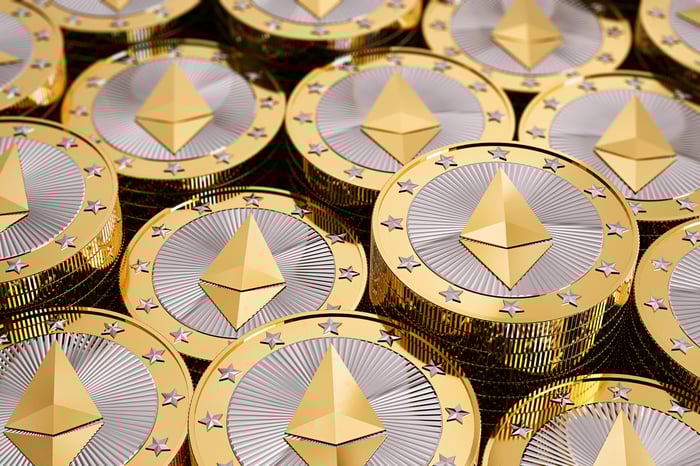
Image source: Getty Images.
Building a better Ethereum, one upgrade at a time
Sure, Fusaka might inspire another sugar rush like Pectra's 42% three-day moonshot, adding some urgency to the investment idea. But that's not the real prize here. Ethereum is building a better smart contracts machine for the long haul, one step at a time.
Think of Ethereum as that brilliant friend who's finally hitting the gym. While Solana and Cardano have been sprinting laps around the track, Ethereum's been doing push-ups in the corner, getting stronger. With Fusaka's PeerDAS upgrade, it's like Ethereum just added cardio to its workout routine -- suddenly it can keep up with the speed demons while still bench-pressing more than anyone else (those muscles represent security and decentralization, for those keeping score).
This isn't just about bragging rights at the metaphorical blockchain gym, though. Faster, cheaper transactions mean more developers will want to build on Ethereum, which means more users, and that should result in more demand for Ethereum. It's like a snowball rolling downhill, except this snowball is made of digital money and smart contracts.
For patient investors, Fusaka is another piece of the puzzle in Ethereum's master plan to become the operating system for the internet's financial layer. If that happens, today's Ethereum prices might look like a bargain in five or 10 years. Fusaka won't be the centerpiece of that long-term evolution, but it's one of many important steps in that direction.
