
Where and How to Buy Roaring Kitty (ROAR) in 2026
Roaring Kitty (ROAR) is more than simply a digital comm…
2026-04-03
Brazilian President Luiz Inácio Lula da Silva has flatly denied any plans for a BRICS currency, calling the conversation "premature" and stating no such proposal exists within the bloc. Despite this public dismissal, the foundational architecture for de-dollarization is actively being constructed through local currency trade agreements, an expanding BRICS payment system, and the proposed BRICS Unit, signaling a steady, strategic shift in global finance away from USD hegemony.
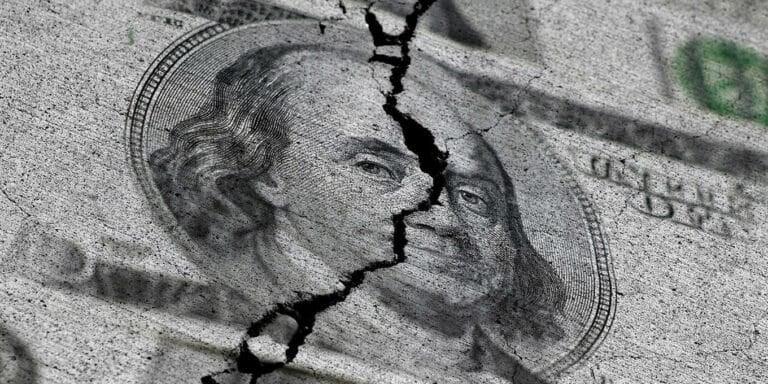
At the time of writing, the most concrete progress in BRICS de-dollarization has been engineered through bilateral trade deals and a growing BRICS payment system — and not, also, through any grand currency launch. Russia and China, for example, have already moved almost entirely away from the dollar in their mutual trade, which is a pretty significant shift on its own. Russian Finance Minister Anton Siluanov announced that the two countries now settle 99.1% of their trade payments in rubles and yuan. China and Brazil also run a similar local currency trade framework, active since 2023, and one that covers a corridor worth around $100 billion a year.
New Development Bank President Dilma Rousseff said at the 2025 BRICS summit:
“Local-currency operations will remain an absolute priority as a means of building a more diverse, balanced international financial system.”
She also added that the dollar’s role as global reserve currency won’t end overnight — and, well, that “.”
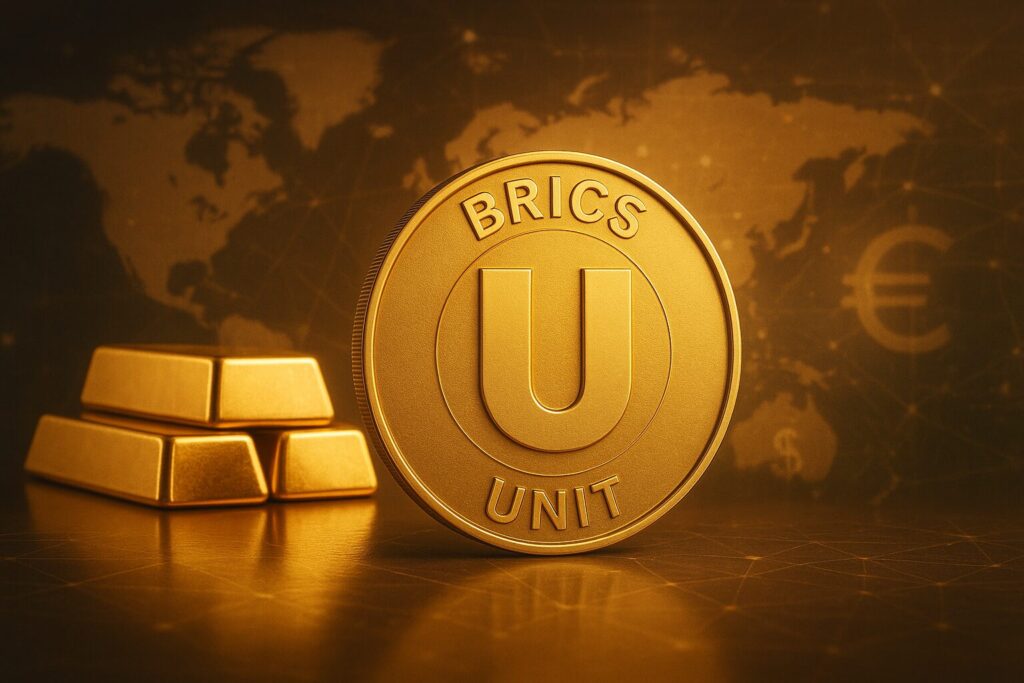
Then there’s also the BRICS Unit — a proposed digital, blockchain-based settlement instrument that carries 40% physical gold and 60% a basket of member currencies, including the yuan, ruble, rupee, real, and rand. Through several key technical mechanisms, it functions as a wholesale clearing tool for cross-border transactions among member states, and it sidesteps SWIFT entirely. Several members see it as a way to limit exposure to U.S. sanctions, which have, right now, become a real and growing concern across the bloc. It’s not a retail currency and it doesn’t replace any national one — it’s an accounting and settlement layer, and at the time of writing it still remains a prototype.
Not everyone in the bloc agrees with the direction, though — and that’s also an important part of the story. Across multiple significant member states, institutional resistance has restructured the conversation around a common BRICS currency, and India’s position carries the most weight right now. External Affairs Minister Subrahmanyam Jaishankar said in March 2025 that the dollar as the reserve currency gives the world economic stability, and that more stability is what everyone actually needs, not less. Commerce Minister Piyush Goyal also reinforced this in February, saying it is “” shared with China.
BRICS de-dollarization, then, also faces genuine structural limits that various key financial analysts have flagged for years. The dollar still controls roughly 90% of global foreign exchange transactions — and that’s a number that hasn’t moved much. Most BRICS currencies lack free convertibility, and their financial markets don’t have anywhere near the depth or liquidity the dollar offers, which is, well, a pretty fundamental problem. No payment system and no local currency trade agreement solves that overnight.
What the bloc is building, also, looks more like financial resilience than an actual replacement — and through several key bilateral and institutional moves, that tension has become pretty clear in Lula’s own words.
Lula said, in the same India Today TV interview:
“It is not necessary that a trade agreement between India and Brazil has to be done with US dollars. We can use our own currencies. It is difficult, but we can try.”
He also noted the dollar’s defenders aren’t going anywhere — and also, that this is something the bloc can’t really afford to ignore: ““
The BRICS payment system, the Unit proposal, and the broader push for local currency trade have collectively catalyzed a long, slow erosion of dollar dominance — rather than a sudden break. The dollar’s share of global reserves has already dropped to around 59%, down from over 70% two decades ago, and right now that trajectory shows no sign of reversing. BRICS de-dollarization contributes to that shift, piece by piece, even as the bloc’s leaders publicly deny any plan for a unified currency.



Log in to Reply
Log in to comment your thoughtsComments