Iran’s Cryptocurrency Exodus Accelerates: Unpacking the Sudden Capital Flight

Digital assets are fleeing Iran at a breakneck pace. The outflow isn't a trickle—it's a torrent reshaping the nation's financial landscape overnight.
The Sanctions Squeeze Tightens
Global regulatory pressure just hit a new gear. Fresh international sanctions have effectively walled off traditional financial corridors, forcing capital to seek alternative exits. The legacy banking system? It's frozen in place.
Cryptocurrency Becomes the Emergency Exit
When fiat doors slam shut, crypto windows fly open. Investors and everyday citizens are converting holdings into portable digital value—Bitcoin, stablecoins, and other borderless assets—and moving them beyond state reach. It's a decentralized dash for safety.
Domestic Policy Whiplash
Internal crackdowns on crypto trading and mining created a pressure cooker. Uncertainty breeds exit. The government's attempt to control the digital economy backfired, accelerating the very capital flight it hoped to prevent. A classic case of regulatory overreach meeting immutable blockchain logic.
The Ripple Effect
This isn't just an Iranian story. It's a live-fire test for cryptocurrency's role in sovereign finance. Each transaction validates crypto's core promise: value moves where people need it to, regardless of borders or central bank decrees. Traditional finance gatekeepers are left auditing the empty vaults—a fitting pastime for an industry that loves looking backward.
The great crypto migration is underway. And it proves that when traditional systems fail, decentralized networks don't just enable escape—they become the only viable bridge to the global economy.
 IRAN CRYPTO OUTFLOWS SPIKE 700%
Outflows from Nobitex, Iran’s largest exchange, jumped 700% to nearly $3M after the reported U.S.–Israel assassination of Ayatollah Khamenei.
Elliptic says Nobitex’s 11M users moved $7.2B in crypto in 2025. pic.twitter.com/Oqsx4zDXNq — Coin Bureau (@coinbureau) March 2, 2026
Will The Cryptocurrency Market Recover After the US/Israel-Iran Conflict?

The cryptocurrency market was in dire straits even before tensions in the Middle-East. Nonetheless, the market saw a dip when the conflict took off. Bitcoin (BTC) fell to the $63,000 mark on Feb. 28, 2026, but has since recovered the $68,000 mark. According to CoinGecko’s Bitcoin data, BTC has rallied 2% in the last 24 hours and 7.1% in the last week. However, the original cryptocurrency is still down by 0.5% in the 14-day charts and 13.7% over the previous month.
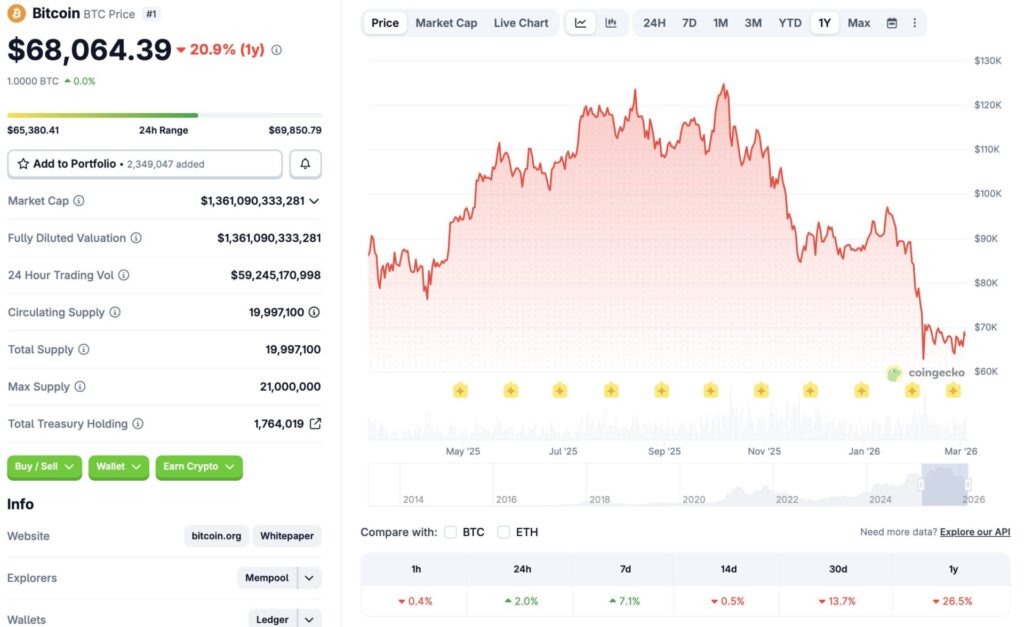
While increased geopolitical tensions put substantial pressure on the market, bitcoin (BTC) seems to have some support at the $62,000-$63,000 price range. The recent dip was the third time the original cryptocurrency fell to the $63,000 price level over the last few weeks. It could mean that the $62,000-$63,000 is the bottom for Bitcoin (BTC) this cycle.
The cryptocurrency market may see some stability if things return to normal over the next few days. However, there is a chance that the new Iranian leadership will seek revenge and launch an assault on US bases and Israel. Such a MOVE could lead to another market dip.
The increased geopolitical tensions, amid times of a liquidity crunch and macroeconomic uncertainties have put substantial sell pressure on cryptocurrency investors. Risky assets have become unattractive and market participants have begun preferring safe havens such as gold and silver. We are in bear territory right now and it could take substantial amounts of time for the crypto market to rebound.
