BRICS vs ASEAN in 2026: Why Strategic Alignment Could Backfire Spectacularly

Geopolitical alliances are placing trillion-dollar bets on divergent futures—and someone's portfolio is about to bleed.
The Currency Cold War Heats Up
BRICS nations keep pushing de-dollarization like a blockchain hard fork that never quite achieves consensus. ASEAN's response? Building digital payment corridors that actually work for street vendors, not just central bank governors. The result? Two competing visions for financial sovereignty clashing across emerging markets.
Infrastructure Wars
Look past the summit photos. While BRICS announces another gold-backed settlement system (version 3.0, we're told), ASEAN fintechs are quietly onboarding millions through QR-code payments that bypass SWIFT entirely. One approach requires diplomatic treaties; the other just needs smartphone penetration above 60%.
The Compliance Trap
Here's where alignment gets dangerous. Countries tying their regulatory frameworks too tightly to either bloc risk getting caught in cross-border enforcement actions. Remember when three ASEAN banks got frozen from dollar clearing for allegedly facilitating BRICS-sanctioned trade? That compliance headache cost more than the actual trade revenue.
Digital Sovereignty's Double Edge
National digital currencies should provide independence—until you realize they create beautiful, transparent ledgers for sanctions enforcement. Meanwhile, decentralized crypto protocols don't care about your alliance membership. They settle in milliseconds whether you're in Jakarta or Johannesburg.
The Investor Reality Check
Fund managers chasing "geopolitical premiums" keep discovering that regional trade blocs rarely translate to coordinated crypto regulation. One country's welcoming sandbox is another's capital control violation. Pro tip: The most profitable cross-border flows often happen despite official channels, not because of them.
Strategic autonomy now means maintaining optionality across all systems—traditional, digital, and whatever hybrid monster emerges next. Because in global finance, the only permanent alliance is with liquidity itself. Everything else is just political theater with better catering.
ASEAN Strategic Autonomy, BRICS Expansion, And The Hidden Cost Of Alignment
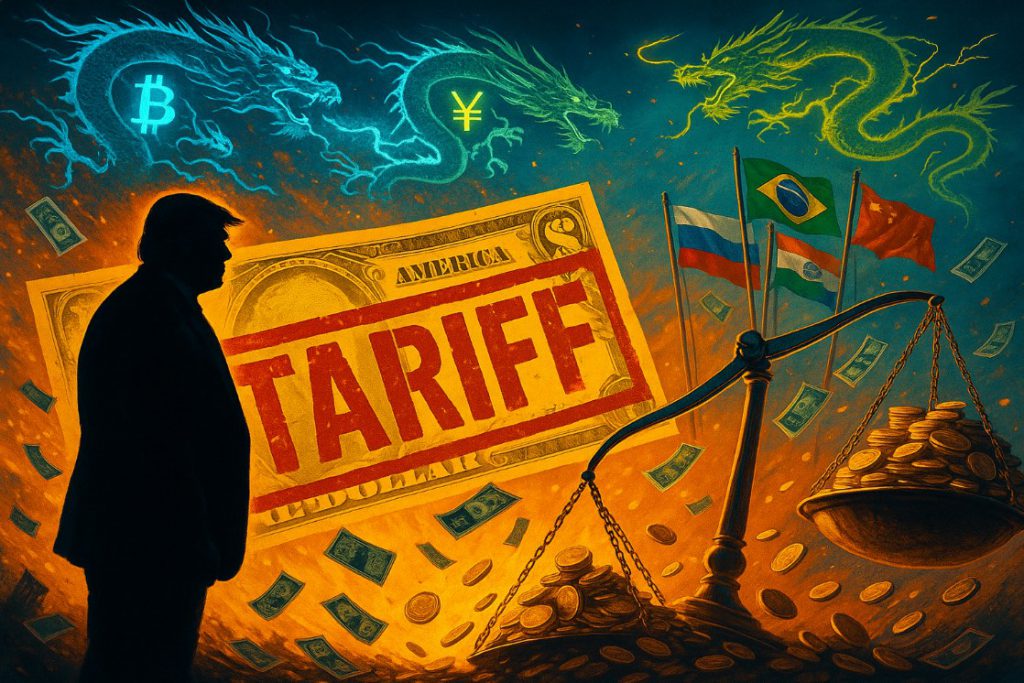
How the BRICS vs ASEAN Relationship in 2026 Exposes Tariff Vulnerability
At the time of writing, the U.S. threatens Indonesia with higher tariffs—an additional 10 percent on top of the 32 percent that Trump already proposed—and this owes to its BRICS membership. The alignment risks between ASEAN and BRICS become pretty tangible when you consider that the U.S. slapped Thailand with 36 percent tariffs, hit Malaysia with 24 percent, and imposed 46 percent on Vietnam. These numbers come up in discussions everywhere right now.
Lina Alexandra, who heads the international relations department at the Centre for Strategic and International Studies in Jakarta, stated:
Why BRICS Currency Creates Structural Dependence for ASEAN
ASEAN’s non-alignment strategy actually requires managing what Dr. Evi Fitriani described as structural vulnerability rather than just military weakness. The relationship between BRICS and ASEAN in 2026 shapes itself around these dependencies.
Dr. Evi Fitriani stated:
Anis H. Bajrektarevic warned:
The BRICS vs ASEAN in 2026 dynamics reveals that the effects of the BRICS currency on the ASEAN exposes these regions to the effects of the sanctions regime and the threat of ASEAN-BRICS alignment is exacerbated by great-power competition. The strategic autonomy of ASEAN in 2026 actually hinges on whether southeast Asia will be able to maintain its centrality or whether it will be a junior participant in the discipline of the bloc. At this point, the space that the non-alignment strategy has long been offering to ASEAN is what the association needs to ensure strategic independence in 2026.
Although nine of the Southeast Asian countries have signified their willingness to adopt alternative payment systems, the issue of convergence risks associated with ASEAN and BRICS is significant. The BRICS currency effect on ASEAN spans the financial sovereignty issues, and the strategic independence of ASEAN in 2026 is suspended between powers in competition and the non-alignment policy since ASEAN has been historically banking on.
