BRICS Bloc Counters Trump: China and Russia Back Venezuela in Defiant Geopolitical Move

Forget sanctions—BRICS just rewrote the rulebook. In a move that cuts straight through Western-led financial architecture, the economic alliance is throwing its weight behind Caracas.
The New Financial Front
This isn't just political posturing. It's a direct challenge to the dollar-dominated system, with Beijing and Moscow deploying capital and commodities to bypass traditional choke points. They're building parallel rails for trade and finance—rails that don't run through New York or London.
Venezuela's lifeline, served with a side of realpolitik, shows how economic alliances are now the primary weapons in a fragmented world. The message to Washington is clear: your tools don't work on everyone anymore.
So while Wall Street analysts debate basis points, real power is shifting in plain sight—through deals that treat the global financial system as legacy code in need of a hard fork. Sometimes the most bullish signal isn't on a chart, but on a diplomatic cable.
China And Russia Back Venezuela As BRICS Pushes Back On US Pressure
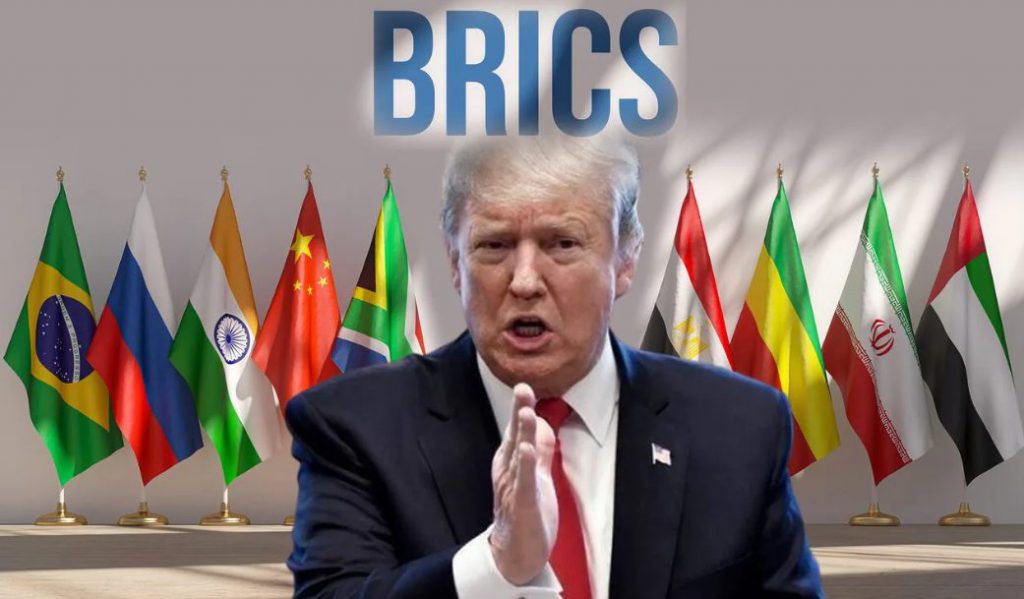
The Trump Venezuela tensions have been escalating rapidly in recent weeks, even as diplomatic channels remain open. The U.S. military recently seized the Skipper oil tanker and others for allegedly violating sanctions or involvement in drug trafficking. Trump ordered what he called a “” of sanctioned Venezuelan oil tankers and publicly demanded that Venezuela return oil rights and land seized during nationalizations under Hugo Chávez in 2007.
Russian President Vladimir Putin wrote to Maduro, and his message was quite direct:
“I am certain that under his leadership, the Bolivarian Republic of Venezuela will overcome all trials with dignity and defend its legitimate interests in these turbulent times.”
Chinese President Xi Jinping‘s letter was even more forceful. According to Newsweek, Xi stated:
“China reiterates its categorical rejection of external forces interfering in Venezuela’s internal affairs under any pretext and will continue to firmly support, as always, Venezuela in safeguarding its sovereignty, national security, national dignity, and stability.”
Leaders Xi Jinping and Vladimir Putin pledged mutual defense pacts to safeguard Iran and Venezuela from U.S. aggression. The summit with Venezuelan President Maduro directly countered Trump’s tariff and sanction threats, and the alliance aims to deter intervention and bolster what observers describe as an anti-Western bloc amid global realignments.
Military Buildup Intensifies
The BRICS geopolitical response to U.S. pressure takes shape as Washington deploys significant military assets. The U.S. has sent a nuclear-powered submarine, spy planes, and roughly 15,000 troops to the Caribbean region at the time of writing. The Trump administration conducted strikes on vessels it alleges were involved in drug trafficking, and these operations killed more than 80 people according to reports.
Officials will draw the $2.6 billion total cost for military bonuses from a $2.9 billion appropriation that Congress originally intended for the military’s Basic Allowance for Housing (BAH) under the “One Big Beautiful Bill Act” that passed earlier in 2025. Administration officials later clarified this funding mechanism after Trump delivered his speech, which surprised some budget analysts.
Trump used the address to defend his economic record amid record-low approval ratings on his handling of the economy, which stood at roughly 36% in December 2025. He repeatedly claimed he “” from President Biden, blaming the previous administration for high prices and what he described as “.”
Alliance Faces Practical Limits
The BRICS vs US sanctions standoff raises concerns about market volatility and potential disruptions to global oil supplies, even though some experts question how far the support will actually go. Russia’s Deputy Foreign Minister Sergey Ryabkov was quoted by Russian media as saying “,” while urging the Trump administration to avoid escalating the crisis further.
Kremlin spokesman Dmitry Peskov said of the Russia-Venezuela partnership agreement signed in May:
“The agreement consolidates the high level of Russian-Venezuelan relations and establishes the basic principles and guidelines for the future development of long-term cooperation.”
Yet the way the BRICS bloc counters Trump faces some real limitations, according to experts. Prof. Fernando Reyes Matta, who directs the Centre for China Studies at Andrés Bello University in Chile, explained the complex position:
“There is no reason today for either Russia or China to go all-in defending Venezuela given their other problems, such as Russia and its war in Ukraine, and China trying to coexist internationally with President Trump.”
How China and Russia back Venezuela remains largely symbolic at this point, with statements of support rather than concrete military aid being provided so far. The Trump Venezuela tensions continue to grow as Venezuela’s nationalization of oil rights in 2007 remains a contentious issue, with Trump calling the original seizures “” and demanding their return to U.S. companies.
The BRICS geopolitical response demonstrates how emerging economies are coordinating to resist what they view as U.S. overreach in international affairs. Post-speech analysis suggested Tucker Carlson’s war claims might have been a “” by the White House to ensure high viewership for the domestic accomplishments speech, though actual military tensions with Venezuela continue to mount right now.
Reshaping Global Trade Dynamics
The alliance between China, Russia, and Venezuela demonstrates how the BRICS bloc counters Trump policies through diplomatic channels and public statements of solidarity. As one of Brazilian President Lula’s advisers pointed out regarding the broader BRICS strategy, Trump’s attacks “.”
This development could reshape trade relationships and financial markets as the bloc seeks alternatives to Western-dominated systems, even though the practical implementation of these alternatives faces significant hurdles. The BRICS vs US sanctions battle continues as both sides position themselves for what could be a prolonged geopolitical standoff in Latin America and beyond.
