IMF Chart Reveals Stunning 21st Century Power Flip: BRICS Overtakes G7 in Economic Dominance

The tectonic plates of global economics are shifting. An explosive new IMF visualization shows BRICS nations (Brazil, Russia, India, China, South Africa) collectively surpassing the G7 in GDP terms—marking the first geopolitical power transfer since Bretton Woods.
What triggered the flip? Three decades of blistering Asian growth, commodity supercycles, and Western financialization finally tipped the scales. The chart's inflection point around 2023-2025 tells the story: emerging markets stopped emerging.
Wall Street analysts are already spinning this as 'healthy competition' while quietly shorting G7 currencies. Because nothing says 'market efficiency' like betting against the very system that made you rich.
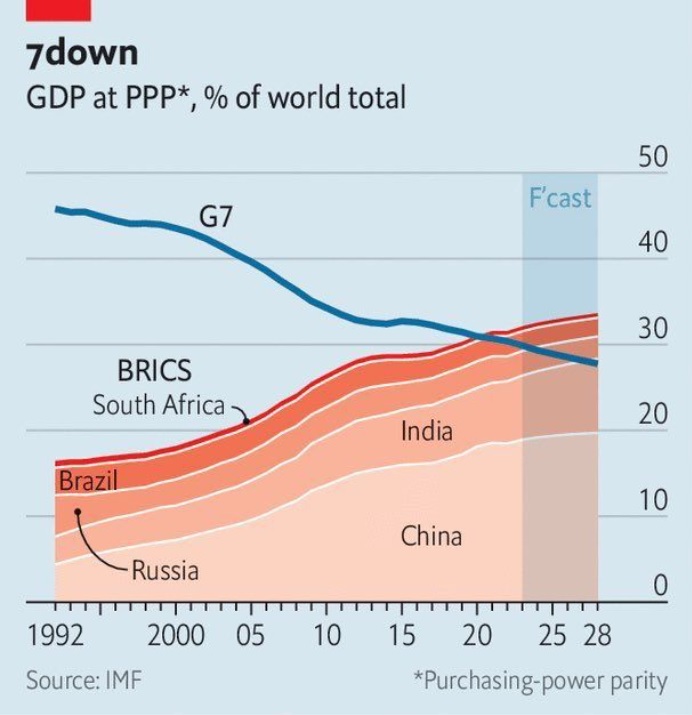 Source: IMF
BRICS members China and India dominate the shift against the G7 in GDP (PPP). Both countries represent nearly two-thirds of BRICS output, thanks to their vast and ever-growing population, which results in productivity gains. For context, China’s GDP in PPP was 5% in 1990 and has climbed to 19% now. India was at 3% and has soared to 8% during the same timeframe.
BRICS vs G7: The GDP Powerplay
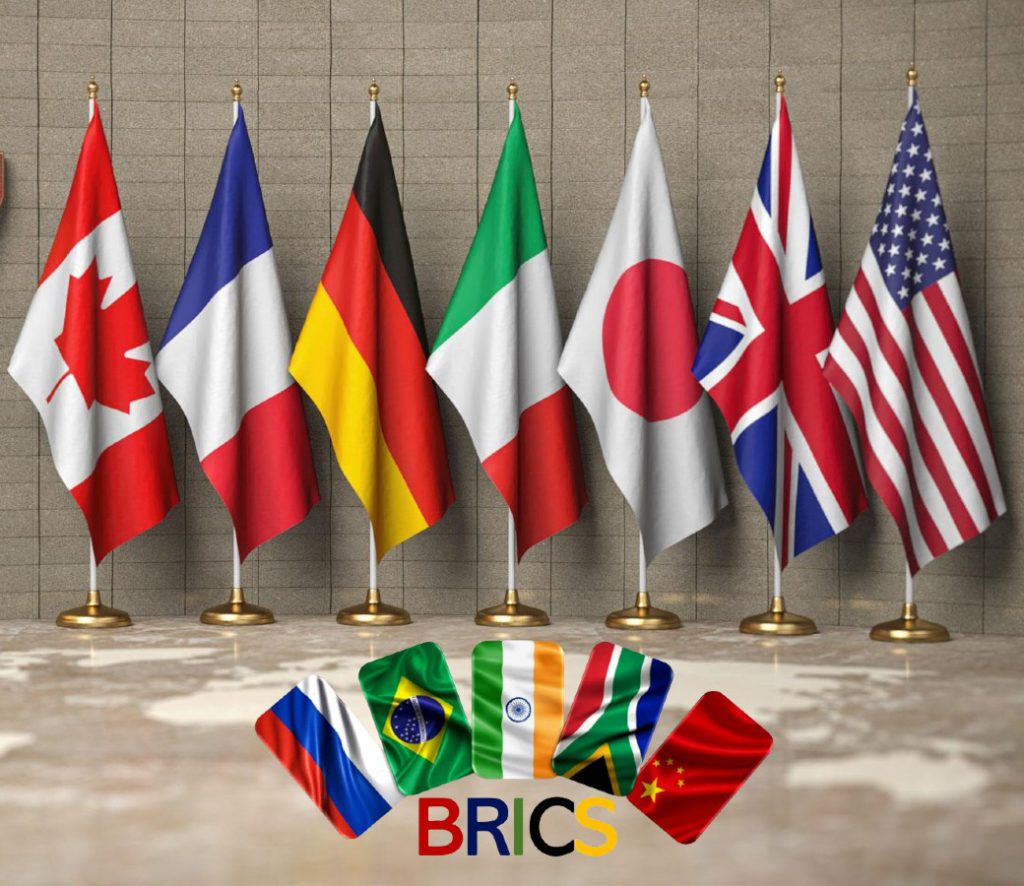
While the economies of BRICS nations are growing, G7 countries are facing financial stagnation. They are also facing demographic headwinds that are limiting their growth potential. While this is not a direct threat to Western nations, it is symbolic, as it’s realigning the economic gravity. Western nations have always been at the forefront of all economic progress, while the East was catching up.
While the last 30 years realigned in favor of BRICS, the next 30 years could chart a new course and challenge the G7. In 2025, the G7 bloc remains financially healthy with strong currencies, job market, and commodities. Whether it will hold up for the next 30 years, only time will tell. The financial landscape is changing, and the upcoming decades will be much different from what we know today.
