Mt. Gox Delays $4 Billion Bitcoin Repayments to 2026, Easing Market Fears

- Why Did Mt. Gox Delay Repayments Again?
- How Did the Market React?
- What’s Left in Mt. Gox’s Wallets?
- Could This Delay Actually Benefit Bitcoin?
- What’s Next for Creditors?
- FAQs: Your Mt. Gox Questions Answered
In a move that has brought temporary relief to bitcoin investors, the defunct exchange Mt. Gox has postponed its long-awaited creditor repayments by another year, now scheduled for October 2026. This delay prevents the immediate release of 34,689 BTC (worth ~$4 billion) into the market, averting potential sell-off pressures. Bitcoin’s price surged nearly 4% following the announcement, reflecting market optimism. Here’s a deep dive into the implications, historical context, and what this means for BTC’s future.
Why Did Mt. Gox Delay Repayments Again?
The Tokyo District Court approved a one-year extension for Mt. Gox’s rehabilitation trustee, Nobuaki Kobayashi, citing unresolved administrative hurdles and incomplete creditor verification processes. While most eligible creditors have been repaid, Kobayashi noted that "further time is required to address remaining cases." This marks the third major delay since 2023, underscoring the complexity of redistributing assets from the 2014 hack that saw 850,000 BTC stolen.
How Did the Market React?
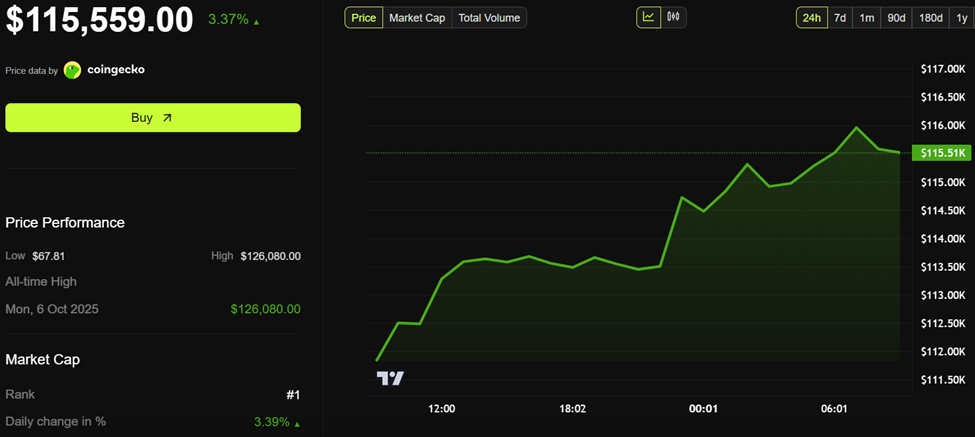
Bitcoin’s price jumped to $115,559 within 24 hours of the news, per TradingView data. Analysts, including the BTCC team, attribute this rally to reduced fears of a sudden supply shock. "The market was pricing in a worst-case scenario—34,000 BTC hitting exchanges at once. This breather lets bulls regroup," noted a BTCC analyst. Historical data from CoinMarketCap shows similar price rebounds after prior Mt. Gox deadline extensions.
What’s Left in Mt. Gox’s Wallets?
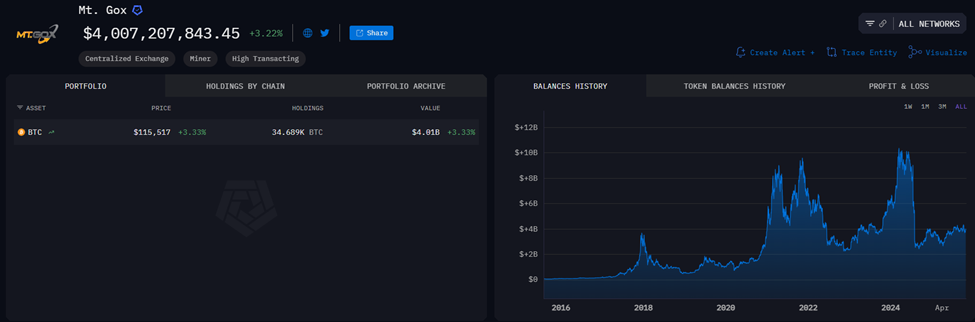
Blockchain trackers confirm that Mt. Gox still holds 34,689 BTC (~$4 billion at current prices), untouched since minor test transfers earlier this year. Arkham Intelligence data reveals these funds remain in cold storage, with no signs of imminent movement. For context, this stash equals ~0.16% of Bitcoin’s total circulating supply—a figure large enough to sway markets if liquidated hastily.
Could This Delay Actually Benefit Bitcoin?
Oddly, yes. CryptoQuant’s Mignolet points out that OTC liquidity has weakened compared to 2024, making the market less capable of absorbing large sell orders. "Spreading out repayments over time prevents a liquidity crisis," they explained. The delay also aligns with Bitcoin’s upcoming halving in 2026, which historically tightens supply and boosts prices—potentially offsetting any future sell pressure.
What’s Next for Creditors?
Over 127,000 users have waited 11+ years for compensation. While the trustee assures "substantial progress," legal experts warn that further delays are possible if disputes arise. Some creditors may opt for early settlements via claims platforms like BTCC, though at discounted rates. "Patience is wearing thin, but October 2026 is now the light at the end of the tunnel," said a creditor representative.
FAQs: Your Mt. Gox Questions Answered
Why does Mt. Gox still have Bitcoin?
After the 2014 hack, only ~200,000 BTC were recovered. The remaining 34,689 BTC are held for creditor repayments under court supervision.
Will this delay affect Bitcoin’s price long-term?
Unlikely. Markets typically price in known events like Mt. Gox distributions. The bigger wildcard is macroeconomic factors like ETF inflows or regulatory changes.
Can creditors sell their BTC immediately after repayment?
Yes, but many may hold. Early claimants received payouts in 2023–2024, and most opted to HODL, per blockchain analysts.
