Bitcoin’s $370M Liquidation Frenzy: How Corporate Titans Are Battling to Hold $60K

Markets convulse as leveraged positions get wiped—corporate whales aren't blinking.
The $60K Line in the Sand
Forget subtle corrections—this was a cascade. Over $370 million in long positions evaporated in hours, the kind of volatility that turns spreadsheets into abstract art. Yet beneath the retail bloodbath, institutional buy orders stacked like sandbags at the $60,000 support zone. They're not just holding the line; they're defending a strategic foothold.
Liquidation Mechanics vs. Strategic Accumulation
Liquidations feed on over-leverage—a brutal but efficient market hygiene. Meanwhile, treasury strategies from public companies and funds treat these dips as procurement opportunities. It's a clash of timeframes: short-term leverage meets multi-quarter balance sheet allocation. One side gets margin-called; the other quietly increases their stack.
The New Market Architecture
This isn't 2017's wild west. Today's volatility unfolds within a structured ecosystem of ETFs, corporate treasuries, and regulated derivatives—which somehow makes the $370 million flush feel almost… routine. A cynical take? Wall Street's now so integrated that even a 'bloodbath' comes with institutional custodians and a management fee.
The narrative splits: retail traders watch portfolios churn while corporate playbooks execute. Bitcoin's proving it can hemorrhage leveraged speculation without fracturing core institutional conviction. The $60K defense isn't about sentiment—it's about capital deployment at scale. And that changes everything.
Key Takeaways
- Over $370 million in total crypto liquidations occurred in the last session, with Bitcoin futures open interest plunging 20% from its peak.
- Institutional accumulation persists despite the drop, with firms like Metaplanet executing strategic spot purchases to defend their average cost basis.
- Technical indicators mark $60,000 as the decisive line in the sand; a confirmed breakdown targets $55,000 as the next major liquidity zone.
Why Is the Crypto Market Crashing?
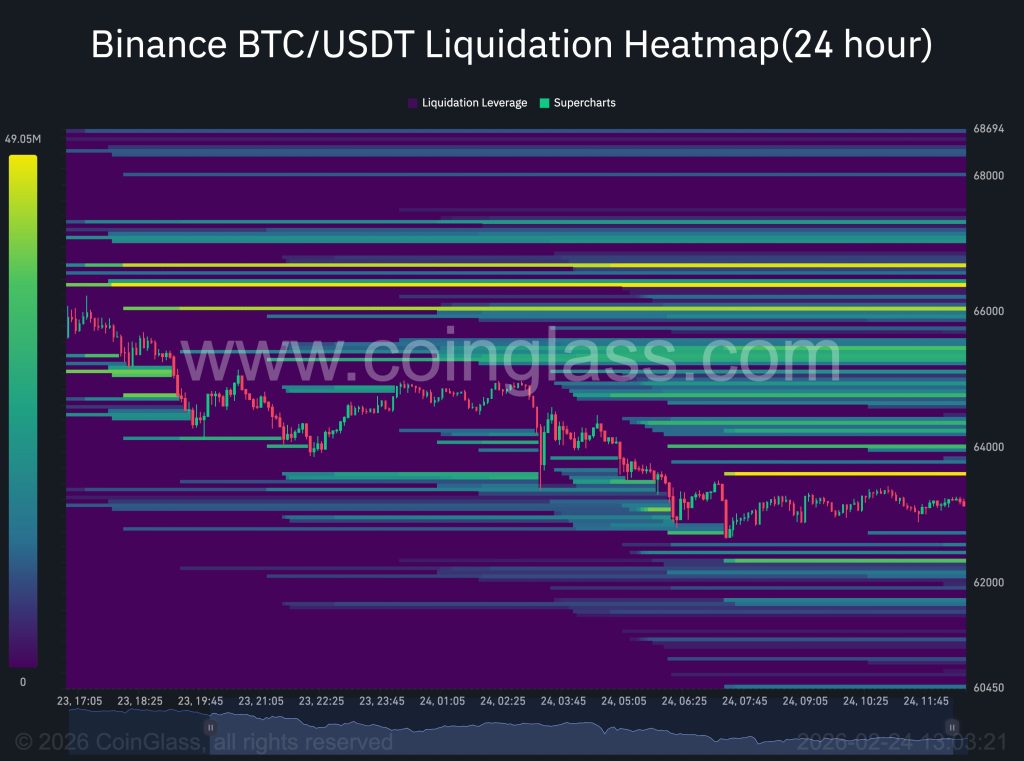
The sell-off was driven by a cascading liquidation loop rather than a fundamental breakdown. According to data from CoinGlass and major exchanges, the market wiped out over $370 million in positions, with long traders accounting for $275 million, or 74% of the losses.
This flush was exacerbated by a sharp decline in Bitcoin futures open interest, which dropped from $61 billion to $49 billion in a few days, a sign that speculative froth is being aggressively removed from the system.
Traders were caught off guard by the speed of the move. Earlier this month, in another drawdown, bitcoin registered a -6.05σ rate-of-change drop, statistically comparable to the volatility seen during the FTX collapse.
The trigger for this volatility appears to be macro-driven, as fears regarding imminent tariff policies sent risk assets spiraling. When the price of Bitcoin dipped below the 200-day moving average, it triggered a chain reaction of stop losses, accelerating the Bitcoin liquidations.
Metaplanet and Treasuries Buy the Dip
While retail panic dominated the headlines, on-chain data reveals a different story among institutional accumulation desks.
Metaplanet, the Japanese investment firm modeling its treasury strategy after U.S. counterparts, is reportedly adding to its Bitcoin holdings during the downturn, according to X posts by CEO Simon Gerovich.
おはプラネット。最近の株価動向を踏まえ、株主の皆さまにとって厳しい状況が続いていることは、私たちも十分に認識しています。しかしながら、メタプラネットの戦略に変更はありません。私たちは引き続き、ビットコインの積み上げ、収益の拡大、そして次の成長フェーズに向けた準備を、着実に進めてい…
— Simon Gerovich (@gerovich) February 6, 2026This behavior aligns with a broader trend of strategic accumulation, where corporates utilize sharp drawdowns to lower their cost basis rather than fleeing to cash.
This follows the precedent set by MicroStrategy. Michael Saylor hints at Strategy’s 100th Bitcoin buy often coincides with market fear, reinforcing the divergence between short-term speculators and long-term treasury hold strategies.
While the paper losses for these entities mount during a correction, their continued buying provides a localized floor, preventing the price from entering a complete freefall.
Current market conditions are a stress test for conviction. We are seeing continued accumulation from corporate treasuries despite the -4% daily candle.
— CryptoAnalyst (@CryptoAnalyst) February 24, 2026
Bitcoin Price Analysis: Critical BTC Support Levels
The technical picture has reached a decisive juncture. Bitcoin is currently testing the BTC support levels at $60,000, a zone that aligns with high-volume nodes from late 2025.
The Relative Strength Index (RSI) on the daily chart has plunged into oversold territory, currently reading just under 30. Historically, such low RSI readings often precede a sharp mean reversion bounce, but the structural damage on the weekly timeframe remains a concern.

If bulls fail to defend $60,000, the path of least resistance flips to the downside. One CryptoQuant analyst recommends watching the $54,700 price level as the ultimate invalidation point for the bull case.
Sentiment markets are already pricing in this risk; Polymarket odds on a bitcoin price drop to $55K have surged, reflecting growing skepticism about an immediate V-shaped recovery.
To reclaim bullish momentum, price action must first stabilize above $62,500 and then challenge the $67,500 resistance block. Until a daily close above that level occurs, the trend remains firmly in bear territory.
Tariff Fears Fuel Record Outflows
The current drawdown extends a rough start to the year, with digital assets logging their longest streak of negative weekly returns since 2022.
Much of this selling is precautionary, driven by the ongoing debate over U.S. tariff implementation under the 1974 Trade Act. The uncertainty has spiked the dollar, effectively siphoning liquidity out of high-beta assets like crypto.
Institutional flows reflect this risk-off rotation. Spot Bitcoin ETFs lodged their fifth straight week of outflows, signaling that traditional finance allocators are de-risking until the regulatory fog clears.
Until these flows reverse, spot markets lack the relentless bid needed to counter derivative sell pressure.
