ECB Warns Europe Can’t Wait for Private Solutions as Cash Use Plunges – Is a Digital Euro the Only Answer?

Cash is vanishing from European wallets, and the European Central Bank is getting nervous. With private payment giants circling, the ECB just issued a stark warning: Europe can't afford to wait for corporate saviors. The race for financial sovereignty is on.
The Private Sector Isn't Coming to Save You
Think Big Tech or fintech startups will build a fair, inclusive payment system? The ECB isn't buying it. Their latest missive cuts through the Silicon Valley hype, arguing that private solutions prioritize profit over resilience and public access. It's a direct jab at the finance bros who think every problem needs a venture-backed app.
Enter the Digital Euro: Tool or Trap?
The logical conclusion points squarely toward a Central Bank Digital Currency (CBDC). A digital euro, controlled by the ECB, would bypass commercial banks and payment processors entirely. It promises instant settlements, reduced costs, and a state-backed alternative to volatile cryptocurrencies and opaque private networks.
But the path is mined with distrust. Critics see a tool for unprecedented surveillance and control. The ECB now faces its toughest sell: convincing a skeptical public that its digital currency empowers citizens, not just bureaucrats.
The clock is ticking. Every month cash use declines is a month a private firm tightens its grip on the continent's financial plumbing. The ECB's warning is clear—build a public digital future, or surrender it to boardrooms that answer to shareholders, not citizens. The real question isn't about technology; it's about who we trust to hold the keys to our money.
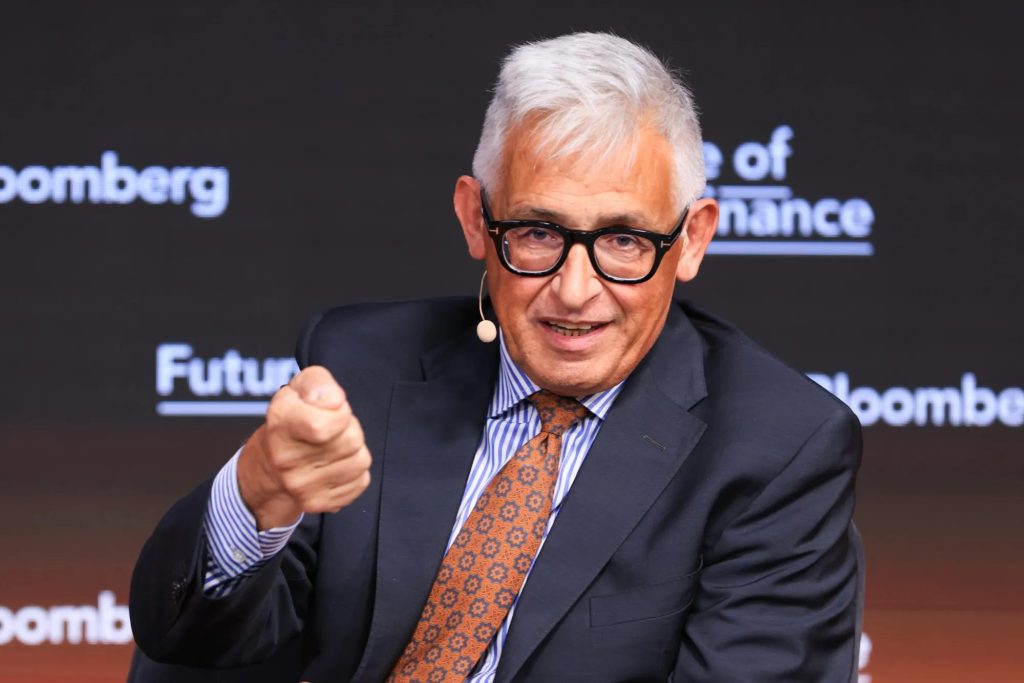 Source: Bloomberg
Cash Retreat Forces Central Bank Adaptation
Cipollone detailed that e-commerce now accounts for more than a third of day-to-day transactions by value, yet central bank money cannot be used for these purchases.
“We provide both retail and wholesale payment methods,” he said. “At the retail level, we offer cash – but it doesn’t fully cover people’s needs, because it can’t be used to pay digitally.“
The ECB official emphasized this represents accelerating change rather than stable conditions.
A decade ago, cash dominated and met nearly all consumer needs, but technological advances have fundamentally altered payment habits.
“The ability to use central bank money for retail transactions is declining rapidly,” Cipollone stated, describing the digital euro as simply adapting to this new environment by complementing banknotes and coins with a digital equivalent.
Technical preparations are complete after the ECB concluded its two-year preparation phase in October 2025, with President Christine Lagarde confirming last month that “we have done our work, we have carried the water.“
ECB President Christine Lagarde said that the digital euro is technically ready and is now awaiting legislative approval.#ECB #DigitalEuro #EUStablecoinhttps://t.co/4cdYV6UdSJ
— Cryptonews.com (@cryptonews) December 19, 2025Responsibility now sits with the EU institutions to finalize legislation, with Cipollone previously indicating that pilot transactions could begin mid-2027 and the first issuance possible in 2029 if lawmakers approve the framework this year.
Private Sector Solution Rejected as Insufficient
The ECB has dismissed proposals from some European Parliament members calling for authorities to wait while the banking sector develops pan-European payment alternatives.
Cipollone said the central bank has long urged private solutions and welcomes integration efforts, but stressed that the digital euro itself will likely accelerate the private sector’s development of continental systems.
As legal tender, the digital euro WOULD require any merchant currently accepting digital payments to accept it, creating a single public standard across all European merchants.
“Currently, when a payment service provider (a bank or fintech firm) provides services to a merchant, the merchant has to sign up to its standards,” Cipollone explained. “With the digital euro, there will be one single, open standard, which will also be available for the private sector.“
He sharply criticized suggestions that the digital euro launch only in offline mode, questioning how such an approach could address the lack of viable European payment methods for e-commerce.
“How can an offline solution be used to pay in the e-commerce space? I don’t know,” Cipollone said.
Geopolitical Leverage Exposes Infrastructure Vulnerabilities
Recent events have shown the risks of foreign control in Europe’s payment systems.
According to a Cryptonews report, Cipollone cited International Criminal Court judges whose U.S. cards were blocked by Visa and Mastercard, limiting their ability to pay across Europe.
“With a digital euro they could have continued to pay throughout the euro area,” he noted in a separate Süddeutsche Zeitung interview.
Seventy European economists amplified these concerns in a January 12 open letter warning that thirteen euro area countries now rely entirely on international card schemes for basic retail transactions.
“This dependence on foreign (U.S.) payment providers exposes European citizens, businesses, and governments to geopolitical leverage, foreign commercial interests, and systemic risks beyond Europe’s control,” the academics wrote, demanding the digital euro function as “the backbone of a sovereign, resilient European payment infrastructure.“
 Seventy European economists warn that weak digital euro design could leave Europe reliant on US payment systems and dollar-backed stablecoins.#DigitalEuro #EU #Stablecoinhttps://t.co/FqcWLtAyEG
The weaponization of payment systems gained fresh relevance when President Trump’s January 19 tariff threats against eight European nations over Greenland triggered $875 million in crypto liquidations within 24 hours, showing how geopolitical tensions rapidly cascade through financial markets.
While Cipollone avoided commenting directly on U.S. political developments when asked about Federal Reserve Chair Jerome Powell’s independence, he emphasized that the ECB focuses exclusively on euro area inflation targeting.
