Gold Becomes A Strategic Tool In The BRICS Plan: The New Monetary Power Play

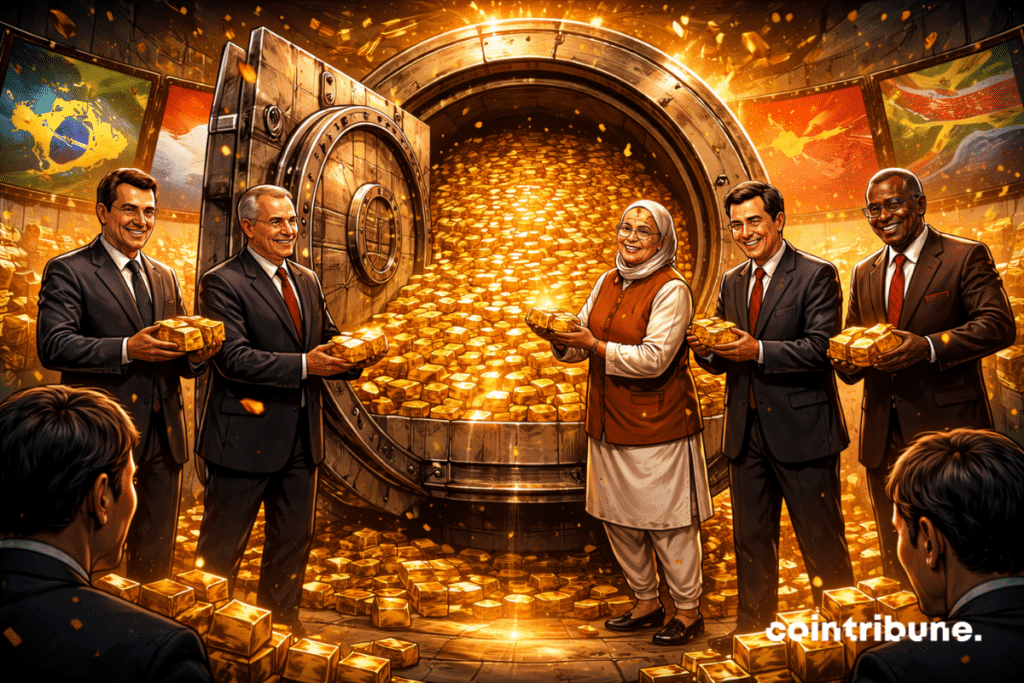
Forget digital wallets—the world's oldest asset is getting a geopolitical makeover. BRICS nations are quietly stacking bullion, turning gold from a safe-haven relic into a strategic chess piece against dollar dominance.
The Hard Asset Gambit
It's not about nostalgia for shiny rocks. This is a calculated move to build a monetary backstop—a tangible foundation for trade and reserves that operates outside traditional Western systems. Gold provides the weight, the credibility, and the ultimate 'off-grid' option.
Bypassing the Old Guard
The playbook is clear: accumulate, then leverage. By backing transactions and potential new financial instruments with physical gold, the bloc aims to carve out a parallel system. It's financial sovereignty, purchased by the ton—a direct challenge to fiat systems run by central banks that can print their way out of trouble (or into it, depending on your cynicism).
The Ripple Effect
This isn't just a commodity story. It signals a deeper fragmentation of global finance. When major economies start treating gold as operational infrastructure rather than a museum piece, it reshapes risk, liquidity, and the very definition of money. Watch for gold-backed digital tokens next—the ultimate hybrid of ancient value and modern rails.
The move is provocative, pragmatic, and a stark reminder: in the high-stakes game of international finance, sometimes the best new tool is the oldest one in the vault. After all, in a world of quantitative easing and creative accounting, gold's greatest feature remains its simple, stubborn refusal to be someone else's liability.
 Read us on Google News
In brief
- The BRICS strengthen their monetary power by controlling nearly 50 % of global gold production.
- China, Russia, India and Brazil accelerate the accumulation of gold reserves in a dedollarization logic.
- The bloc adopts a coordinated strategy aimed at reducing its dependence on the US dollar.
- A prototype of a common currency, the “Unit”, partially backed by gold, has been launched by the BRICS.
Physical gold, pillar of a new geopolitical balance
This year, the BRICS and their allies, including Kazakhstan, Iran, and Uzbekistan, hold about 50 % of global Gold production, while many experts predict the launch of a common currency in 2026.
Such a breakthrough is based on a coordinated strategy of extraction and reserve accumulation. China and Russia lead this movement with impressive production volumes and massive storage of physical gold.
Here are the key facts of this strategic offensive :
- More than 1,000 tons of gold purchased per year between 2022 and 2024, a historic record for central banks ;
- Brazil resumed its purchases last September, adding 16 tons to its reserves after a pause since 2021 ;
- An increasing concentration of global production in member or allied countries of the BRICS bloc, strengthening their strategic leverage ;
- An implicit geoeconomic coordination aiming to strengthen internal monetary stability and reduce dependency on dollar reserves.
This rise in the bloc is seen as a voluntary redefinition of monetary power, carried out outside circuits dominated by the dollar.
Frank Giustra, famous investor in the gold sector, sums up the issue as follows : “we have entered the hard money era. If you own paper gold, you do not own real gold. When the crisis comes, it will not be there”.
A parallel monetary architecture in the making
Beyond the mere accumulation of metal, the BRICS are now moving to concrete experimentation of a common monetary tool.
On October 31, the group launched a prototype currency called “Unit”, backed by 40 % physical gold and 60% national currencies of the BRICS. 100 Units were issued, each indexed to 1 gram of gold, laying the foundation for an instrument that could, in the long term, partially replace the dollar in inter-bloc exchanges.
For Yevgeny Biryukov, an economics expert interviewed by Russian media on December 13, “gold is a protection tool against sanction risks, a response to the instability of traditional partners, and a real asset recognized for millennia”.
This dedollarization strategy does not stop there. Russia and China now settle almost all their mutual exchanges in yuan and ruble. The Eurasian Economic Union has followed the same path. A common gold pool is being formed to stabilize markets, and a BRICS gold price index is under study, aimed at challenging the supremacy of the “London Gold Fix”. This initiative clearly aims to reduce dependency on Western infrastructures such as SWIFT or American clearing systems.
Far from a frontal confrontation, the BRICS do not seek to destabilize the dollar, but to build a credible alternative based on tangible assets. By structuring an autonomous monetary sphere, they lay the foundation for a gradual rebalancing of the global system, where gold becomes a lever of influence and no longer just a simple refuge.
Maximize your Cointribune experience with our "Read to Earn" program! For every article you read, earn points and access exclusive rewards. Sign up now and start earning benefits.
