Ethereum Shatters Records: 34,468 Transactions Per Second Signals Network Revolution

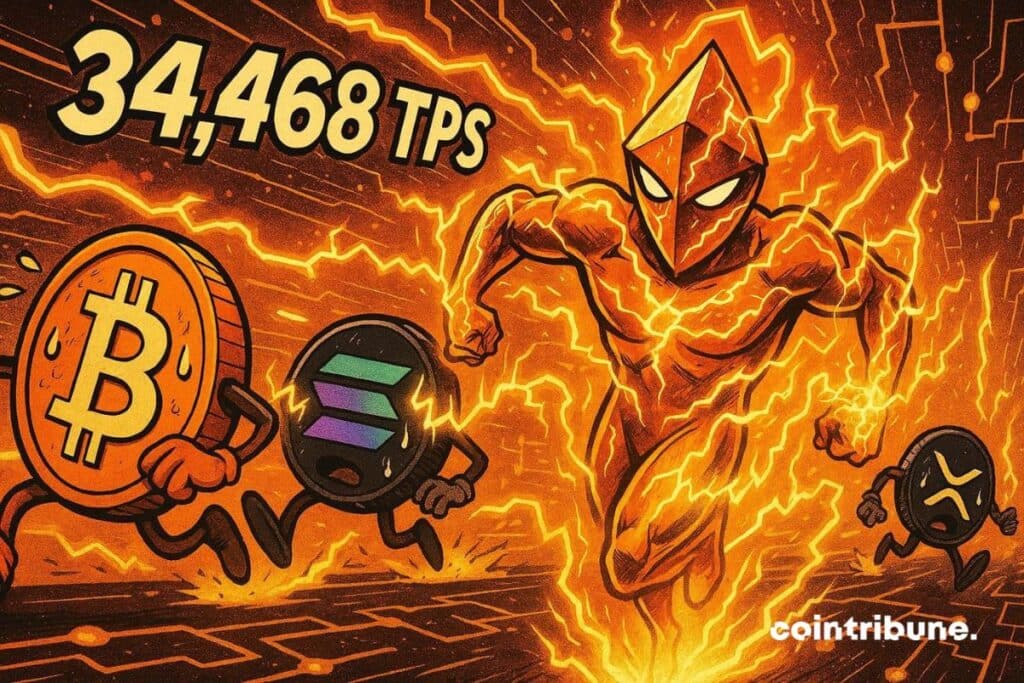
Ethereum just left its scalability doubters in the digital dust. The network processed a staggering 34,468 transactions in a single second—a figure that rewrites the rulebook for blockchain capacity and sends a clear message about its evolving infrastructure.
Beyond the Hype: What the Number Actually Means
Forget theoretical peaks or lab-test results. This throughput represents real-world activity, the kind that separates viable platforms from academic exercises. It's a stress test passed with flying colors, showcasing the network's ability to handle demand spikes that would have crippled it just years ago.
The Scalability Engine Revs Up
This milestone isn't magic; it's engineering. Layer-2 rollups are doing the heavy lifting, bundling transactions off the main chain before settling back on Ethereum. It's a fundamental architectural shift—one that bypasses old bottlenecks without compromising the network's foundational security. The result? Fees stay predictable even when traffic goes parabolic.
A New Benchmark for the Entire Sector
Hitting 34,468 TPS sets a new high-water mark that every other smart contract platform will now be measured against. It moves the goalposts for what's considered 'high-performance' in decentralized finance and applications, forcing competitors to play catch-up or risk irrelevance.
The Bottom Line for Builders and Users
For developers, this record translates to fewer constraints and more creative freedom. For users, it means smoother experiences and less wallet anxiety during market frenzies. The network is proving it can support the mainstream adoption it's long promised—though skeptics on Wall Street might still call it a solution in search of a problem that pays traditional banking fees.
Ethereum's latest record is more than a headline. It's tangible proof that the network's multi-year upgrade path is delivering. The era of 'slow and expensive' is receding into memory, replaced by a new reality where scalability is no longer the primary bottleneck for blockchain's potential.
 Read us on Google News
In brief
- Ethereum established a historic record by processing 34,468 crypto transactions per second thanks to the efficiency of Layer 2 solutions.
- The Fusaka upgrade and Layer 2 optimization reduce costs, improve scalability, and prepare Ethereum to reach 100,000 TPS in the long term.
- This technological leap could boost ETH adoption and its price in 2026, attracting investors and decentralized applications.
Ethereum explodes the historical record of 34,468 crypto transactions per second
On December 14, 2025, Ethereum shattered all records by processing 34,468 transactions per second, a level never reached before. This performance peak was made possible thanks to the intense activity of Layer 2 solutions, such as Lighter, a perpetual exchange based on Zero Knowledge Rollups. These technologies allow bundling thousands of transactions off the main chain, thus reducing pressure on the crypto network.
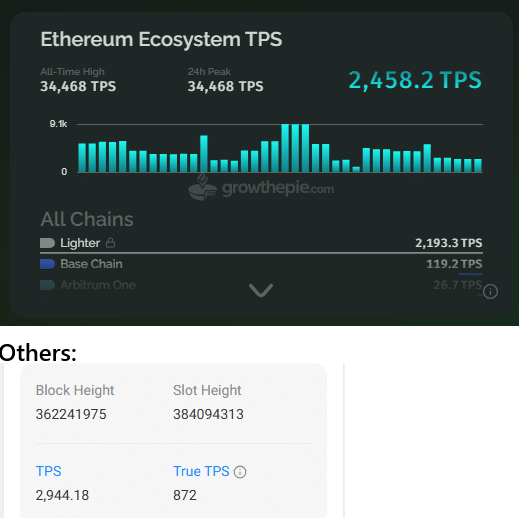
Layer 2s, such as Base, Arbitrum, and Optimism, played a key role in this breakthrough. Indeed, their ability to process transactions at high speed while maintaining reduced costs allowed Ethereum to surpass its previous limits. For example, Lighter processed a large portion of crypto transactions, while Base maintained a steady pace between 100 and 300 transactions per second. This record occurs just before the Fusaka upgrade, launched on December 3, 2025.
Crypto: Ethereum gets a head start over its competitors
With 34,468 crypto transactions per second, Ethereum positions itself as an undisputed leader in scalability. Compared to competitors like Solana, which aims for a theoretical ceiling of 65,000 TPS, Ethereum demonstrates capacity to evolve rapidly. Moreover, transaction costs on LAYER 2s have also dropped, making the network more accessible. For example, “blobs” fees have been reduced, encouraging broader adoption, especially in DeFi, gaming, and social applications.
Ethereum developers now aim for an ambitious goal: reaching 100,000 TPS in the long term. This prospect relies on continuous updates like Fusaka and optimization of existing technologies. As confirmed by Ryan Lee, chief analyst at Bitget:
The Fusaka upgrade introduces PeerDAS and a structured increase in “blobs” capacity, allowing up to eight times more data and reducing operational costs for validators. This prepares Ethereum to reach 100,000 transactions per second in the long term.
ETH in 2026: toward a triumphant first quarter?
Ethereum’s recent technological advances could well affect the value of its crypto, ETH. Increased scalability and improved efficiency are key factors to attract investors and stimulate demand. Analysts expect these technical performances to translate into a significant price increase of ETH, especially if institutional adoption continues to grow.
For the first quarter of 2026, prospects are optimistic. A combination of factors, such as reduced transaction costs, increased user volume, and integration of new applications, could propel ETH towards $5,000. However, risks remain, including increased competition from other blockchains and challenges related to crypto regulation.
Does this record of 34,468 transactions per second mark the beginning of a new era for Ethereum and crypto? As technologies evolve and adoption accelerates, one question remains: can Ethereum maintain this momentum and become the ultimate reference for decentralized transactions in blockchain?
Maximize your Cointribune experience with our "Read to Earn" program! For every article you read, earn points and access exclusive rewards. Sign up now and start earning benefits.
