Quantum Hack Could Unlock Satoshi’s Fortune: Investors Eye Historic Opportunity

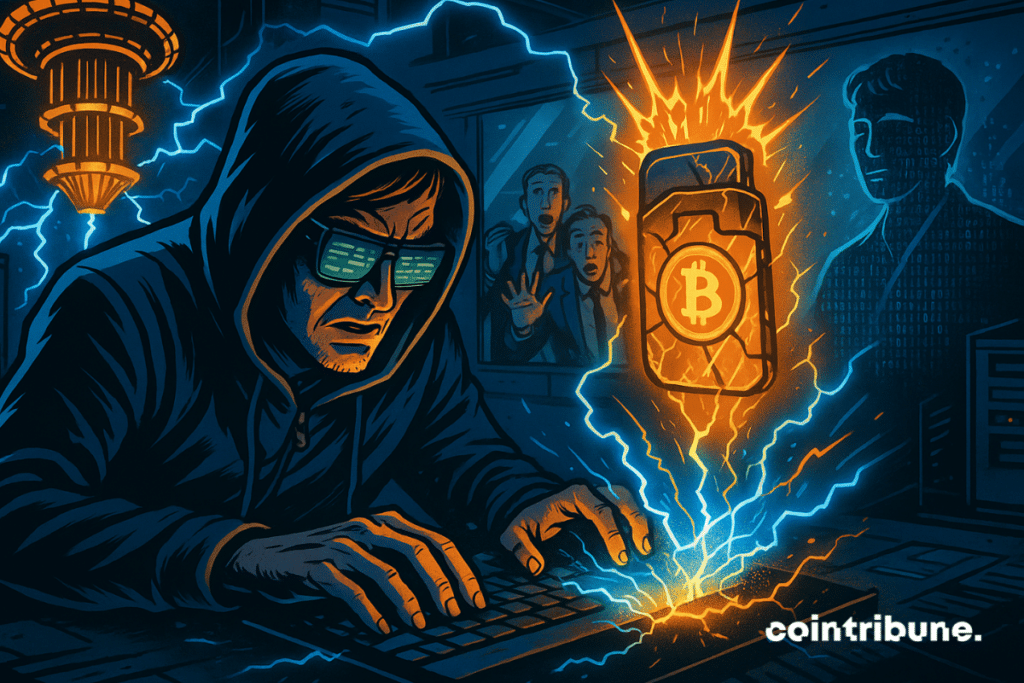
Quantum computing just threw a live grenade into cryptocurrency's foundational myth. The theoretical threat to Bitcoin's cryptography is no longer academic—it's a potential market-shattering event that could see Satoshi Nakamoto's legendary 1.1 million BTC hoard suddenly, violently, become liquid.
The Unthinkable Becomes Tradeable
For years, Satoshi's coins were the ultimate dead weight—a monument, a mystery, and a market overhang everyone agreed would never move. A successful quantum attack on those early wallets rewrites the entire script. It doesn't just crack a code; it smashes the perception of absolute scarcity that Bitcoin's valuation partially rests upon. Suddenly, the most famous HODL in history becomes the mother of all sell-offs—or the catalyst for a paradoxical bull run.
Front-Running the Fallout
Smart money isn't just watching the cryptography—it's gaming the human reaction. The immediate panic would be biblical. But the aftermath? That's where the real play begins. Will exchanges freeze the funds? Will a hard fork attempt to 'save' Bitcoin by invalidating the stolen coins, creating a chaotic schism? This creates a volatility arbitrage playground across BTC, hard fork tokens, and the entire crypto sector. Hedge funds are already modeling scenarios where fear-driven sell-offs create generational buying opportunities for assets *unaffected* by the breach. After all, Wall Street's motto has always been 'never let a good crisis go to waste'—even if they helped create the conditions for it.
A System's Ultimate Stress Test
This isn't just about a price chart. It's a forced evolution. The community's response would either validate Bitcoin's resilience as a decentralized network or expose fatal flaws. Developers have floated quantum-resistant upgrades for years; a genuine threat could see them implemented at breakneck speed. The entire crypto ecosystem would pivot overnight, pouring capital and talent into next-generation, quantum-secure blockchains and cryptographic solutions. The hack that could break Bitcoin might just be the event that forces it—and everything built in its wake—to evolve beyond its original design.
So, keep one eye on the qubits and the other on the order books. The moment quantum theory becomes financial reality, the rules of the game won't just change—they'll be written from scratch by whoever seizes the initiative first. Just remember, in the rush to profit from a broken paradigm, the most valuable asset might be the one thing in short supply: clear thinking.
 Read us on Google News
In brief
- Speculators have suggested that a quantum computer breach of Satoshi’s wallet could push Bitcoin’s price as low as $3.
- Early investors could potentially take advantage of such a sudden drop to acquire coins at rock-bottom prices.
Bitcoin Faces Potential Quantum Risks
Some speculators have painted dramatic scenarios to illustrate the potential consequences. A prominent YouTuber, Josh Otten, shared a chart suggesting that Bitcoin could fall as low as $3 if a quantum computer successfully breached Satoshi’s wallet and flooded the market with the coins. This scenario drew intense attention online, prompting debates across the crypto community.
Veteran bitcoin investor Willy Woo shared that such a steep decline could actually create opportunities for long-term holders. He added that the Bitcoin network itself would likely remain resilient, as most holdings are not immediately at risk. Woo explained that about 4 million BTC, including Satoshi’s coins, are stored in pay-to-public-key (P2PK) addresses. These addresses reveal the full public key during transactions, which could make them vulnerable to future attacks by quantum computers.
Building on this, analysts clarified that any wallet whose full public key is exposed on the blockchain could theoretically have its private key derived by a sufficiently advanced quantum computer, highlighting the potential security risks for these holdings.
However, Bitcoin’s newer wallets have been designed with improved protections. These addresses do not expose the full public key, making it far more difficult for quantum computers to access the private key. Nevertheless, the broader cryptocurrency community remains alert, aware that advances in quantum computing could create serious challenges for digital asset security in the future.
Expert Assessments on Timing and Risk
Experts largely agree that the threat from quantum computers is not immediate. In September, Cointribune reported that Samson Mow, founder of Jan3, acknowledged that quantum computing could eventually compromise Bitcoin’s security but emphasized that this is likely at least a decade away. He also noted that other systems WOULD probably fail before Bitcoin faces a serious risk.
Meanwhile, British cryptographer Adam Back has highlighted that Bitcoin is unlikely to face a quantum computing threat for the next 20 to 40 years, noting that there is ample time to implement post-quantum cryptography standards before current encryption could be compromised.
The potential economic impact of quantum computing on Bitcoin has also been pointed out by crypto expert James Check. He emphasized that the main concern is how quantum computing could affect Bitcoin’s market price rather than the immediate security of coins. Check also noted that it is highly improbable the community would freeze Satoshi’s holdings before a quantum computer could access his wallets and release those coins into the market.
Maximize your Cointribune experience with our "Read to Earn" program! For every article you read, earn points and access exclusive rewards. Sign up now and start earning benefits.
