Singapore Pioneers Future of Finance: Tokenized Bonds Settled in CBDC Go Live

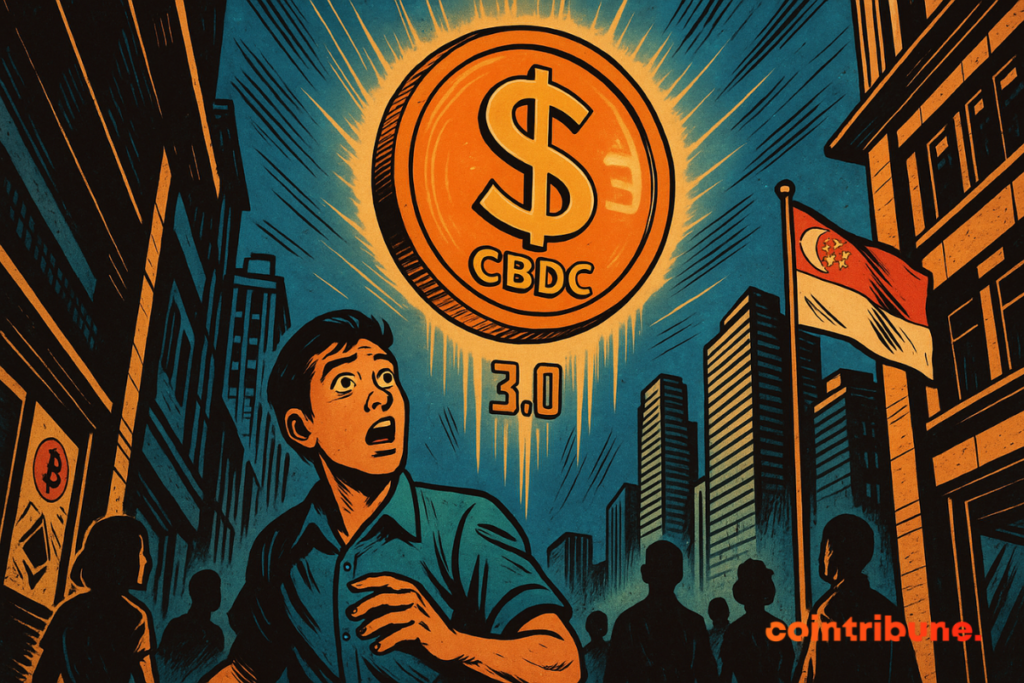
Singapore just flipped the script on traditional finance—tokenized bonds now settle in central bank digital currency. No more legacy settlement delays, no more middlemen skimming spreads. The Monetary Authority of Singapore (MAS) pulls the trigger on what could become the blueprint for global capital markets.
How it works: Blockchain rails + programmable CBDC = atomic settlement. The system slashes counterparty risk while proving regulators won’t let DeFi monopolize innovation. TradFi banks, meanwhile, are scrambling to retrofit their creaky systems—better late than never.
One cynic’s take: Wall Street will lobby to call this ‘revolutionary’… right after they finish charging clients 2% fees for manual bond allocations.
 Read us on Google News
In brief
- Singapore will test tokenized MAS Bills, settled with its own CBDC.
- The MAS wants to avoid closed ecosystems by imposing open and compatible standards.
- Three types of assets tested for settlement: CBDC, regulated stablecoins, and tokenized bank liabilities.
- The MAS pushes for programmable, secure, interoperable finance favourable to crypto players.
Tokenized Bonds and CBDC: Experimentation Becomes Reality
After TOKEN2049, Singapore takes a new step. At the Singapore FinTech Festival 2025, Chia Der Jiun, director of the MAS, unveiled a pilot operation: issuance of tokenized MAS Bills, reserved for primary dealers, and settled in digital Singapore dollar. A paradigm shift? Probably. Especially when you hear the MAS head state:
Are asset-backed tokens clearly out of the lab? Undoubtedly. Many commercial products have been launched. Bonds have been issued natively and settled on-chain. Money market funds have been tokenized.
The MAS does not stop there: the banks DBS, OCBC and UOB have already conducted interbank lending operations using CBDC. These initiatives confirm an assumed ambition: to impose public finance in the crypto ecosystem with safe, traceable, and agile digital tools. A role-play where states are no longer just regulators but also builders of monetary networks.
Open Standards and Regulation: Singapore Paves the Crypto Way
The real challenge is no longer technical, it is structural. In his speech, Chia Der Jiun mentions a major risk: that of a fragmented ecosystem, made of incompatible networks, tokens not recognized from one platform to another. The solution? A “coopetition” approach.
They must agree on common standards for asset-backed tokens, even while seeking to grow. A bond or fund token must be understood and accepted on another network than the original one.
Chia Der JiunThe Guardian project, already launched in 2022, and the Global LAYER One initiative aim to create these standards. Their mission: to ensure that any tokenized asset on network A can be recognized and exchanged on network B. This is not just an advance for crypto traders; it is a market overhaul itself.
The regulator wants to avoid the emergence of closed monopolies or walled gardens. It supports open finance, driven by regulation but fueled by innovation. A hybrid model that could set an example far beyond Asia.
Stablecoins, CBDC, Tokenized Liabilities: A Powerful Trio for Crypto
Behind the launch of these tokenized bonds, another battle is raging: the choice of settlement assets. The digital Singapore dollar, stablecoins, and tokenized bank liabilities are tested to serve as bases for dematerialized exchanges.
Key points to understand the stakes:
- CBDC: used in the first interbank loans via DBS, OCBC, UOB;
- Regulated stablecoins: governed since 2023 by a strict legislative framework in Singapore;
- Tokenized bank liabilities: experimented via the BLOOM initiative for their agility;
- Interoperability: at the heart of the Global Layer One project to avoid fragmentation;
- Operational goal: 24/7 settlement, reduction of intermediaries, increased efficiency.
Each of these models has its strengths. CBDCs offer security and legitimacy. Regulated stablecoins allow smoother circulation. And bank liabilities bring private sector flexibility, provided they are interoperable. This plurality of approaches clearly shows one thing: no one yet holds the key to universal programmable money. But Singapore is moving forward, and fast.
Singapore only confirms a trend underway for several years. Like the Bank of France and the Bank of Switzerland, its central bank has already successfully tested wholesale CBDCs. By crossing this new threshold, it helps shape the contours of programmable, fluid finance but under close supervision. A complex score, where each note played already resonates well beyond its borders.
Maximize your Cointribune experience with our "Read to Earn" program! For every article you read, earn points and access exclusive rewards. Sign up now and start earning benefits.
