ApeCoin Shatters Barriers: Otherside Now Accessible Through Bitcoin Runestones Integration

Forget walled gardens—ApeCoin just bulldozed a major one. The Bored Ape ecosystem's native token has executed a strategic bridge to Bitcoin's burgeoning Runestones protocol, unlocking its coveted Otherside metaverse to a massive, new user base. This isn't just an update; it's a land grab for attention and liquidity.
The Mechanics of the Merge
The integration works by leveraging Runestones' functionality as a Bitcoin-based inscription standard. It essentially creates a permissionless on-ramp, allowing users to interact with Otherside's digital experiences and assets using their Bitcoin-native holdings. The move bypasses traditional multi-chain bridge complexities, offering a more direct path. Think of it as building a highway where there was once a toll booth and a dozen checkpoints.
Why This Cuts Through the Noise
In a landscape cluttered with empty partnerships, this integration targets utility and reach. It directly taps into Bitcoin's colossal, often conservative, capital pool—a segment that has historically watched the NFT and metaverse frenzy from the sidelines. For ApeCoin, it's a fresh injection of potential users. For the Bitcoin ecosystem, it's a compelling use-case beyond 'digital gold' that might actually get people to transact on-chain again.
The Finance-Speak Reality Check
Let's be cynical for a second: every metaverse play still smells faintly of the 2021 hype cycle, and 'synergies' are often just a fancy word for hoping two stagnant communities can pump each other's bags. This move, however, is a tangible technical step rather than a vague memorandum of understanding. It converts theoretical interoperability into a working product. Whether users actually want to live in a cartoon ape world remains the billion-dollar question no whitepaper can answer.
The final take? ApeCoin didn't just open a door; it installed a blast door. It's a bold bet that the future of digital interaction is multi-chain by default, and that the king of crypto, Bitcoin, needs a more interesting castle to rule. Now we see if the apes and the hodlers actually want to party together.
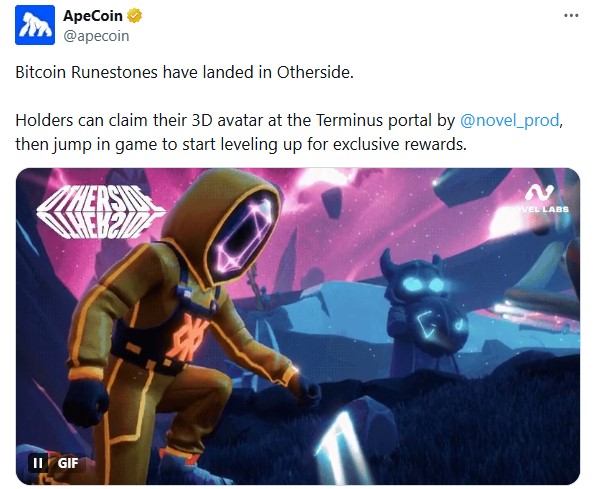
The process was tested publicly by Runestones creator Leonidas, with early users sharing gameplay clips shortly after launch.
How Runestone Avatars Work in Otherside
Runestones were created in early 2024 and exist on Bitcoin using Ordinals technology, which allows NFTs to be attached directly to Bitcoin transactions.
With the latest update, once claimed, the avatars can be used inside Otherside’s MMORPG environment, a platform where players explore a virtual world, complete missions, and interact with other users.
With Runestones, players can explore social hubs, take part in quests, engage in combat, and mine in-game resources. As players progress, they earn experience points (XP), with some activities offering potential $APE rewards, the platform’s currency coin.
This marks a direct bridge between Bitcoin Ordinals and Otherside’s gaming ecosystem, which operates on ApeChain.
Why This Integration Is Important: Expands Outside Ecosystem
This update connects two different blockchain ecosystems. Runestones come from Bitcoin, while Otherside runs on ApeChain, which is linked to Ethereum. Bitcoin-based NFTs used in a game built on another network, highlights the cross-chain working power of NFTs and also gives a wider idea to other networks also.
The recent integration follows a series of similar additions made since late 2025, as Otherside continues adding more NFT collections in a similar way to increase its player base. Alongside Runestones, four new avatar sets from ApeChain-based projects were also introduced, each featuring exclusive lore available only to holders.
$APE Price Shows Limited Reaction
Despite the announcement, ApeCoin’s market price remained under pressure. As of today, $APE was trading between $0.1085, NEAR all-time lows. Reports show the token is down more than 43% over the past 30 days, with no significant spike in volume tied to the Runestone news.
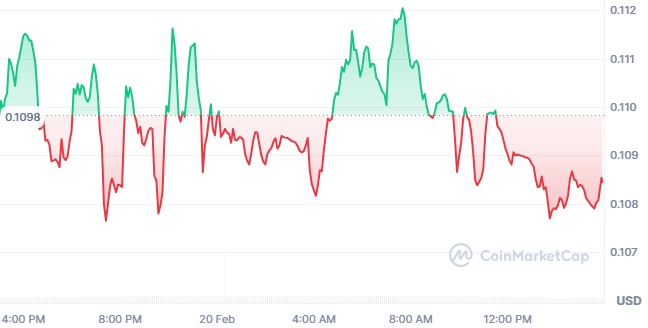
The weakness in $APE price is mainly driven by sector rotation, with capital moving out of high-beta altcoins as the Altcoin Season Index slid to 30. It also aligns with the broader market which is currently in extreme fear.
Why the Update Still Matters
While the price impact was minimal, the move highlights a broader 2026 trend: NFTs shifting from static collectibles toward real in-game utility. By connecting Bitcoin Ordinals with a gaming ecosystem, ApeCoin and Otherside continue to experiment with cross-chain use cases that focus on long-term engagement rather than short-term hype.
The article above is for informational purposes only and does not constitute any financial advice.
