India’s Crypto Boom Collides with Regulatory Whiplash in 2026

India's digital asset market is exploding—while its policymakers scramble to keep up.
The Regulatory Maze
Investors face a dizzying landscape. One week brings whispers of progressive frameworks; the next, stern warnings from the central bank. This isn't confusion—it's a high-stakes tug-of-war between innovation and control. The lack of a unified playbook creates wild volatility, turning regulatory announcements into the most potent market movers.
Navigating the Gray Zones
Projects and exchanges operate in constant adaptation mode. They're building for a future rulebook that hasn't been written, hedging bets on everything from token classification to taxation. This uncertainty acts as both a brake and a filter: it stifles mainstream adoption but also weeds out the faint-hearted. The survivors are becoming experts in regulatory arbitrage—a fancy term for creative compliance.
The Innovation Engine vs. The Rulebook
Despite the fog, capital continues to flow. Domestic blockchain development hasn't slowed; it's just learned to build with one eye on Delhi. The real tension lies between homegrown tech talent, racing to compete globally, and a bureaucracy traditionally wary of financial disruption. It's a classic clash of internet time versus government time.
The result? A market thriving on sheer momentum, betting that the economic potential will eventually force regulatory clarity. After all, nothing clarifies policy like the scent of taxable revenue—the oldest finance hack in the book.
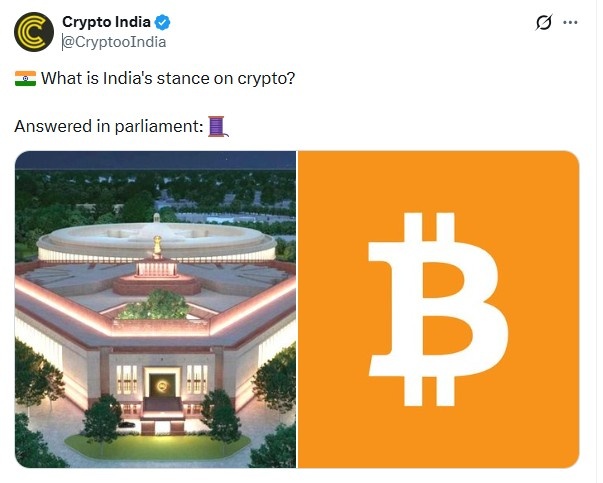
Source: X official
What Parliament Revealed About the Crypto Market
According to the official reply, the government does not maintain centralized data on individual crypto holdings and has not yet introduced a comprehensive regulatory structure. Still, service providers must follow strict anti-money-laundering requirements and financial reporting standards.
Key observations include:
virtual assets remains outside a formal regulatory framework but is not operating without oversight.
Authorities are actively tracking transactions and enforcing tax compliance to reduce misuse.
This creates a puzzling environment, one where digital assets are neither fully accepted nor entirely restricted.
Rising Adoption: Millions of Indians Enter the Digital Asset Space
Despite regulatory ambiguity, India has emerged as one of the fastest-growing virtual assets markets globally. Estimates suggest that nearly 90–100 million Indians now hold some FORM of digital asset, representing a significant portion of the population.
Source: TripleA official
Several factors explain this surge:
Young investors view virtual assets as a modern wealth-building opportunity.
Easy-to-use mobile platforms have simplified access for first-time participants.
There is also visible eagerness among retail users who fear missing out on the next financial revolution. Many see blockchain-based assets as an alternative investment during uncertain economic cycles. Yet enthusiasm is often paired with confusion, as shifting policy signals make long-term planning difficult.
This blend of excitement and hesitation perfectly reflects the current stage of Indian Crypto regulation — growing demand alongside incomplete rules.
Government Steps Toward Stronger Oversight
Rather than unveiling a single sweeping law, authorities are tightening control through incremental measures.
Exchanges and related firms must comply with financial intelligence guidelines and reporting obligations.
Tax policies remain strict, ensuring that profits are declared while discouraging speculative excess.
Officials are also exploring international cooperation and data-sharing mechanisms to track cross-border flows. These moves suggest that the government is prioritizing risk management before offering full legitimacy.
The strategy may appear slow, but it indicates deliberate preparation rather than policy paralysis.
When Could India Fully Regulate Crypto?
Based on current developments, a structured regulatory framework could realistically emerge within the next two to three years. Policymakers seem focused on building surveillance capabilities, refining tax systems, and aligning with global standards before announcing comprehensive rules.
However, the possibility of private virtualcurrencies becoming official legal tender in India remains distant. Authorities have consistently expressed concerns about financial stability and investor protection, while simultaneously promoting a central bank digital currency as the safer alternative.
