Binance SAFU Fund Shifts $1B Into Bitcoin Reserves: A Billion-Dollar Bet on BTC’s Future

Binance just moved a cool billion from its SAFU insurance fund straight into Bitcoin—no intermediaries, no apologies. This isn't just a rebalance; it's a statement.
The Mechanics of Trust
SAFU—Secure Asset Fund for Users—exists as a rainy-day vault, funded by trading fees to protect users during black-swan events. Shifting $1 billion from stablecoins or other assets into Bitcoin reserves transforms that vault from a defensive bunker into a strategic bull position. It signals that Binance views Bitcoin not just as a digital asset, but as the ultimate reserve asset for its own protection fund.
Why This Move Cuts Through the Noise
Exchanges talk about transparency; this move demonstrates conviction. It aligns Binance's own safety net directly with Bitcoin's long-term performance. While traditional finance dabbles in tokenized treasuries, this bypasses the middleman entirely—putting raw, unencumbered BTC on the balance sheet. It's a hedge against fiat devaluation wrapped in a user-protection narrative. After all, what better backs a crypto insurance fund than the original crypto?
A Provocative Pivot for Protection
This reshuffling blurs the line between operational safeguard and strategic treasury management. It raises the stakes: the fund's value now fluctuates with the crypto market it insures. Some will call it brilliant alignment; others, a risky concentration. One cynical take? It's a masterclass in financial optics—turning a mandatory insurance cost into a headline-grabbing, bullish bet on Bitcoin's future, all while the legacy system still debates ETF custody fees.
The final analysis? Actions speak louder than white papers. When the world's largest crypto exchange bets its own safety fund on Bitcoin, it doesn't just back the asset—it challenges the entire concept of what constitutes a secure reserve. The message is clear: in their view, the safest place for a billion-dollar safety net is in the network that started it all.
The Secure Asset Fund for Users (SAFU), launched back in 2018, originally aimed to protect traders from extreme scenarios like security breaches. Historically, keeping this reserve in stablecoins provided a predictable dollar peg. However, market observers note that 2026 has brought a shift in how major platforms view risk. By moving to a Binance SAFU fund BTC model, the exchange is essentially exiting the traditional banking-linked stablecoin system and leaning into the "native" store of value that defines the crypto world.
What the Binance SAFU Bitcoin Strategy Means for Crypto Safety
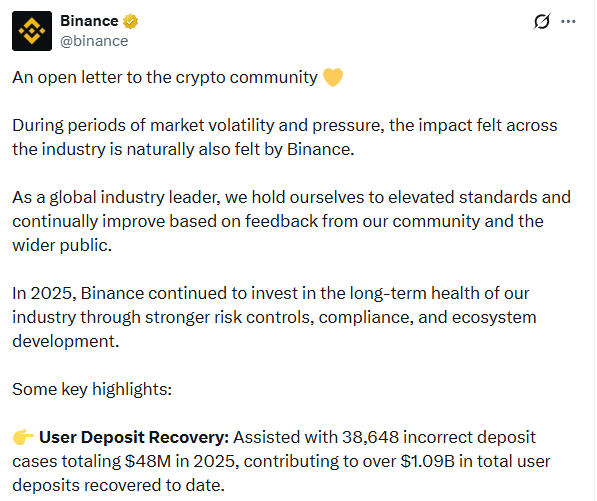
This transition didn't happen in a vacuum. It follows a massive year for user protection on the platform. In 2025, the exchange successfully helped over 5.4 million users identify potential scams, preventing roughly $6.7 billion in losses. Additionally, about $48 million in "incorrect deposits" were recovered for customers. The MOVE to a Binance SAFU insurance pool bitcoin reserve is the next logical step in a roadmap focused on independence from legacy financial risks.
The $800 Million "Safety Net" Mechanism
The biggest question most users have is about volatility. If BTC's price drops, does the insurance Reserve vanish? The short answer is no. To maintain the Exchange SAFU fund Bitcoin utility, a dynamic rebalancing system is now in place:
If market fluctuations cause the reserve’s value to dip below $800 million, the exchange triggers an automatic replenishment.
The Exchange will inject additional BTC to restore the reserve's total value to the $1 billion mark.
This ensures that while the assets are in BTC, the actual "protective power" remains at the promised $1 billion level.
Expert Analysis: Setting a New Industry Precedent
Industry analysts suggest this move could spark a "domino effect" among other major global platforms. Throughout 2025, a clear trend emerged where institutional players began rotating out of passive stablecoins and into "hard" assets. By backing its most critical safety net with Bitcoin, The platform isn't just following a trend, it's validating a new standard for treasury management. The built-in replenishment clause is particularly clever; it respects the reality of price swings while maintaining the fiduciary duty of an insurance fund. Moving forward, the Binance SAFU fund BTC structure will likely be studied by regulators as a case study in decentralized risk management.
Your Money, Your Life (YMYL) Disclaimer
This content is for informational purposes only and does not constitute financial or investment advice. Cryptocurrency markets involve significant risk. Readers should conduct independent research and consult qualified professionals before making any financial decisions.
