Trump Sues IRS and Treasury Over Alleged Tax Data Failures - A Privacy Battle with Financial Implications

Former President Donald Trump has filed a lawsuit against the IRS and Treasury Department, alleging systemic failures in protecting sensitive taxpayer information. The legal action spotlights growing concerns about financial data security in an increasingly digital age.
The Core Allegations
The lawsuit claims federal agencies mishandled confidential tax data, potentially exposing millions of Americans to privacy breaches. Legal experts note the case could set precedents for how government entities safeguard financial information—especially as digital asset reporting requirements expand.
Broader Implications for Digital Finance
While focused on traditional tax data, the case echoes crypto community concerns about centralized financial surveillance. As regulators push for more transaction reporting, this lawsuit questions whether existing systems can protect sensitive information at scale. It's another reminder that in finance, your data is only as secure as the most incompetent bureaucrat handling it.
The Regulatory Ripple Effect
The outcome could influence how financial agencies approach data protection mandates, particularly as they grapple with monitoring decentralized transactions. A ruling against the government might force agencies to upgrade security protocols before expanding surveillance capabilities—potentially delaying controversial reporting requirements.
This legal battle transcends political theater, touching fundamental questions about financial privacy in the surveillance age. As digital assets challenge traditional financial boundaries, this case reminds us that data protection failures aren't just technical glitches—they're systemic vulnerabilities with real consequences for economic freedom.
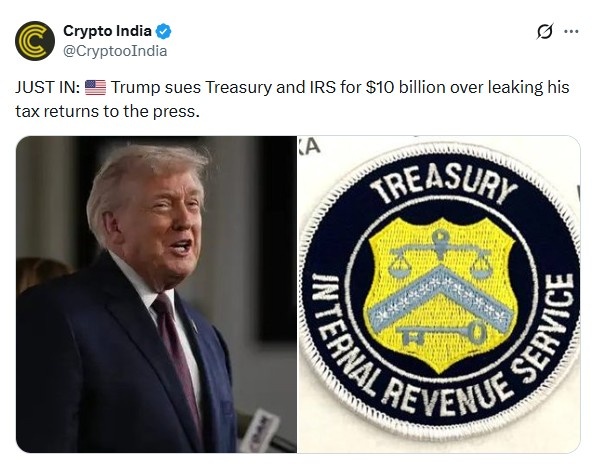
Source: X official
Who Leaked the Data and Where It Went
Investigations identified Charles Edward Littlejohn, a former IRS contractor, as the individual responsible for accessing and sharing the records. He later pleaded guilty and received a prison sentence for the offense. The leaked documents were provided to media outlets, including The New York Times and ProPublica, which published reports based on those filings.
What makes the situation unusual is that Trump Sues IRS and the Treasury while overseeing both during his presidency, is now suing the very institutions that operate under executive authority. This adds a rare constitutional and governance angle to the dispute.
Centralized Systems and Security Weakness
At the Core of this case lies a broader issue: centralized data storage. Financial records were accessible to a contractor, internal controls failed, and sensitive material was left in secure environments without detection.
Key failures highlighted by the lawsuit include:
Broad access permissions without sufficient monitoring
Delayed response despite clear confidentiality obligations
Such breakdowns raise questions about whether traditional architectures can protect high-value financial information in an era of digital exposure.
Why Decentralized Finance Enters the Conversation
This incident has revived discussion around decentralized financial infrastructure. Blockchain-based frameworks emphasize financial privacy, self-custody, and limited trust, replacing blind reliance on institutions with transparent verification.
Decentralized systems differ because:
Users retain direct control over records
Access trails remain immutable and auditable
Rather than trusting internal promises, protection comes from architecture itself. Transparency does not mean public exposure; it means controlled visibility with cryptographic safeguards.
Hedge Against Institutional Risk and Long-Term Meaning
Trump Sues IRS, and the Treasury Department reinforces a growing belief within digital asset communities: crypto serves as a hedge against institutional risk. When established authorities mishandle sensitive information, confidence erodes. Distributed networks reduce single-point failures and insider misuse.
Over time, such cases may influence:
Data protection standards
Regulatory design for digital assets
Public demand for privacy-focused finance
While this dispute centers on tax documents, its implications stretch further. It highlights why alternative models continue gaining attention—not because institutions disappear, but because trust must be engineered, not assumed.
Trump sues IRS, and the US Treasury highlights serious failures in centralized data protection, strengthening the case for privacy-focused, decentralized systems that reduce institutional risk and restore trust in handling sensitive financial information.
