Bermuda’s Blockchain Revolution: First Nation to Run Entirely Onchain by 2026

Forget pilot programs—Bermuda just cut the ribbon on a full-scale national blockchain economy.
The island nation's government has migrated its entire administrative and financial infrastructure onto a sovereign distributed ledger. Every land registry entry, business license, and tax payment now lives on-chain. The move bypasses traditional banking rails entirely, creating what officials call a 'real-time, transparent economic operating system.'
How It Actually Works
Citizens and businesses interact through a government-issued digital identity wallet. Property transfers settle in minutes, not weeks. Corporate filings become immutable public records. Even the tourism levy—that crucial revenue stream—flows through smart contracts that auto-distribute funds to conservation and infrastructure pools. The system runs on a permissioned blockchain validated by a consortium of local financial institutions, under the watchful eye of the Bermuda Monetary Authority.
The Regulatory Sandbox Pays Off
This isn't a sudden pivot. Bermuda's 2018 Digital Asset Business Act laid the groundwork, creating one of the first comprehensive crypto frameworks globally. The Bermuda Financial Services Authority (FSA) has been quietly approving blockchain-based insurers and asset managers for years. The national shift is simply the logical endpoint of that regulatory foresight—turning the entire jurisdiction into a compliant DeFi protocol.
The Sovereign Ledger Advantage
Proponents argue the transparency slashes corruption and administrative bloat. Auditors get real-time access. Entrepreneurs incorporate in an afternoon. The government gains an un-hackable, immutable record of all state activity. Critics whisper about total financial surveillance and question what happens during a network fork—does the nation state split in two? The Premier's office dismisses this, highlighting the disaster-recovery protocols and the fact that, for once, the paperwork can't literally blow away in a hurricane.
A quiet jab for the finance traditionalists: Wall Street still can't decide if Bitcoin is an inflation hedge, while a whole country just hedged its entire sovereignty on a cryptographically-secured timestamp server.
Bermuda's bet is clear: in the race for financial innovation, it's not building a faster horse—it's deploying the railroad. Other micro-nations are watching closely. If this works, the blueprint for a 21st-century digital state is now live on mainnet.
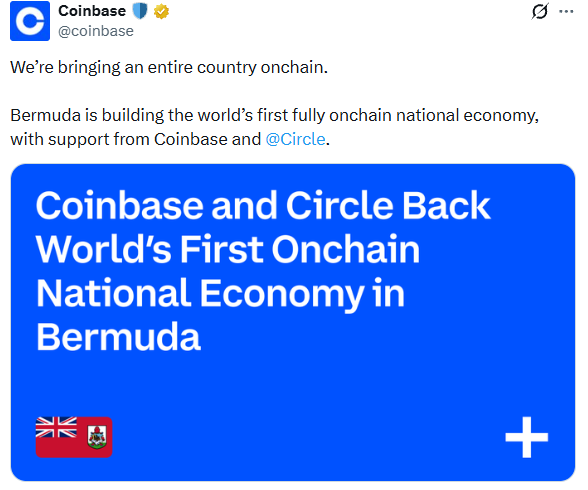
This isn't just another government pilot program or a flashy app. It is a fundamental rewrite of how a country’s money moves. By teaming up with Coinbase and Circle, Bermuda is moving its entire financial infrastructure, everything from government taxes to your morning coffee run onto the blockchain.
The "Island Tax": Why This Move Matters
You might wonder why a small island nation is taking such a massive leap. For years, Bermuda has been stuck in a financial "bottleneck." Because global banks group small island nations together, Bermudian businesses have been forced to pay sky-high fees to process credit cards or send international wires. Small shop owners were often losing 3% to 6% of every sale just to pay for the "privilege" of using a bank.
By building the Bermuda onchain economy, the government is effectively "cutting out the middleman." Using the USDC stablecoin (which is pegged 1:1 to the US Dollar) and Coinbase’s Base network, payments can now happen instantly. Instead of waiting three days for a bank transfer to clear, a local merchant in Hamilton can receive payment in seconds.
Building Trust Through the "Airdrop"
The government knew that for this to work, regular people had to use it. They didn't just tell people about it; they showed them. Back in May 2025, they did something bold: they "airdropped" 100 USDC (the equivalent of $100) into the digital wallets of everyone who attended a local finance forum.
People didn't just hold the money they spent it. They used it at local grocery stores and cafes that had already switched to the new digital system. This created a "grassroots" movement. By the time the 2026 Davos announcement arrived, the Bermuda onchain economy already had a foundation of real users and real local businesses.
What’s Actually Coming in 2026?
Bermuda isn't just talking big; they have a very busy year ahead to make this "onchain" dream a reality. Instead of just theorizing, the government is rolling out several "boots on the ground" projects that people will actually see in their daily lives.
First off, you’re going to see government agencies leading by example. They aren't just telling people to use digital dollars; they’re going to start using USDC themselves to pay their vendors and even accept government fees.
Then there’s the big money side of things. Bermuda is already a global heavyweight in insurance and banking, and now those local institutions are starting to "tokenize" their assets. In plain English, they’re turning things like property or bonds into digital tokens so they can be traded globally in seconds, without paperwork.
But the most important part of this whole plan is the people. The government knows that if people don't understand how to use a digital wallet, the whole system fails. That’s why there’s a massive push for digital literacy. They’re setting up programs to make sure everyone from a tech-savvy student to a retiree feels comfortable and, more importantly, SAFE navigating this new digital world. It’s about making sure nobody gets left behind as the island moves its economy into the future.
Is it mandatory?
Short answer: No. Officials were clear that this is voluntary. If you want to stick with your current bank and physical cash, you can. But the government is betting that once people see how fast and cheap the "onchain" version is, they’ll make the switch on their own.
The Bottom Line
Bermuda is acting as the world’s "test lab." If this works, it proves that a country doesn't need to wait for a complicated "Central Bank Digital Currency" to modernize. They can simply use existing, trusted tools like USDC to gain financial independence.
As Premier Burt put it, this is about "creating opportunity." For Bermuda, being the first onchain economy isn't about being trendy; it's about making sure their small businesses aren't left behind in a fast-moving, digital world.
