BOA CEO’s Dire Stablecoin Warning: $6 Trillion Banking Exodus Looms

Bank of America's CEO just sounded the alarm—and traditional finance might never be the same.
The $6 Trillion Threat
Forget niche crypto speculation. The real disruption is happening in plain sight, with stablecoins acting as a direct pipeline out of the legacy system. We're talking about a potential capital flight so massive it would rewrite banking's balance sheets overnight. The warning isn't about volatility; it's about obsolescence.
Bypassing the Middleman
Why park money in a savings account earning fractions of a percent when a digital dollar can move globally in seconds? Stablecoins cut out the traditional bank as the necessary intermediary for payments and storage. They don't just compete with services; they threaten the very role of banks as the custodians of liquid assets. It's a direct challenge to a centuries-old business model—and the model is losing.
The Provocative Balance
Is this a death knell or a wake-up call? The sheer scale of the number—$6 trillion—forces the conversation. It highlights a system already straining under its own weight, where innovation often comes from the outside looking in. The real story isn't the warning itself, but what it admits: the walls around the fortress are looking more like suggestions every day. After all, in finance, the most passionate defenses usually come when someone's found a way to bypass the fee structure.
The genie isn't going back in the bottle. The question now is who builds the new vault.
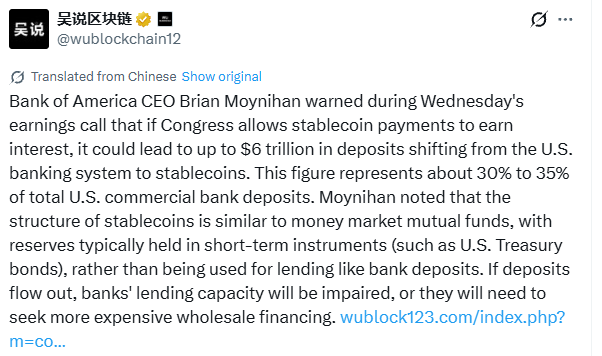
Speaking during a high-stakes earnings call on January 15, 2026, CEO Brian Moynihan highlighted a shift that WOULD represent roughly 35% of all U.S. bank deposits. According to Moynihan, this isn't just a tech trend, it's a structural threat to the way Americans get loans for homes and small businesses.
The "Genie Out of the Bottle": Why Moynihan is Sounding the Alarm
The Core of the BOA CEO stablecoin warning is the competition for "yield." For years, banks have functioned on a simple model: they take your deposits and use that money to fund loans. However, interest-bearing stablecoins behave more like money market funds.
Moynihan argued that if these digital dollars are allowed to pay high interest, the "genie will be out of the bottle." Because stablecoin reserves are typically parked in U.S. Treasuries rather than recycled into the economy via bank loans, the traditional credit system could face a permanent liquidity crunch. "If you take out deposits, banks won't be able to loan," Moynihan warned, noting that the cost of alternative "wholesale funding" would likely drive up mortgage and business loan rates for everyone.
The Senate Showdown: Why "Passive Yield" is the New Battleground
Moynihan’s warning couldn't have come at a more chaotic time. Right now, the Senate Banking Committee is in the middle of a massive debate over the 2026 crypto market structure bill, and one specific rule has everyone on edge. Lawmakers are essentially drawing a line in the sand that would ban "Passive Yield." If this goes through, you’d be legally blocked from earning interest just for having a stablecoin sitting in your wallet. Allow "Activity Rewards": Incentives for staking, providing liquidity, or governance would still be permitted.
This compromise has sparked a civil war in the industry. Coinbase CEO Brian Armstrong recently pulled his support for the bill, claiming it unfairly protects the "legacy revenue" of big banks like BOA at the expense of everyday consumers.
A National Security Risk?
The debate has even taken a turn toward national security. While the BOA CEO stablecoin warning focuses on economic stability, crypto advocates like the Blockchain Association argue that banning rewards will push users toward foreign digital currencies (CBDCs). They contend that a "weakened" digital dollar one that can't pay competitive interest—hands an advantage to global rivals just as the world’s financial plumbing moves on-chain.
