Roman Storm Trial: Is Writing Code Now a Crime? Tornado Cash Case Ignites Crypto Privacy War

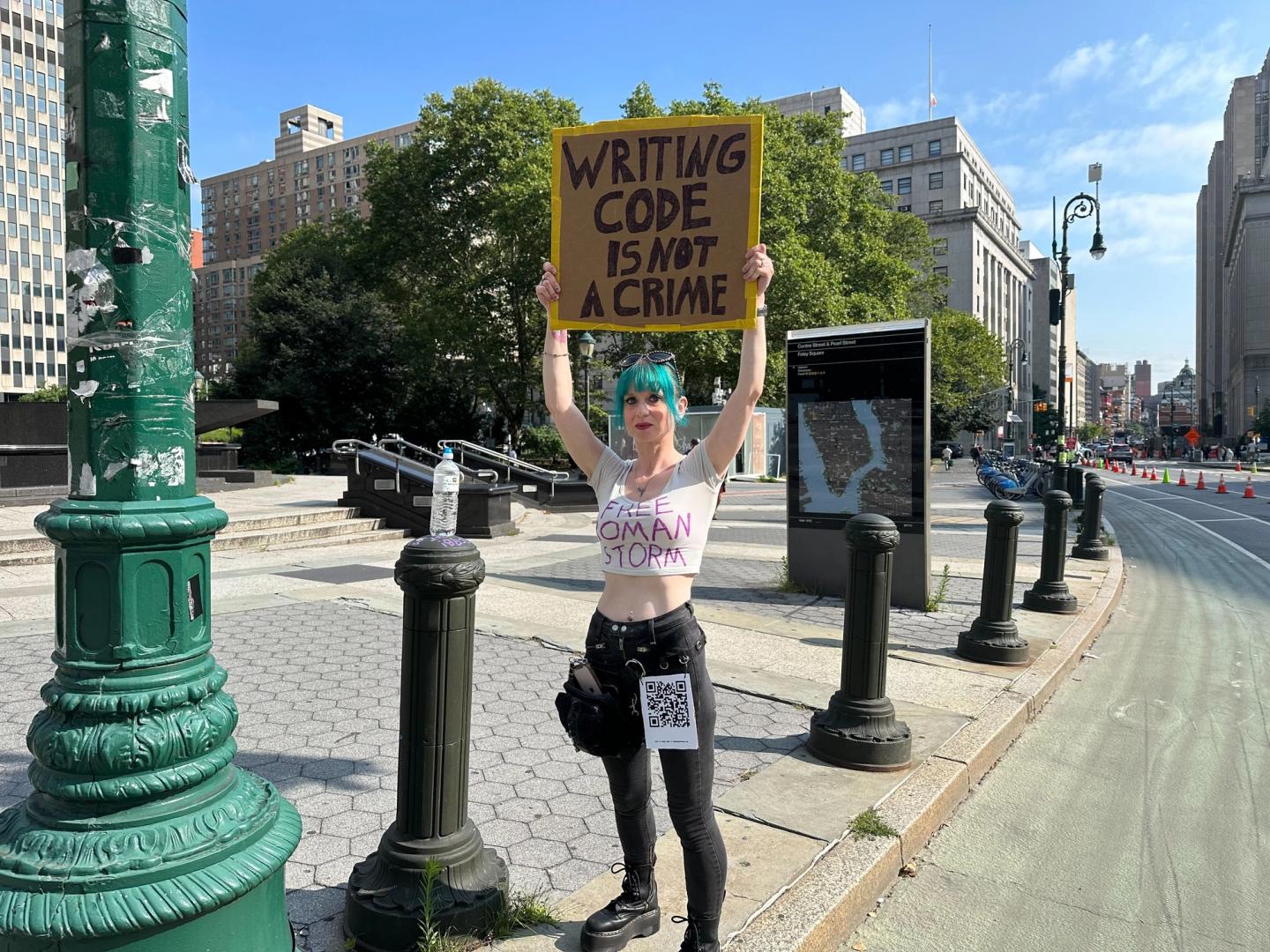
Developers beware—the DOJ just turned your keyboard into a potential crime scene.
The Storm Before the Calm
Roman Storm's legal battle over Tornado Cash isn't just about one coder—it's setting precedent for whether privacy tools equal money laundering. Prosecutors claim the Ethereum mixer's $7 billion in processed transactions makes Storm an accomplice. His defense? The code is speech—and he stopped maintaining it before alleged criminal use.
Privacy Tech vs. The Machine
Tornado Cash's smart contracts still operate autonomously, proving DeFi's unstoppable nature. Meanwhile, three-letter agencies fume as their financial surveillance tools hit crypto's privacy firewall. 'It's like arresting a bridge builder because drug dealers used it,' quipped one blockchain dev—before their lawyer made them retract the statement.
The Irony Stings
Wall Street banks laundered $2 trillion last year (per UN estimates) but get fined less than a crypto startup's Series A round. Now regulators swarm decentralized protocols while traditional finance gets its usual slap-on-the-wrist spa treatment.
Verdict coming Q3 2025. Either way—the crypto trenches just got deeper.
Expert (?) witness
Through the testimony of several “victim” witnesses as well as hack perpetrators, the prosecution told the jury how criminal proceeds flowed through Tornado Cash and then disappeared.
But one witness — a victim of a wrong-number WhatsApp scam named Hanfeng Lin, who lost $250,000 to a pig butchering operation – testified earlier in Storm’s trial that a crypto tracing company called Payback traced a portion of her money to Tornado Cash. Over the weekend, however, blockchain sleuth Taylor Monahan (aka @tayvano_x) took to X to explain that Payback, and thus the government, had gotten the tracing wrong. Lin’s money, she said, never went to Tornado Cash — a claim that other well-respected blockchain tracers, including pseudonymous blockchain sleuth ZachXBT, also verified.
The alleged tracing error led the defense to raise the possibility of a mistrial, or at least the striking of Lin’s testimony. However, Failla ruled that another of the prosecution’s witnesses — Internal Revenue Service (IRS) agent Stephan George — would be allowed to verify that Lin’s funds indeed flowed through Tornado Cash, overruling the defense’s objection to George’s introduction as an expert witness.
George, a first-time expert witness, testified that he used an accounting principle called “LIFO” (last in, first out) to trace Lin’s funds. He admitted, upon cross-examination, that the method of tracing does not establish the ownership or attribution of the wallets or funds and does not prove that Lin’s scammers moved her money through Tornado Cash.
During his cross-examination by Axel, George also admitted that he was unsure whether TORN tokens were “a totally different token than ETH,” saying, “It’s not a factor that I have to regularly navigate in my work.” When asked if he knew what Crypto.com (the exchange from which the victim’s funds originated) was, the expert replied: “I have not looked into Crypto.com and what it could be.”
Next steps
Through their own witnesses, the defense will attempt to roll back some of the characterizations and allegations made by the prosecution. On Friday, the defense will call an expert witness as well as Columbia Business School professor Omid Malekan, who will testify about his use of Tornado Cash.
