Shocking Revelation: 40% of All Blockchain Fees Fuel USDT Moves Alone, Says Tether CEO

The king of stablecoins is eating the blockchain's lunch—and the bill is staggering.
Tether's CEO drops a bombshell: Nearly half of all network fees across chains just shuttle USDT around. That's right—40% of every gas fee, every validator tip, every miner's cut... all for moving digital dollars that supposedly mirror the real thing.
The USDT black hole
Blockchains bleed value with every transaction, but Tether's dominance turns this into a self-reinforcing loop. More adoption means more congestion means higher fees—all while arbitrage bots play hot potato with the stablecoin's peg.
A cynical take?
Wall Street spends millions optimizing settlement times—crypto's 'efficient future' now burns cash faster than a 1990s investment banker at a strip club. The irony? This all happens to maintain... *drumroll*... a 1:1 dollar peg.
USDT Transfers Make Up For A Notable Portion Of Network Fees
In a post on X, Paolo Ardoino has shared the latest data related to USDT’s transfer fees share on the major blockchains. Transfer fee here naturally refers to the amount that senders have to attach with their network transactions as a reward for the validators.
Below is the chart shared by the Tether CEO that shows the trend in the percentage of these transfer fees that users on major networks are paying for making USDT transfers.
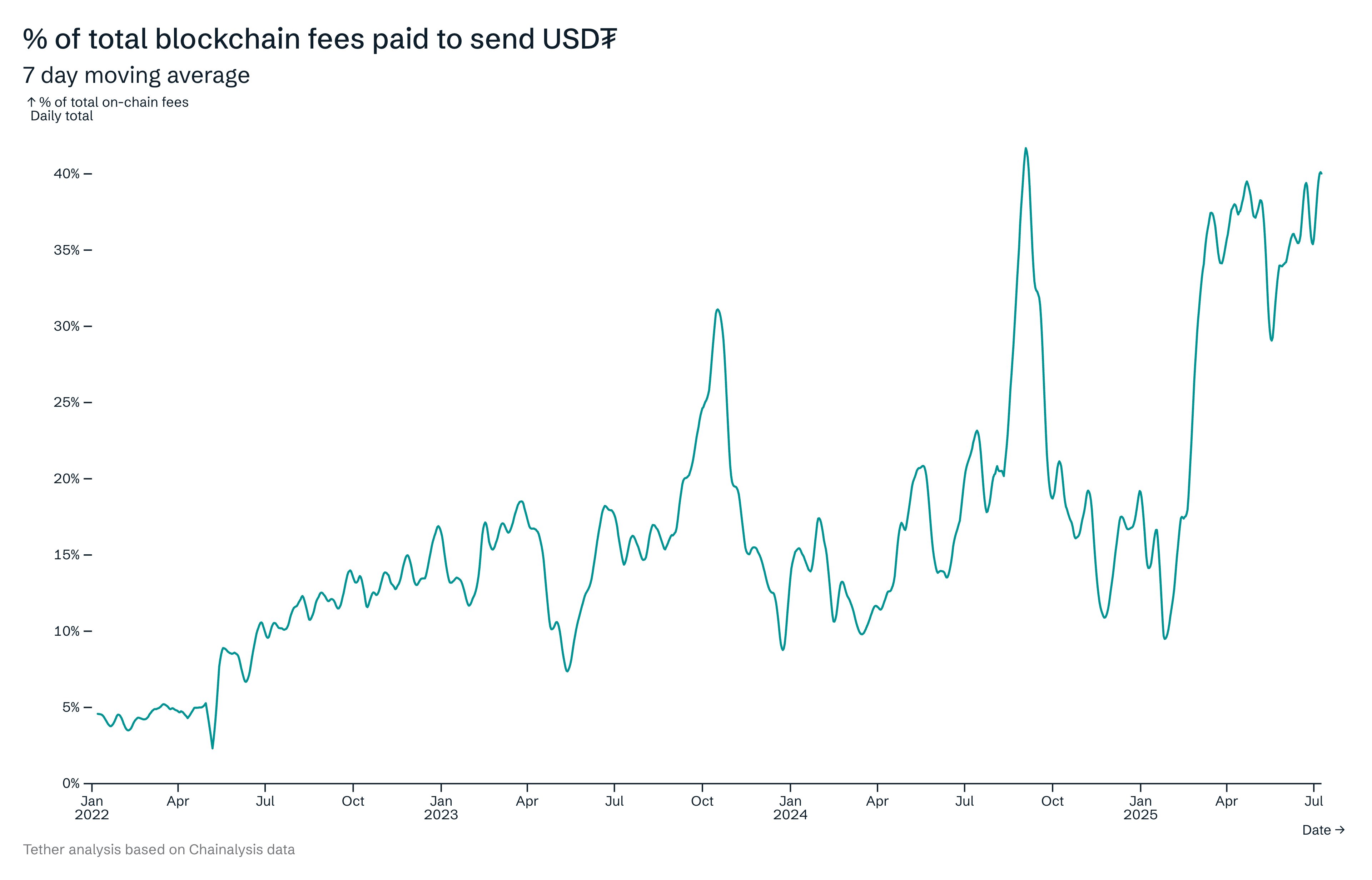
Nine networks are included here: Ethereum, Tron, Toncoin, Solana, BSC, Avalanche, Arbitrum, Polygon, and Optimism. From the graph, it’s visible that the 7-day moving average fees share of USDT transfers across these chains recently hit the 40% mark.
Fees usage can serve as a proxy for transaction activity, so this high share WOULD indicate strong user interest in Tether’s stablecoin. “Hundreds of millions of people in emerging markets use Tether’s digital dollar USDt daily, to protect their families from local inflation and devaluation of their national currencies,” notes Ardoino.
On most networks, the transfer fee is paid using the chain’s native token, even when the transaction involves a secondary coin. For example, ETH is required to make any kind of transaction on the ethereum network.
Since stablecoins like USDT run on blockchains like these, senders also need to own the network’s main token to participate in transfers related to them. Among the chains included in the above data, however, there is one exception: Tron.
This year, the blockchain launched a feature that allows users to pay gas fees in other tokens, including USDT. As a result, TRON has established itself as the dominant network when it comes to the supply of the number one stablecoin.
“Blockchains that will focus on lower gas fees, allowing paying these in USDT will take over the world,” says the Tether CEO.
In related news, the on-chain volume associated with all stablecoins set a new record recently, as institutional DeFi solutions provider Sentora has pointed out in an X post.

As displayed in the above chart, the combined monthly transaction volume of the stablecoins crossed $1.5 trillion last month, which is a new all-time high (ATH).
ETH Price
At the time of writing, Ethereum is trading around $3,600, down more than 4% over the past week.
