ECB Warns: Stablecoins Threaten Eurozone Lending Stability in 2026

Central bankers are sweating over digital dollars—and what they mean for traditional finance.
The New Shadow Banking System
Forget the old warnings about crypto volatility. The European Central Bank now flags a stealthier danger: stablecoins. These digital tokens, pegged to fiat currencies, are morphing into a parallel financial system. They don't just sit in wallets—they're being lent, borrowed, and leveraged outside the regulated banking sector.
Cutting Out the Middleman (and the Regulator)
The mechanism is simple and disruptive. Stablecoin platforms create credit channels that bypass traditional banks entirely. Savers park funds in yield-bearing stablecoin pools; borrowers tap them directly. No bank license needed. No capital reserve requirements. It's financial disintermediation on steroids—and it's siphoning activity away from eurozone lenders.
A Systemic Risk in Plain Sight
The ECB isn't crying wolf. When lending shifts to opaque, algorithm-driven protocols, systemic oversight evaporates. There's no lender of last resort if a major stablecoin lending pool fails. A sudden mass redemption or a collateral crash could trigger a liquidity crunch that spills back into the traditional economy. The 2008 playbook doesn't cover this.
The Regulatory Tug-of-War
Brussels is scrambling. MiCA regulations aim to bring stablecoin issuers to heel, but enforcement lags behind innovation. The real challenge? Jurisdiction. How do you regulate a global, 24/7 network operated by decentralized autonomous organizations? It's like trying to put a leash on the internet.
The Ironic Twist
Here's the finance jab: The same institutions that spent decades building a fortress of compliance now watch as markets choose speed and efficiency over their 'safety.' Stablecoins expose a brutal truth—sometimes, the biggest risk to the system is the system itself becoming obsolete.
The genie's out of the bottle. The ECB can warn, but the market is voting with its wallet. The future of lending might not be decided in Frankfurt, but on a blockchain.
Deposit Flight Could Strain Eurozone Banks
According to an ECB working paper cited by Reuters and other outlets, stablecoins may pull funds out of the banking system if people see them as SAFE and easy to use for payments or savings.
Even small shifts can matter. Eurozone banks rely heavily on deposits to finance mortgages, business credit, and consumer loans.
If deposits fall, banks may have to look for other funding sources. Those often cost more. When funding becomes more expensive, lending can slow, or borrowing rates may climb. That Ripple effect could be felt by households and companies across the region.
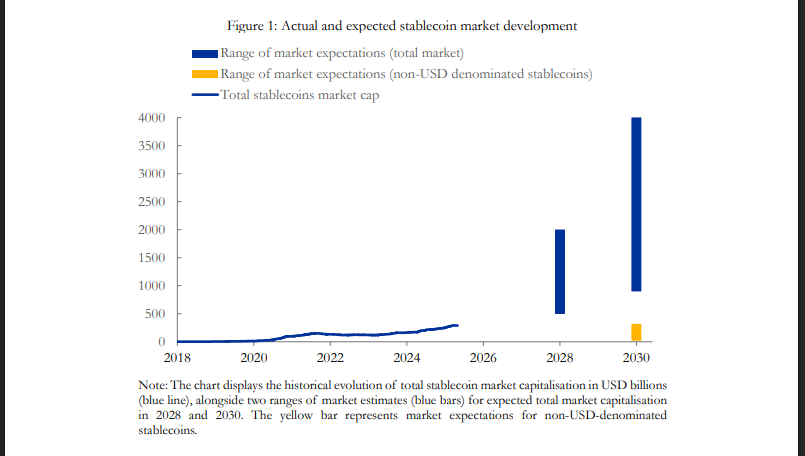
Reports note that dollar-backed stablecoins are a particular worry. If Eurozone residents increasingly hold tokens linked to the US dollar, it may also weaken the role of the euro in daily transactions.
The ECB has long guarded its control over monetary policy. That control depends on how smoothly interest rate changes pass through the banking system.
It was stressed in the paper that a sharp rise in stablecoin adoption could weaken that transmission channel.
Monetary Policy Could Lose Some Bite
The ECB adjusts interest rates to cool inflation or support growth. Those decisions filter through banks, which adjust deposit and loan rates in response. If a chunk of savings sits outside the traditional system, that chain can be disrupted.
Based on reports, ECB researchers modeled scenarios where stablecoins capture a meaningful share of deposits. In such cases, the impact of rate hikes or cuts may become less predictable. Policy moves could take longer to influence spending and investment.
On Interference & PredictabilityAccording to the report’s authors, they find that stablecoin adoption “interferes with multiple monetary policy transmission channels that WOULD potentially weaken the predictability of policy actions.”
There is also a liquidity angle. During times of market stress, digital tokens can be moved quickly. Large outflows from banks into stablecoins, or back again, could amplify swings in funding conditions. That risk has been flagged before in global debates on crypto regulation.
The paper forms part of the ECB’s broader push to keep a close watch on stablecoins, a sector whose total market value has surged to more than $300 billion after more than doubling in the last three years. Forecasts suggest that figure could climb to $2 trillion by 2028.
European officials have not called for a ban. Instead, attention has focused on oversight. The European Union’s Markets in Crypto-Assets framework is already in place, setting rules for issuers and service providers.
Featured image from Unsplash, chart from TradingView
