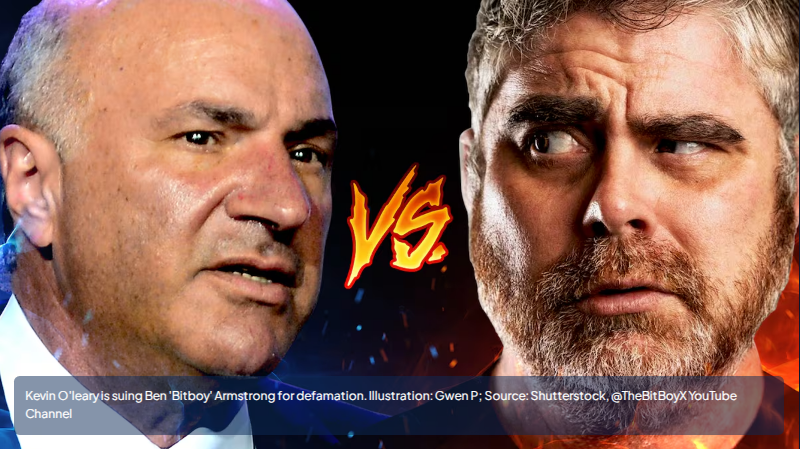
Crypto Courtroom Drama: Kevin O’Leary Wins Nearly $3M Against YouTuber ‘Bitboy’

Shark Tank investor Kevin O’Leary just landed a nearly $3 million legal bite on crypto influencer Ben Armstrong—known as ‘Bitboy Crypto’—in a defamation suit that’s sending shockwaves through the digital asset space.
From YouTube rants to courtroom receipts
The case centered on allegations Armstrong made across his social media platforms, claiming O’Leary was involved in a promotional scheme for a now-defunct crypto project. O’Leary’s legal team argued the statements were false and damaging, painting the investor as unethical. The court agreed, handing down a judgment that converts viral accusations into a very real, very expensive liability.
A precedent for influencer accountability?
This isn’t just a personal win for O’Leary—it’s a potential watershed moment. The ruling signals that the ‘wild west’ era of unchecked crypto commentary might be facing a new sheriff: the legal system. For an industry built on decentralized ideals, a centralized court enforcing defamation law adds a complex layer of traditional accountability.
The high cost of hype
Armstrong built a massive following by blending brash predictions with entertainment. This judgment, however, puts a precise dollar figure on the risk of that approach. Nearly $3 million serves as a stark reminder that influence is an asset, and mismanaging it can lead to a brutal margin call. It’s a classic finance lesson—always hedge your bets, especially when your mouth is writing checks your reputation can’t cash.
The verdict lands as regulators globally sharpen their focus on market manipulation and misleading promotion in crypto. While this was a civil case, it creates a powerful deterrent. Other influencers may now think twice before making unsubstantiated claims, potentially leading to more measured—or at least more legally vetted—content. For investors, it’s a reminder: do your own research, because even the loudest voices can be silenced by a judge’s gavel.
Court Enters Default Judgment
The court award totals roughly $2.8 million in combined damages. That figure breaks down into about $78,000 for reputational injury, $750,000 for emotional distress, and $2,000,000 in punitive damages meant to punish the conduct.
#bitboy #Mrwonderful pic.twitter.com/mCUsuwESm6
— F Joe (@FJOE_CRYPTO) February 14, 2026
Judge Beth Bloom presided over the matter in the US District Court for the Southern District of Florida, which handled filings and issued the judgment. The ruling came after procedural steps that allow a plaintiff to obtain judgment when a defendant fails to respond.
Allegations And Timeline
Reports say the posts at the center of the case appeared in March of last year. They accused the businessman of being connected to lethal conduct and alleged a cover-up. O’Leary has never been charged in relation to that incident, and later court records showed related parties were cleared at trial.
The defamation suit alleged the statements crossed the line from opinion into false factual claims that damaged reputation and caused distress. Because Armstrong did not appear or meaningfully answer the complaint, the court treated the claims as conceded for purposes of final judgment.
Crypto Connection And ImplicationsArmstrong is a well-known personality in the world of cryptocurrency, operating the popular site BitBoy Crypto. His messages reach thousands of cryptocurrency fans and investors, which helped to spread the false claims.
Although the case itself is not related to cryptocurrency, it shows the legal danger that cryptocurrency influencers may face when posting unverified or defamatory information online. This decision may make other personalities in the cryptocurrency world more careful about what they post online.
Featured image from Getty Images, chart from TradingView
