SPY, QQQ Slide as October Data Threat Looms Ahead of House Shutdown Vote—Market Braces for Impact

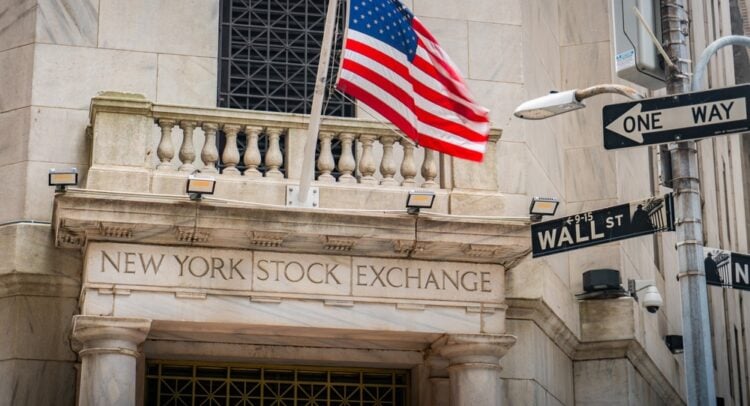
Markets tumble as political brinkmanship threatens economic clarity.
SPY and QQQ took a hit today as investors faced a double-whammy: vanishing October economic data and Washington's shutdown theatrics. The House vote isn't just political theater—it's a loaded gun pointed at market stability.
Key takeaways:
- Liquidity vampires are circling: Without fresh data, algorithmic traders will feast on volatility
- The 'transparent market' myth takes another hit—when DC flips the switch, Wall Street goes blind
Funny how 'fiscal responsibility' always means last-minute brinksmanship. Someone check if Congress is trading options.
Meet Your ETF AI Analyst
- Discover how TipRanks' ETF AI Analyst can help you make smarter investment decisions
- Explore ETFs TipRanks' users love and see what insights the ETF AI Analyst reveals about the ones you follow.
White House Press Secretary Karoline Leavitt warned that inflation and jobs data for October will likely never be released amid a halt of federal economic data stemming from the government shutdown.
“The Democrats may have permanently damaged the federal statistical system with October CPI and jobs reports likely never being released,” said Leavitt, adding that economic data could be “permanently impaired.” That creates a major issue for the Fed ahead of its December 9-10 Federal Open Market Committee (FOMC) meeting, as it uses the data to guide its monetary policy decisions.
The House will vote on a government shutdown resolution bill this evening after the House Rules Committee cleared the measure this morning. The chamber is expected to approve the bill and send it to President Trump, who has already voiced his support. The two approvals WOULD put an end to the longest government shutdown on record, currently in its 43rd day.
This evening, TRUMP is also expected to host a dinner at the White House with top financiers, including JPMorgan Chase (JPM) CEO Jamie Dimon, Goldman Sachs (GS) CEO David Solomon, and BlackRock (BLK) CEO Larry Fink. Trump has previously held dinners with corporate leaders, including one with tech CEOs in September, in order to deepen relationships and promote domestic investment and manufacturing.
Meanwhile, Goldman Sachs has warned that the S&P 500 (SPX) is at risk of facing a decade of underperformance in comparison with the rest of the world. Strategists at the bank led by Peter Oppenheimer forecast the benchmark index to return 6.5% annually over the next decade, falling behind Europe at 7.1%, Japan at 8.2%, Asia ex-Japan at 10.3%, and emerging markets at 10.9%.
“We expect higher nominal GDP growth and structural reforms to favor EM, while AI’s long-term benefits should be broad-based rather than confined to US technology,” wrote the strategists in a note.
Finally, Atlanta Fed President Raphael Bostic announced that he would retire once his five-year term expires in February 2026. Bostic said in a speech on Wednesday that he prefers a steady rate until there is “clear evidence” of inflation winding down to the Fed’s target of 2%.
The S&P 500 (SPX) closed with a 0.06% gain, while the Nasdaq 100 (NDX) fell by 0.06%.
