Warren Buffett’s 100-Day Countdown: 3 seismic shifts coming to Berkshire Hathaway when the Oracle retires

Berkshire's throne empties in 100 days—and the empire built on soda and insurance faces its greatest transformation.
The succession shakeup nobody's ready for
Buffett's departure triggers immediate leadership restructuring. The Oracle's cult-of-personality management style gives way to institutionalized decision-making. No more folksy annual meetings dripping with homespun wisdom—just cold, hard corporate governance.
Portfolio purge incoming
Berkshire's fossil fuel holdings face existential scrutiny. New leadership ditches Buffett's analog-era energy bets for tech-forward allocations. The famous 'buy what you understand' mantra gets replaced by 'buy what generates alpha'—even if nobody understands blockchain.
The cash hoard dilemma
That $100 billion war chest suddenly looks like dead weight. Activist investors circle as Berkshire's new guards face pressure to deploy capital faster than Buffett's glacial pace. The 'wait for the perfect pitch' approach gets benched for aggressive acquisition plays.
Three changes, one inevitable truth: even the most legendary investors become legacy items. Berkshire transforms from museum piece to modern corporation—proving once again that on Wall Street, the only constant is someone else's retirement fund getting reshuffled.
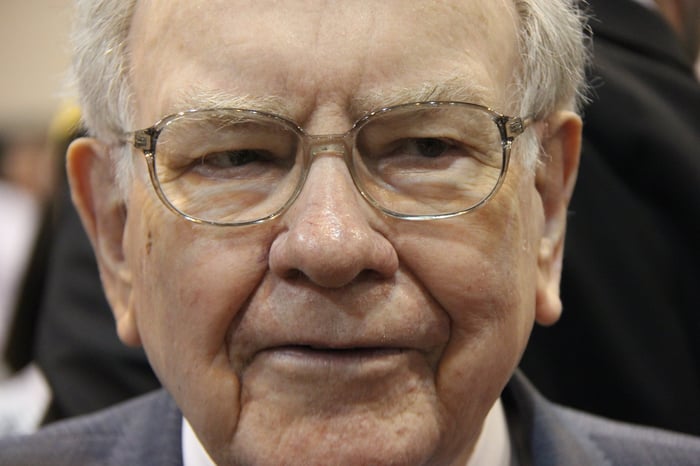
Berkshire Hathaway CEO Warren Buffett. Image source: The Motley Fool.
During Berkshire's annual shareholder meeting in early May, the aptly named Oracle of Omaha announced his intent to step down from the CEO role at the end of the year and, with board approval, hand the reins over to predetermined successor Greg Abel. The end of Buffett's tenure as CEO is exactly 100 days away, as of today, Sept. 23.
For his part, Abel has vowed to stick to the investing philosophies that made Warren Buffett and late right-hand man Charlie Munger such phenomenal investors. This means focusing on the long-term, buying back Berkshire Hathaway's stock when appropriate, and being an unwavering value investor.
But changes are inevitable.
When Warren Buffett retires 100 days from now, three big changes are coming to Berkshire Hathaway.
1. Expect more active trading from longtime "investing lieutenants," Todd Combs and Ted Weschler
Among the dozens of books written about Berkshire Hathaway's billionaire chief, arguably no characteristic defines him more than his desire to buy great companies and hold them for a long, long time. While it's unlikely that we'll see significantly shorter hold periods once Buffett retires from the CEO role at the end of 2025, there's a good chance his longtime "investing lieutenants," Todd Combs and Ted Weschler, become more active.
For example, Buffett often took a couple of quarters to build up a position he had conviction in, or to exit a stake that no longer met his investment criteria. Adding 5% to an existing position here, or selling 3% of an existing position there, isn't something you'd traditionally see from a Warren Buffett-run portfolio. The trades he oversaw had a clear purpose: enter or exit a stock.
In recent years, Combs and Weschler have become more active on the trading front. Though the overwhelming majority of stocks purchased are being held for multiple years, it's not uncommon for this dynamic duo to slowly add to or reduce a position.
Don't be surprised if Berkshire Hathaway's FORM 13F filings following Buffett's retirement feature considerably more purchases and reductions than we're historically used to seeing.

Image source: Getty Images.
2. Healthcare stocks are back on the radar (perhaps in a big way)
The second change Berkshire Hathaway shareholders and Wall Street can expect is a renewed focus on healthcare stocks.
Historically, Berkshire's largest holdings have often been found in the financial or consumer staples sectors, which are the two sectors Buffett understands best. Though(AAPL 4.33%), a tech stock, is currently Berkshire's largest holding (and has been for years), the Oracle of Omaha views it more as a provider of consumer goods (iPhones, iPads, Macs, and so on) and has been enamored with the incredible loyalty consumers have shown to the Apple brand.
It's been more than a decade since healthcare played a meaningful role in Berkshire Hathaway's investment portfolio. At 95 years old, Buffett doesn't have the time or energy to keep up with clinical trials and regulatory news. Once he retires, Abel, Combs, and Weschler are likely to lean on healthcare stocks for investment purposes.
The reason is simple: the stock market is historically pricey and healthcare stocks are comparatively inexpensive. Based on data from Yardeni Research, the forward price-to-earnings (P/E) ratio of the S&P 500 is 22.7, while S&P 500 healthcare stocks are sporting an average forward P/E of just 16.4, as of Sept. 16. With the exception of energy, healthcare has the lowest forward P/E of any S&P 500 sector.
For example, pharmaceutical stocks remain highly attractive.(PFE 0.04%), which was briefly held by Buffett's company in late 2020 and early 2021 (likely a trade made by Combs or Weschler), can be purchased for a forward P/E of less than 8, equating to a 24% discount to its average forward earnings multiple over the last half-decade. It's also doling out an S&P 500-crushing yield north of 7%! This is the type of healthcare stock Berkshire Hathaway's investment team may gobble up in the post-Buffett era.
3. One or more core holdings will be given the heave-ho
The third big change Wall Street and investors should expect following the retirement of Warren Buffett is the eventual disposition of one or more of Berkshire Hathaway's Core holdings.
To be crystal clear, I'm not talking about the eight "indefinite" holdings Warren Buffett described in his 2023 annual letter to shareholders. In that letter, he referred to his company's longest-held stocks,and, along with, and the five Japanese trading houses, as "indefinite" holdings. These eight stocks aren't going anywhere.
However, No. 1 holding Apple is far from safe. Despite having a loyal shareholder base and a phenomenal management team led by CEO Tim Cook, Apple's physical device sales stalled out for three consecutive years.
When Buffett and his team first began building up Berkshire's stake in Apple in the first quarter of 2016, shares of company were trading at a forward P/E of 10 to 15, with sales growth expected in the high-single-digits if not low double-digits. Today, Apple is valued at 36 times trailing-12-month earnings per share.
It no longer meets the value criteria that Buffett or his investment team typically look for, which may explain why 69% of Berkshire's stake in Apple has been sold since Sept. 30, 2023. Don't be surprised if Berkshire's selling of Apple stock continues/accelerates after Buffett retires.
It's also possible financial juggernaut(BAC -0.43%) gets shown the door.
BofA, as Bank of America is more commonly known, was added to Berkshire's portfolio in August 2011 in the form of preferred stock. Prior to Buffett converting BofA warrants into the common stock Berkshire owns today, Bank of America was valued at as much as a 68% discount to its book value. Today, it trades at a 38% premium to its book value. It's no longer the slam-dunk bargain to book value that it once was.
While nothing suggests Berkshire Hathaway won't continue to be a great investment in the post-Buffett era, things are going to look different.
