Is Elon Musk Already Abandoning Tesla’s Robotaxi Dream?

Elon Musk's latest pivot sparks fresh doubts about Tesla's autonomous future.
Just months after touting robotaxis as Tesla's next revolution, Musk appears to be shifting focus—again. The billionaire's attention has fractured across X.ai, SpaceX, and now rumored crypto ventures, leaving investors wondering if Tesla's moonshot got grounded.
Wall Street's patience wears thin as promises pile up. 'Another visionary project stuck in beta,' quipped one fund manager. 'Musk's ambitions outpace execution—classic disruption theater.'
Tesla's autonomy timeline stretches into its fifth year of 'next-year' promises. Meanwhile, competitors quietly deploy real-world fleets. Musk's silence speaks volumes—sometimes the biggest moves are the ones not made.
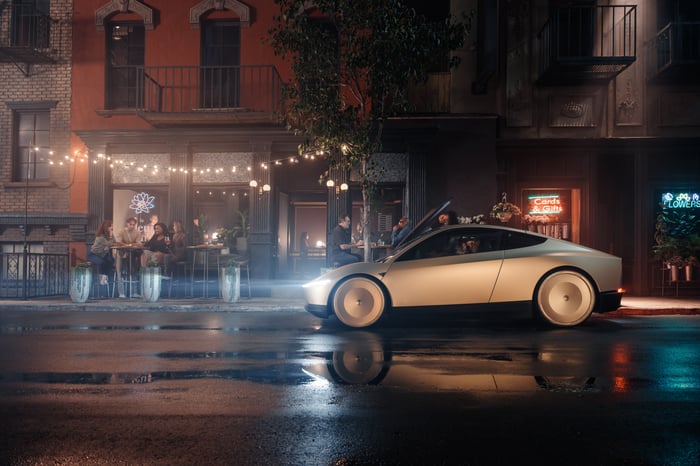
Image source: Tesla.
Promises, promises
Even Tesla bulls know by now that Musk's statements are best taken with a grain of salt. It's hard to know if the quote above about Optimus was based on any real forecasting or just on his enthusiasm and confidence in the new technology.
Though it frustrates Musk's critics, part of his talent as a CEO is to perform a sort of sleight-of-hand where he distracts investors from current problems with the company by making promises about the future. Similarly, the bull case for Tesla seems to be constantly changing. At the start of the year, Musk's alliance with President Donald TRUMP drove the stock to double in price in just a few months before it pulled back on subsequent backlash against Musk and Tesla over Musk's apparent falling out with Trump.
Over the last week, Tesla stock has been rallying again despite reports that its market share in EVs has fallen to its lowest point in the U.S. since 2017, at 38% of total EV sales, showing it may be losing the market it once defined.
Musk's promises around robotics and his recent purchase of $1 billion worth of stock seem to have overcome any doubts (for now) and helped fuel recent gains. Tesla also received permission from Nevada to test its robotaxis in that state.
What's next for Tesla's robotaxis
Musk did promote the robotaxi launch in the company's July earnings call, and noted that it's seeking regulatory clearance in the Bay Area, Arizona, Florida, and Nevada.
He also predicted that Tesla WOULD offer autonomous ride-hailing to half the U.S. population by the end of the year. However, now that it's already September, it seems unlikely that it will happen.
The robotaxi went live in the Bay Area on Sept. 4, though rides will come with a safety driver present, meaning they aren't fully autonomous. Tesla does not yet have the permit to operate autonomous vehicles without a driver.
For now, the market opportunity for robotaxis is massive, but Tesla is far from the only competitor here.Waymo remains the leader here, and other deep-pocketed operators are getting in the mix asZoox just launched in Las Vegas.
At this point, it's too soon to judge the impact the robotaxi will have, but it will almost certainly take longer to MOVE the revenue needle than Musk has forecast. Meanwhile, statements like the one above on Optimus may help pump the stock, but they ultimately do a disservice to investors.
Currently, Tesla trades at a sky-high price-to-earnings ratio close to 200, and analysts expect both revenue and profits to fall this year.
Musk may have more bold predictions up his sleeve, but at some point, Tesla is going to have to back them up with real business results. At its current valuation and trajectory, the risk/reward in Tesla stock doesn't seem worth it.
