Tesla Stock Tempting? 2 Glaring Red Flags You Can’t Ignore in 2025

Tesla's stock might look shiny—but don't get blinded by Elon's hype machine. Here's what could derail your investment.
1. Valuation vs. Reality: The Gravity-Defying Act
Even after recent dips, Tesla trades at multiples that make legacy automakers weep. When does the 'growth premium' start looking like pure speculation?
2. Execution Roulette: Factories or Fantasy?
Cybertruck delays, robotaxis stuck in beta, and that 'full self-driving' promise? Still not here. Meanwhile, BYD and Xiaomi eat Tesla's lunch in China.
Bottom line: Tesla remains a cult stock with cult risks—perfect for degenerates who think 'diamond hands' is an investment strategy.
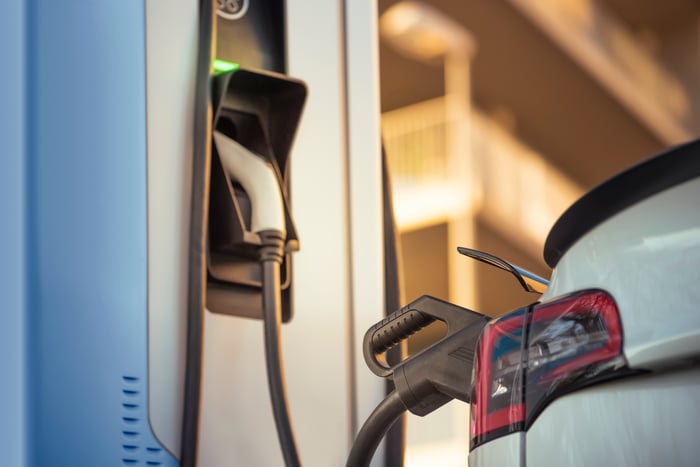
Image source: Getty Images.
1. The Elon Musk factor
Elon Musk's leadership is often cited as Tesla's greatest strength -- and, paradoxically, one of its most significant vulnerabilities. Musk's vision and hands-on approach have driven Tesla's technological breakthroughs and ambitious expansion. However, this heavy reliance on a single individual introduces what investors refer to as "key man risk."
If Musk were to step back from daily operations or shift his focus to other projects, Tesla might face challenges in maintaining its momentum. Though Tesla's management team has grown stronger, few executives command the same vision, drive, and public attention as Musk.
Recently, Musk's increasing involvement in political activities has raised concerns about potential distractions or reputational risks for Tesla. While the company has remained operationally strong, these developments underscore the uncertainty around its future leadership continuity. While Tesla's success lies not only with Musk but also with his team, which has executed well on his vision -- no one can build a trillion-dollar company alone -- there is still no clear successor (or a viable management team) . The silver lining here is that the Tesla board has become more serious about finding one in recent months, largely due to the CEO's active involvement in politics.
For investors, this means that Tesla's fortunes remain closely tied to Musk's presence and decisions -- a factor that adds a LAYER of risk to the investment.
2. Intensifying competition
Tesla might have been an early mover in the EV industry, but its dominance is no longer guaranteed. The industry landscape is rapidly evolving, with legacy automakers and new entrants accelerating their electric ambitions.
Companies likeandare aggressively expanding their EV lineups. For instance, Ford plans to introduce a $30,000 midsize truck by 2027. That price is significantly lower than the average for an EV, and Ford is investing $5 billion in its EV production to make it happen. GM, on the other hand, is working hard on next-generation battery technologies to improve range, charging performance, and cost.
Meanwhile, Chinese manufacturers such asare growing their international footprints, particularly in Europe, where Tesla experienced a nearly 27% sales declinein July 2025. BYD's battery technology, government support, and competitive pricing make it a formidable challenger.
In addition, a host of EV start-ups are innovating in battery tech, autonomous driving, and new business models, further intensifying competition. While Tesla is not sitting still -- it is working on becoming the lowest-cost producer by cutting prices to grow sales volume and achieve economies of scale -- there is no guarantee that it can maintain its market share over time.
In short, it's no longer the only player in town.
What does this mean for investors?
Tesla's story remains compelling: It's a pioneer with a powerful brand, innovative products, and potential optionality with some of its long shot bets (robotaxi, humanoid robots, etc). But the key man risk surrounding Musk and the escalating competitive landscape are real concerns that investors can't ignore.
If Tesla continues to innovate more rapidly than its rivals, the company could sustain its growth trajectory. However, any leadership changes or slips in market position could hurt the business and its share price.
While these two risks don't necessarily call for the sale of the stock, they do mean that investors should think carefully before buying the stock today. Tesla stock trades at a significant premium valuation to other carmakers. For perspective, Tesla has a price-to-sales (P/S) ratio of 12.9, compared to GM's 0.3.
Unless you're comfortable with the risks and the high valuation, buying the stock today may not be a prudent decision.
