Joby Aviation Stock Soared in July—Here’s the High-Altitude Reason Why

Joby Aviation’s stock didn’t just climb—it went full vertical takeoff last month. Here’s the turbulence-free breakdown.
The electric air taxi hype hit warp speed
Investors piled into the eVTOL (electric vertical takeoff and landing) darling like it was the last chopper out of Saigon. No hard numbers? No problem—Wall Street’s imagination did the heavy lifting.
Short sellers got burned—again
Another ‘future of mobility’ play proving skeptics wrong—or just another overbought meme stock? Either way, the bears are licking their wounds.
The cynical take
Let’s be real—this is the same market that thought WeWork deserved $47 billion. At least Joby’s helicopters might actually fly.
Joby Aviation expands manufacturing capacity
First, it's a sign of growing confidence in its ongoing certification process. The latest news on that front came from the recent announcement that Joby is "preparing for final assembly of its first conforming aircraft intended for Type Inspection Authorization (TIA) flight tests" with the Federal Aviation Administration (FAA).
Management expects to complete its first TIA flight this year as it moves toward final certification.
Second, the news is particularly important for the company because of its vertical integration strategy. In this case, "vertical" means management is primarily designing and manufacturing its eVTOL components in-house. This differentiates it from eVTOL competitors likeor, which have technology partners. As such, Archer and Vertical Aerospace both believe their business models should result in a quicker certification process and with less risk attached.
However, it seems Joby is leading the field in terms of FAA certification, and expanding its manufacturing capacity helps de-risk the stock from one of investors' most significant fears: the possibility that its vertically integrated model will create manufacturing issues for a young company.
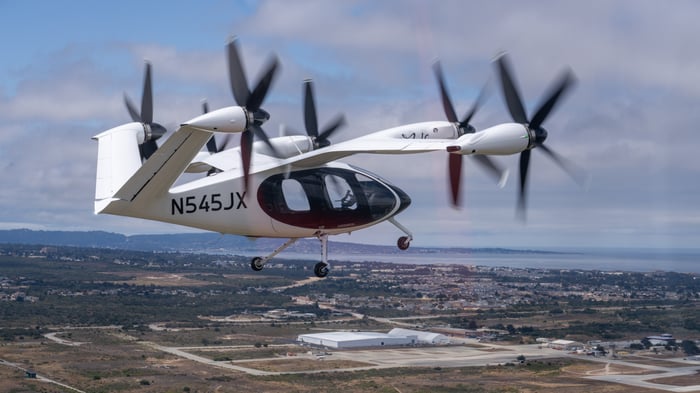
Image source: Joby Aviation.
Toyota's and Uber's involvement is key
While Joby has a vertically integrated model, it also has investment from and a manufacturing alliance with. The Japanese car company has invested $894 million in Joby, and Toyota is working with Joby to help optimize its manufacturing processes.
In addition,has invested $125 million in Joby so far, with the eVTOL company acquiring Uber Elevate. This is a key part of Joby's overall business model, which involves owning and operating its own fleet of aircraft and offering transportation services (air taxis) itself rather than selling aircraft to other operators.
Moreover,is on track to invest $200 million in Joby, with the intent to deliver a service to Delta customers traveling to and from airports.
Joby's plans are ambitious, but they are perfectly feasible. The partnerships with Toyota, Uber, and Delta make sense, and Joby's management is de-risking the stock with its capacity expansion and progress toward certification.
