$1,000 in Bitcoin a Decade Ago? Here’s the Life-Changing Sum You’d Be Sitting On Today

Imagine turning lunch money into generational wealth—that’s Bitcoin’s 10-year promise in one sentence.
The ROI that shatters traditional finance
While hedge funds peddled 8% annual returns, Bitcoin quietly minted millionaires. No lock-up periods, no gatekeepers—just code, scarcity, and the audacity to ignore Wall Street’s playbook.
Why your broker still hates this
Financial advisors who dismissed crypto now battle existential dread. That 1,000%+ gain? It wasn’t in their commission-heavy products. Bonus jab: Your bank’s ‘high-yield’ savings account still pays less than inflation.
The new wealth blueprint
From pizza purchases to private islands—the math speaks for itself. Missed the boat? Today’s altcoins are writing tomorrow’s headlines.
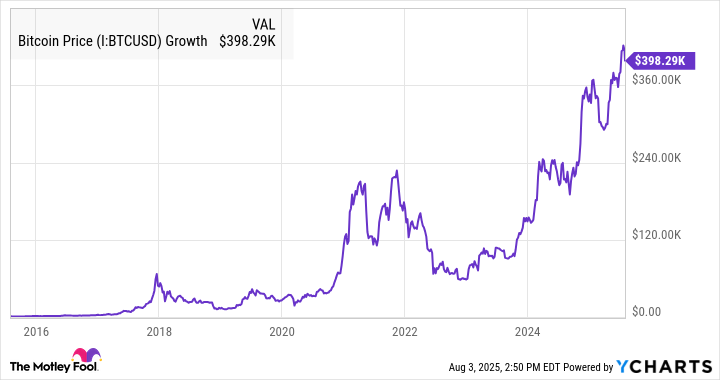
Bitcoin Price data by YCharts
Bitcoin's not-so-linear rise
As you can see from the chart, Bitcoin's rise has been a bit lumpy over the past decade, and there were a few specific catalysts that helped fuel nearly 400-fold gains in its price:
- There was a massive surge in cryptocurrency awareness and investor interest toward the end of 2017, sending it about 20 times higher than where it started that year.
- Investor appetite for speculation soared during the COVID-19 pandemic, fueled by massive fiscal and monetary stimulus, and cryptocurrencies were a major beneficiary.
The recent crypto-friendly policies and legislative efforts of the Trump administration has also fueled the latest rally to all-time highs in Bitcoin. For example, the Office of the Comptroller of the Currency (OCC) recently clarified that chartered financial institutions can serve as cryptocurrency custodians. This is what prompted to announce the return of cryptocurrency trading, and it wouldn't be surprising to see more banks follow.

Image source: Getty Images.
As a final thought, keep in mind that 10 years ago, Bitcoin, cryptocurrency, and financial technology in general weren't anything even close to what they are today. At the time, bitcoin was used by a very small percentage of early adopters, and had yet to gain mainstream recognition, especially as a digital store of money.
