Top Warren Buffett Stocks to Snap Up With $300 Right Now

Warren Buffett's $300 plays that could outperform traditional finance.
Forget waiting for Wall Street's permission—these Buffett-backed stocks deliver institutional-grade value at retail prices.
Value investing meets accessibility
Buffett’s strategy always favored durable competitive advantages. Now with fractional shares, his top picks become accessible without the typical hedge fund entry requirements.
The $300 advantage
While finance traditionalists obsess over minimum investments, modern platforms demolish those barriers. Three Benjamin Franklins now buy what once required six figures.
Timeless picks for turbulent markets
Consumer staples, energy infrastructure, and financial services dominate Buffett’s current portfolio—sectors built to withstand economic cycles unlike speculative tech plays.
Because sometimes the best fintech innovation is buying what the Oracle already vetted—while Wall Street analysts still debate their morning coffee orders.
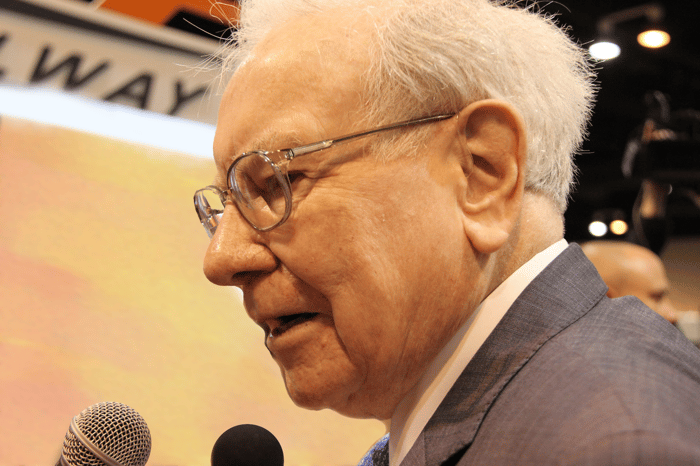
Image source: The Motley Fool.
Bank of America: Buffett's favorite bank stock
Buffett and Berkshire Hathaway have positions in several financial companies. Berkshire owns insurance companies Geico, General Re, and Berkshire Hathaway; stock in credit card companies,, and; a stake in the the credit ratings and analytics company; and a small percentage of, the investment bank.
But Bank of America is by far the company's biggest bank stock, as Berkshire holds 605.2 million shares for a $31.3 billion stake. Bank of America makes up 10% of Berkshire's entire portfolio. The North Carolina–based financial institution has about 69 million customers and maintains 3,700 locations across the country, as well as a network of 15,000 ATMs and a robust digital presence.
The company has benefited from a period of elevated interest rates that brought in increased net interest income -- the company reported $14.7 billion in net interest income in the second quarter, up 7% from a year ago. And while the Federal Reserve is now starting to lower rates, Bank of America will still be just fine as people begin to take out new loans or refinance mortgages.
Bank of America is also attractive for its 15.2 price-to-earnings ratio and its 2.1% dividend yield.
Chevron: The energy powerhouse
Buffett and Berkshire Hathaway recognize the importance of energy and fossil fuels in today's economy, and the conglomerate has sizable investments in, Chevron, and.
I like Chevron here. Even though oil prices have been down this year, Chevron still generates a massive amount of free cash FLOW -- $4.9 billion in the second quarter, up from $2.3 billion a year ago.
The company recently completed its $55 billion acquisition of Hess, emerging victorious over ExxonMobil in a legal battle that saw it win access to the Guyana Stabroek Block that is purportedly the biggest oil discovery in decades with more than 11 billion barrels of oil.
Chevron already recorded record production in the second quarter for the Permian Basin, with 1 billion barrels of oil per day, and I expect production to increase following the Hess merger.
The company pays a generous dividend yield of 4.4%.
Kroger: The defensive pick
Even when spending tightens up and consumer confidence falls, people still need to eat. While consumer discretionary stocks can come under pressure, consumer staples stocks, such as grocery stores, often can be a safer place for investors to put their money. That's where Kroger comes in.
Kroger is the second-largest grocery store chain in the U.S., behind only. The company has more than 2,700 locations, 2,250 pharmacies, and 1,700 fuel locations scattered throughout 35 U.S. states and the District of Columbia.
The Cincinnati-based grocer reported $33.9 billion in sales in the second quarter, including fuel and specialty pharmacy sales. But without those items, sales were up 3.8% from last year, indicating that people are spending more money in Kroger's grocery stores.
Part of that comes from Kroger's increased emphasis on growing its own in-house brands of food products, which the company can offer at a lower price point and a greater profit than national brands.
Kroger still has a cheap valuation with a P/E ratio of 16.4, which is lower than that of Walmart (38.7),(53.5), or(26.7). Coupled with a dividend yield of 2.1%, Kroger offers a compelling investment opportunity.
