BRICS 2027 Chairmanship: The Silent Power Shift That Will Reshape Global Finance

Forget the flashy summits and loud declarations. The real geopolitical earthquakes happen in boardrooms, over secure lines, with a single line on a calendar. The BRICS bloc just scheduled one for 2027.
The Chairmanship That's Not Just a Title
Rotating leadership in an economic alliance might sound like bureaucratic housekeeping. It's not. It's a year-long masterclass in agenda-setting, coalition-building, and institutional steering. The chair sets the tone, prioritizes the projects, and—critically—controls the narrative. For a bloc explicitly built to challenge Western financial hegemony, that narrative is everything.
Why 2027 is the New 2008
Mark the year. By 2027, years of groundwork on de-dollarization initiatives, alternative payment systems, and shared financial infrastructure will need a conductor. The chair will be that conductor. They'll oversee the final pushes, manage the inevitable friction between member ambitions, and present a unified face to a world watching for cracks. It's the year potential becomes protocol.
The Quiet Before the Storm
No fanfare accompanied this scheduling. No press conference, no triumphant tweet. Just a quiet, procedural entry into the official record. That's the tell. The loudest moves in global finance are often the quietest—a technical adjustment here, a governance tweak there, while the legacy system is busy chasing quarterly earnings and congratulating itself on stability. It's the financial equivalent of watching the tide go out, right before the wave hits.
A new chair won't flip a switch and end the dollar's reign overnight. But they will methodically tighten the bolts on a parallel system. For traders and institutions still sleeping on digital asset infrastructure and tokenized real-world assets, the alarm clock just got set for 2027. Snooze at your own peril.
China BRICS Chairmanship 2027 And The Financial System Shift
A Bigger, More Consequential Bloc
The BRICS that China will lead through its 2027 chairmanship is also a much larger organization than the one Beijing led in 2017. Eleven full members are now part of the bloc — Indonesia joined in early 2025 — alongside several partner countries, and together they represent over 40% of the global population. US tariff pressure has also pushed conversations about alternative payment infrastructure well into the mainstream across member states, and the 2027 BRICS chairmanship is where many of those conversations are expected to move from talk to action.
| 2027 | China | Xi Jinping (Expected) | TBD |
| 2026 | India | Narendra Modi | TBD |
| 2025 | Brazil | Luiz Inácio Lula da Silva | Rio de Janeiro (Planned) |
| 2024 | Russia | Vladimir Putin | Kazan |
| 2023 | South Africa | Cyril Ramaphosa | Johannesburg |
| 2022 | China | Xi Jinping | Virtual (Beijing) |
| 2021 | India | Narendra Modi | Virtual (New Delhi) |
| 2020 | Russia | Vladimir Putin | Virtual (St. Petersburg) |
| 2019 | Brazil | Jair Bolsonaro | Brasília |
| 2018 | South Africa | Cyril Ramaphosa | Johannesburg |
| 2017 | China | Xi Jinping | Xiamen |
| 2016 | India | Narendra Modi | Benaulim (Goa) |
De-Dollarization and the Financial Reform Push
No topic tied to BRICS de-dollarization plans draws more attention right now than what China actually intends to do about dollar dependence. India kept that language off the front burner during its 2026 term — New Delhi has real reasons to avoid friction with Washington. Beijing faces no such constraint heading into the BRICS chairmanship in 2027.
At the 2024 Kazan Summit, Xi Jinping stated:
“Under the current circumstances, the urgency of reforming the international financial architecture is prominent. The BRICS countries should play a leading role, deepen financial cooperation, promote the interconnection of financial infrastructure, maintain high-level financial security, expand and strengthen the New Development Bank, and promote the international financial system to better reflect changes in the world economic landscape.”
A BRICS cross-border payment system and expanded IMF voting reforms are both widely expected to return to the table under the 2027 BRICS chairmanship, and the BRICS financial system shift Beijing has been pushing for years could finally gain the institutional momentum it has been missing.
The India Dimension Beijing Cannot Ignore
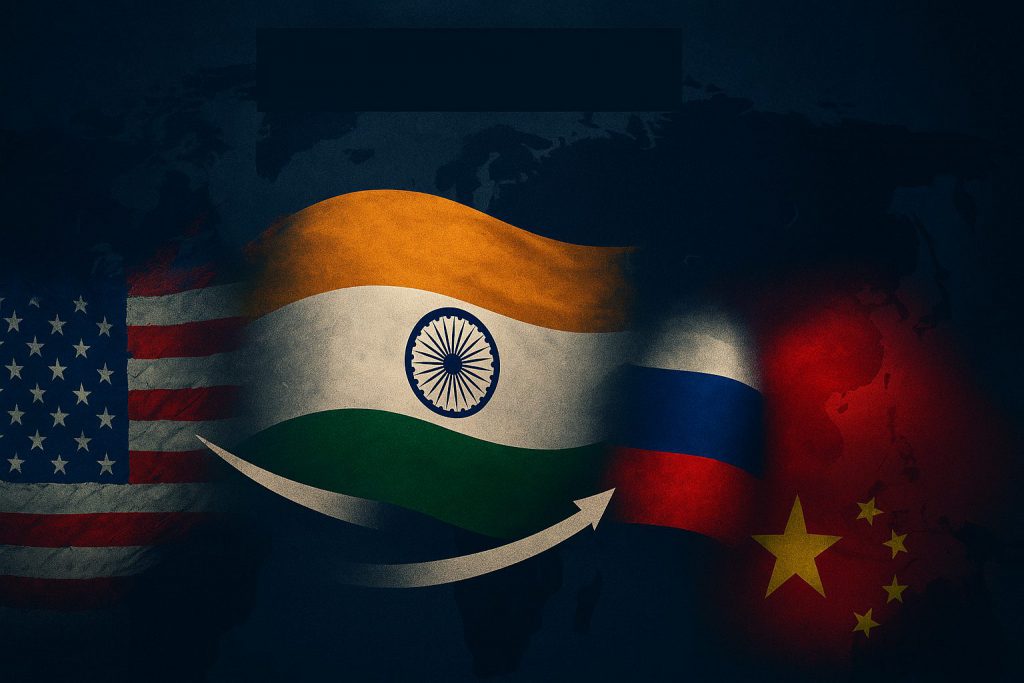
Former Indian diplomat Vidya Bhushan Soni noted that China has come to recognize BRICS without India’s active participation cannot get anywhere. That recognition is expected to shape how Beijing runs China’s BRICS chairmanship in 2027 — with a more consensus-driven approach, designed to keep the bloc’s largest democracy inside the tent. BRICS Global South leadership is being framed as collective rather than purely Chinese-led, and that distinction matters for keeping the coalition coherent.
The 2027 BRICS chairmanship is also expected to produce landmark language on AI governance, climate finance for developing nations, and reform of the international monetary system. Those topics are not being invented in 2027 — they are being built right now, through bilateral diplomacy and quiet agenda-setting happening across member capitals. China’s BRICS chairmanship in 2027 is, more than anything, one of the clearest signals yet that the post-Cold War international order is being renegotiated — and Beijing intends to be one of the authors.
