India’s Stock Market Panic: Index Plunges 5,000 Points in Historic Rout

Mumbai's trading floors turned into theaters of chaos today as India's benchmark index nosedived a staggering 5,000 points—a seismic shockwave that rattled portfolios from Dalal Street to Main Street.
The Domino Effect
Sell orders flooded in like a monsoon surge, overwhelming circuit breakers and triggering automated trading halts. Margin calls vaporized leveraged positions, creating a self-feeding downward spiral that left even veteran traders staring at blood-red screens in disbelief.
Traditional Finance's Achilles' Heel
The plunge exposes the fragility of centralized market structures—single points of failure, opaque order books, and settlement delays that amplify panic. While regulators scramble to issue calming statements, the damage reveals how legacy systems magnify volatility rather than dampen it.
Where's the Hedge?
Conventional diversification strategies failed spectacularly as correlations converged toward one. Gold? Barely budged. Bonds? Offered minimal shelter. The supposed 'smart money' protection racket—another reminder that traditional finance often sells insurance policies it can't honor during actual disasters.
Markets eventually find floors, but confidence takes longer to rebuild. Today's 5,000-point freefall isn't just a correction—it's a billboard advertising traditional finance's structural vulnerabilities while decentralized alternatives operate 24/7 with full transparency. The old guard's house of cards just lost another foundation stone.
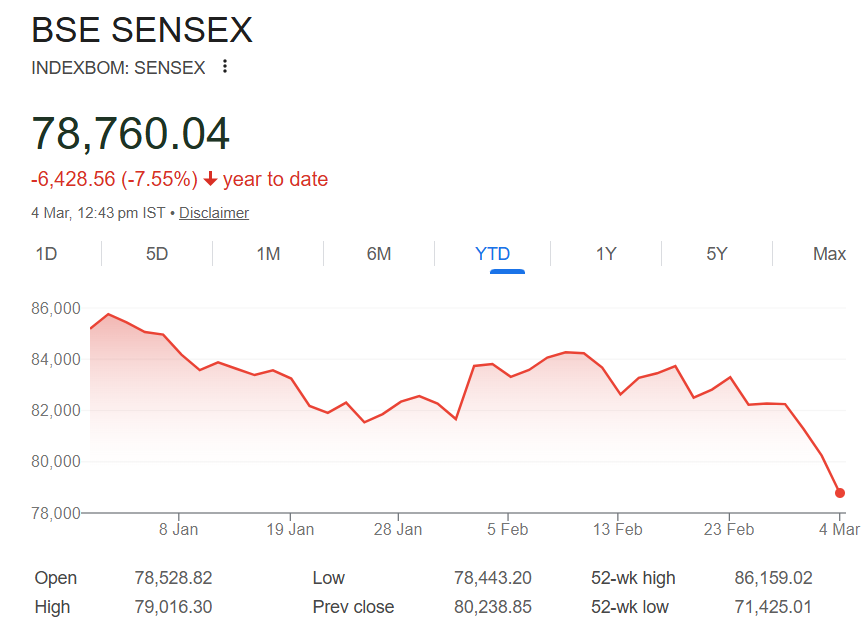 Source: Google
India’s stock market crash WOULD likely continue throughout the week. Sensex has lost close to 8% in value year-to-date, while Nifty has erased nearly 7% YTD. Anyone who took an entry position through mutual funds in the indexes is underwater. A quick recovery from here is questionable as the sell-off is likely to continue.
In addition, collateral damage is being felt across the UAE, Bahrain, Saudi Arabia, and Qatar. While the UAE was destined to be the safest country in the region with financial stability, the war is challenging that notion. India’s stock market crash has sent leading equities to new lows as the slump extends this week.
Stock Market Crash in India: A Buying Opportunity in Disguise?
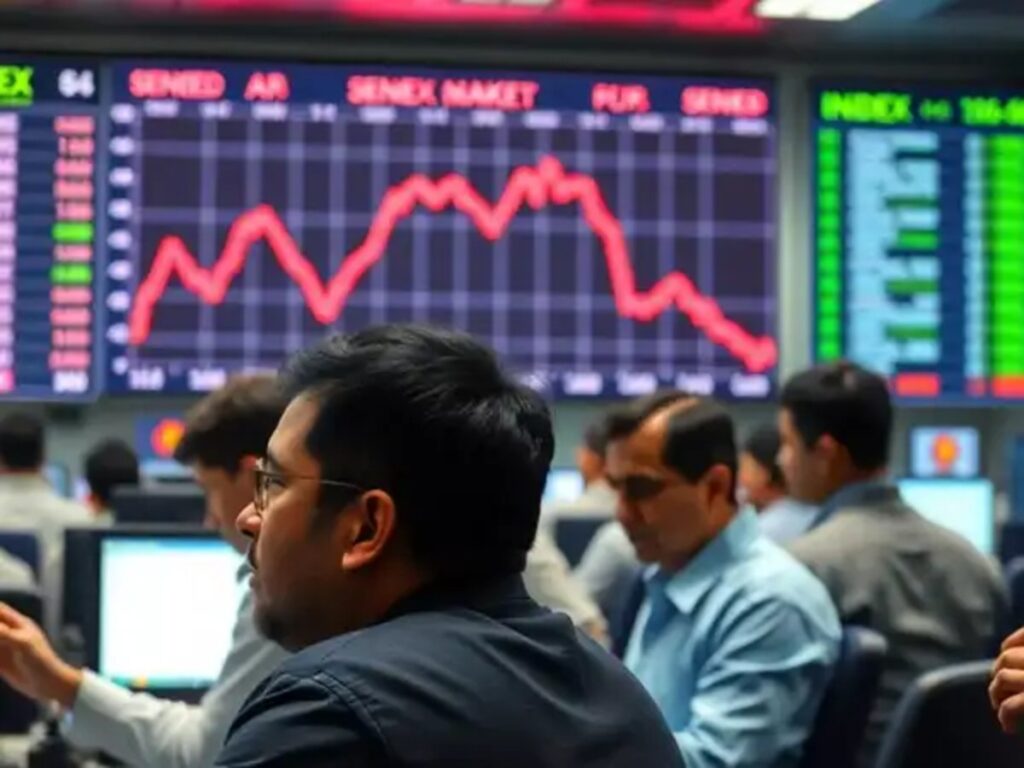
The stock market crash in India could be a buying opportunity, as the slump occurred not due to weak fundamentals, but due to a conflict. The escalation has stopped trade functioning at the Strait of Hormuz, and also made oil prices surge to $78. Taking an entry position during the crash offers better results when the conflict cools down.
While India’s stock market is gearing up for the Sensex to reach 100,000, accumulation below the 80,000 range is beneficial. Buying now and holding on for the next five to 10 years will be rewarding. The fundamentals remain strong, and this can be an opportunity to make more money.
