Asian Stock Rout Deepens: Traditional Markets Bleed While Digital Assets Stand Firm

Panic grips Asia's trading floors as the sell-off accelerates—but the smart money is already looking elsewhere.
The Contagion Spreads
It started with a whisper, then became a roar. Major indices from Tokyo to Hong Kong are painted red, with losses deepening by the hour. The usual suspects—inflation fears, geopolitical tensions, sluggish growth—are being trotted out by pundits to explain the carnage. Meanwhile, capital is evaporating from legacy systems faster than you can say 'quantitative tightening.'
A Tale of Two Systems
Contrast this old-world fragility with the parallel financial universe of digital assets. While traditional markets convulse, decentralized networks hum along, processing value 24/7 without a central bank in sight. No trading halts. No emergency meetings. Just immutable code executing as programmed. The divergence couldn't be more stark—or more telling.
The Real Story Behind the Numbers
Forget the surface-level analysis. This rout exposes the core vulnerability of centralized, permissioned finance: it's built on confidence, and confidence is fleeing. Every percentage point drop in the Nikkei or Hang Seng isn't just a number—it's a vote of no confidence in a system that can be halted by a single regulator's whim or a bank's decision. It's the financial equivalent of watching a dam crack while standing next to a river that flows regardless.
One cynical observer might note that the same institutions now crying crisis are the ones that spent years dismissing blockchain as a 'solution in search of a problem.' Well, the problem is now glaringly obvious.
The rout will continue until the narrative shifts—or until capital finds its permanent home in systems that don't sleep, don't ask for permission, and don't panic when the old guard loses its nerve.
The Impact on the Asian Stock Market Gets Harder
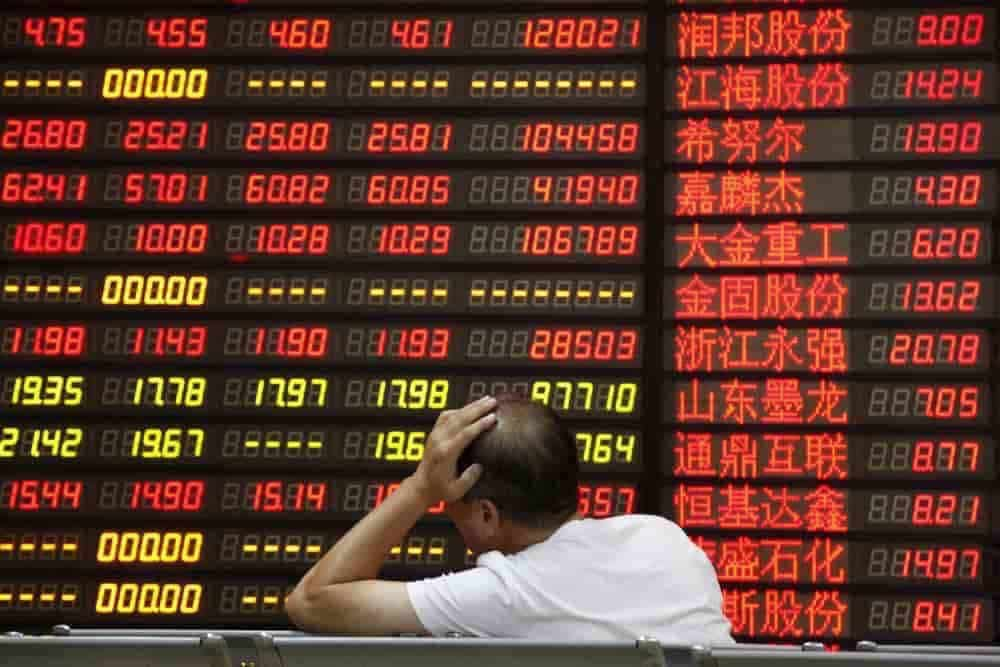
Asian traders had already anticipated a decline in the stock market after the war broke out. All analysis, price predictions, and estimates go for a toss when geopolitical turmoil engulfs the world. It puts a full stop to growth and takes the global economy two to three years behind. A quick recovery from here could be slow, as several countries are now involved in the conflict.
Traders who suffered losses due to the conflict will now have to wait for months to recover or break even. The situation is grim as the conflict is escalating with each passing day. The United Arab Emirates, Qatar, and Saudi Arabia are also at the receiving end of Iran. All of these are affecting the Asian stock market, deepening the rout in the day’s trading session.
