India’s Strategic Pivot: Expanding Trade with EU and US While Reshaping BRICS Power Dynamics

New Delhi's diplomatic chessboard just got a major update. India is executing a bold, multi-vector trade strategy that simultaneously deepens ties with Western economic powerhouses and recalibrates its role within the BRICS bloc. This isn't just diplomacy—it's a high-stakes rebalancing act with trillion-dollar implications.
The Western Swing: Deals, Data, and Digital
Forget the old narratives. India isn't picking sides; it's playing the field with surgical precision. A flurry of new trade pacts with the European Union and the United States signals a pragmatic turn toward securing advanced technology, critical investment, and stable export markets. We're talking semiconductors, green energy infrastructure, and digital service corridors—the exact inputs needed to fuel its own economic engine. It's a move that acknowledges where the current capital and innovation flows are strongest, a classic case of following the money (even if some of it is still tied up in bureaucratic red tape).
BRICS: From Bloc to Balancing Weight
Inside the BRICS consortium, India's maneuver is sending ripples. By aggressively courting the EU and US, New Delhi instantly amplifies its negotiating leverage within the group. It becomes less a junior partner in a pre-defined axis and more an independent pivot point—a nation with options. This dilutes any singular vision for the bloc and reframes it from a potential anti-Western coalition into a more fragmented, interest-based platform. India's power now stems as much from its external partnerships as from its internal consensus.
The Ripple Effect: Currencies, Commodities, and Control
The real game is in the financial plumbing. Enhanced trade with the West could subtly pressure the long-term push for de-dollarization within BRICS, as rupee-euro and rupee-dollar settlements gain volume. It also diversifies India away from over-reliance on any single group for energy or raw materials, turning it into a crucial swing node in global supply chains. For investors, it translates to reduced political risk premiums and a more predictable environment for long-term bets—at least on paper.
A cynical take? It's the ultimate hedge. While talking up multilateralism in one forum, India is securing bilateral wins in another, proving that in global economics, strategic ambiguity is often more profitable than steadfast allegiance. The finance world loves a good hedge—it's how you make money while pretending to manage risk.
Bottom line: India isn't leaving BRICS; it's leveraging it. By expanding its Western trade portfolio, New Delhi isn't just importing goods—it's importing optionality. And in today's fragmented world, optionality is the most valuable currency of all.
India Trade Deals with US and EU Boost BRICS Trade Turnover
A Historic Pivot — With Some Caveats
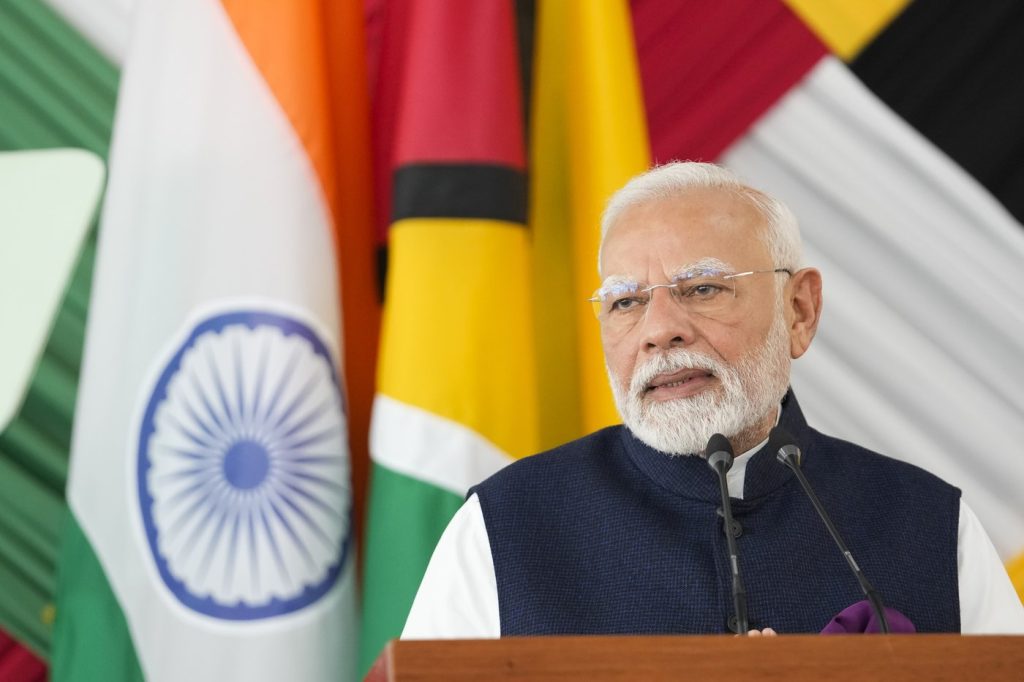
Modi has been pushing trade diversification since at least 2022, and at the time of writing, India has now signed its 9th and 10th FTAs since 2014 — also including earlier agreements with the UK, Oman, and New Zealand. The India-EU FTA benefits alone will save exporters on both sides up to €4 billion a year in duties, and the agreement also covers services and investments across all 27 EU member states.
Modi had this to say at the India-EU summit in New Delhi:
“This historic agreement will make it easier for our farmers and small businesses to reach the European markets. It represents 25% of the global GDP and one-third of global trade.”
European Commission President Ursula von der Leyen stated:
“We have concluded the mother of all deals. We have created a free trade zone of two billion people, with both sides set to benefit. India has risen and Europe is truly glad about it — because when India succeeds, the world is more stable, more prosperous and more secure.”
The US Side of the Story
India’s trade deal with the US — referred to by some as the “” — was announced by Trump on Truth Social, following a phone call with Modi. Trump wrote:
“Out of friendship and respect for Prime Minister Modi and, as per his request, effective immediately, we agreed to a Trade Deal between the United States and India, whereby the United States will charge a reduced Reciprocal Tariff, lowering it from 25% to 18%.”
Not everyone is celebrating, though. Many critics see the terms of India’s trade deal with the US as asymmetric — India agreed to reduce its tariffs and non-tariff barriers against the US to zero, and also committed to buying over $500 billion in American energy, technology, and agricultural products. That last part has drawn sharp criticism at home, given longstanding concerns about large US agricultural companies getting access to the Indian market.
What It All Means for BRICS
All of this is also reshaping India’s BRICS role. BRICS trade turnover has grown fast over the past two decades — intra-BRICS merchandise exports went from $84.2 billion in 2003 to $1.17 trillion in 2024, at an annual average of 13.3%, more than double the 5.7% global trade growth rate over the same period. Even so, the bloc still accounts for around 5% of world trade, and member countries have yet to establish any comprehensive trade agreement covering the full group.
India’s BRICS presidency in 2026 puts New Delhi in an unusual spot — trying to keep the group focused on practical cooperation while also managing its own growing ties with the West. India’s trade deal with the US and the EU pact both make that balancing act harder, and also a lot more consequential.
