De-Dollarization Revolution: How Cambodia’s Daily Transactions Are Being Reshaped

Phnom Penh's streets are telling a new story—one written in riel, not greenbacks.
For decades, the US dollar dominated Cambodia's economy, from market stalls to real estate deals. That grip is finally slipping. A quiet financial revolution is rewriting the rules of daily commerce, and it's happening one transaction at a time.
The Riel's Remarkable Return
Central bank nudges, national pride, and pure pragmatism are fueling the shift. Businesses are increasingly posting prices in the local currency. Salaries are being paid in riel. The psychological anchor of the dollar is being hauled up, revealing an economy ready to stand on its own two feet.
Beyond Politics: A Practical Pivot
This isn't just geopolitical posturing. It's a hard-nosed calculation. Reducing dollar dependency insulates the economy from external shocks and monetary policy decisions made an ocean away. It gives the National Bank of Cambodia greater control—a lever they're now pulling with deliberate force.
The mechanism is straightforward: encourage, incentivize, and normalize. Digital payment platforms are being calibrated for riel-first transactions. A gentle but persistent campaign is reshaping public habit, proving that sometimes, the most powerful monetary policy tool is simple persuasion.
The Ripple Effect on Regional Finance
Cambodia's move is a bellwether. It signals a broader regional reconsideration of dollar hegemony. When a nation deeply entrenched in dollarization charts a new course, others take note. It’s a live experiment in monetary sovereignty—and so far, the markets aren't panicking. They're adapting.
Of course, old habits die hard. Major assets and some international trade will cling to the dollar for now. Full de-dollarization is a marathon, not a sprint. But the starting pistol has fired, and the direction of travel is clear.
The ultimate test? Making the riel so reliable and convenient that people forget the dollar was ever an option. That’s the central bank's real target—not just a balanced ledger, but a changed mindset.
After all, true financial independence isn't just about having your own currency; it's about wanting to use it. And in Cambodia today, that want is growing louder than any trader's cynical jab about 'just another government-led liquidity trap.'
Here’s the Steps Cambodia is Taking For De-Dollarization
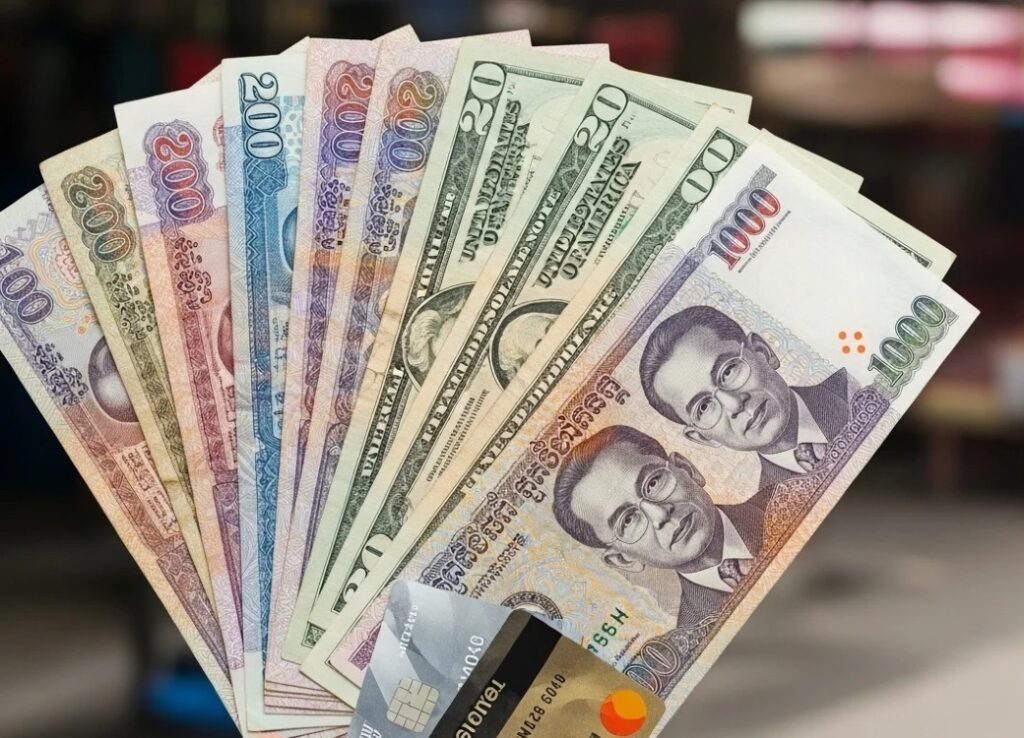
Cambodia’s de-dollarization push is systematically removing small-denomination US dollars for payments. Currency bills such as $1, $2, and $5 are being phased out from circulation. Merchants have been directed to reject the bills when offered by customers as payment. Therefore, small-dollar transactions are becoming impractical across the country.
In addition, ATM’s in Cambodia will now dispense only $100 bills in the de-dollarization push. Customers will no longer find smaller denominations of the US dollar and will have to use the riel. Merchants will be unable to hand out change in USD below $100 purchases. Small change in the greenback will be made virtually unavailable, and the riel will take its place.
Therefore, small-value transactions, like street food or a quick water bottle, will be exclusive in the riel. Bigger transactions like hotel bookings, cabs, and business-to-business transactions will use the US dollar. This is a small-scale de-dollarization effort in Cambodia that causes no harm to the USD. The gradual transition will bring the riel back to circulation, starting from the bottom. Liquidity in the riel will increase through this small-scale de-dollarization initiative started by the government.
