BRICS Strategy Under Fire as Trump’s Red Line Threatens India’s Economic Ambitions

Trump's latest geopolitical ultimatum isn't just shaking up traditional alliances—it's throwing a Molotov cocktail into the delicate dance of de-dollarization. The BRICS bloc, that ambitious club of emerging economies, just hit its first major stress test. And the pressure point? India.
The Dollar's Unlikely Challenger
For years, BRICS has been the polite dinner guest whispering about creating an alternative to the US-dominated financial system. Cross-border payment platforms, local currency settlements, even whispers of a common currency—it all sounded revolutionary over brandy and cigars. Then reality arrived with a tweet.
Red Lines and Realpolitik
When a former (and potentially future) US president draws a bright red line around a nation's economic partnerships, markets listen. The threat isn't just about tariffs or sanctions; it's about cutting access to the plumbing of global finance—the SWIFT messages, the correspondent banking relationships, the dollar liquidity that keeps economies humming. India's tech boom and manufacturing ambitions are built on this infrastructure. Trump's warning forces a brutal calculation: BRICS solidarity or financial survival?
The Crypto Wild Card
Here's where it gets interesting for our world. This exact tension is why Bitcoin was invented. When trust between nation-states breaks down, decentralized networks don't take sides. They just settle transactions. Watch for Indian businesses to quietly explore crypto rails for commodity trades with Russia or Iran—not as an ideological choice, but as a practical bypass. Stablecoins pegged to commodities or baskets of BRICS currencies could emerge faster than any central bank digital currency project.
A Strategy Built on Sand?
The brutal truth? BRICS has always been more of an anti-Western mood board than a coherent financial alliance. Their economies compete as much as they cooperate. China wants to internationalize the yuan, India fears Chinese dominance, Brazil worries about commodity dependence. Trump's move exploits these very fractures. It's the oldest play in the book: divide the opposition by making the costs of unity painfully clear.
The finance jab? Wall Street's already pricing this as 'geopolitical volatility'—their polite term for other people's problems becoming profitable trading opportunities. The real test comes when India's central bank has to choose between BRICS promises and US dollar swap lines during a liquidity crunch. Bet on the greenback every time.
Trump’s Warning and India’s Careful Navigation
Trump has been very clear about his position, and he hasn’t held back. On Truth Social, the U.S. President stated:
India’s strategy for navigating BRICS now requires what can only be described as careful navigation between competing interests. Wang Youming, who is a Senior Research Fellow at the BRICS Economic Think Tank at Tsinghua University, had this to say about the current situation:
India assumed the chairmanship with a theme that’s centered on “People-Centric, Humanity-First” approaches. This was announced by External Affairs Minister S. Jaishankar. At the time of writing, Jaishankar has been emphasizing the forum’s value as an international cooperation platform.
External Affairs Minister S. Jaishankar stated:
The challenge for how India approaches BRICS strategy is that Trump’s red line creates real constraints. India has suffered from tariff wars inflicted by the United States. It was widely expected that New Delhi might highlight multilateral cooperation to counter what’s been described as surging unilateralism. But the theme announced was anything but confrontational.
Global South Leadership Goals and Expansion Questions
India is using its year as BRICS chair to advance its global south leadership credentials. At the BRICS theme launch event, Jaishankar announced that the global south WOULD be at the center of this year’s agenda, with a focus on food security, debt restructuring and also climate change.
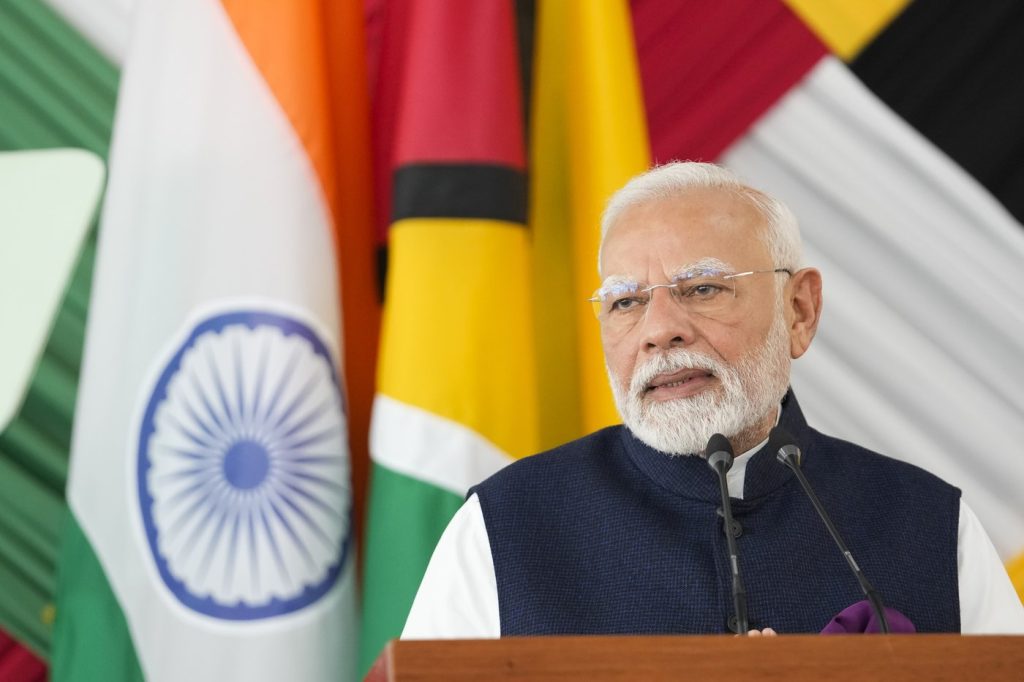
Prime Minister Narendra Modi has outlined an ambitious vision for what India’s BRICS strategy should accomplish this year. He stated:
Membership Expansion Faces New Hurdles
India’s year at BRICS faces mounting challenges as expansion momentum appears to be slowing down. Malaysia is seeking to upgrade from partner status to full membership, while Pakistan’s application has faced opposition from India. New Delhi may introduce stricter expansion criteria for BRICS that include factors such as economic development levels, geopolitical representation and what some are calling democratic institutions.
Questions around BRICS expansion criteria are being discussed more seriously now, as the grouping tries to figure out how to grow without triggering more pressure from Washington. Turkey no longer actively seeks membership, and Saudi Arabia has repeatedly dodged formal membership status.
The success of India’s approach to the BRICS strategy really depends on whether New Delhi can maintain cooperation among member states without crossing what Trump has made clear is a red line. The U.S. President has warned that countries “” if they align with what he calls anti-American policies. This creates uncertainty around the bloc’s future direction.
Walking the Line Between Washington and Member States
India’s presidency, at the time of writing, is focused on avoiding controversial topics like de-dollarization, which would accelerate tensions with the United States. New Delhi may propose milder alternatives, such as a “BRICS Digital Currency Alliance,” rather than pushing for more aggressive measures that would challenge the dollar’s dominance.
How India navigates its BRICS strategy is being watched closely by observers who wonder if India can successfully balance its global south leadership ambitions with the realities of U.S. pressure. India will host the BRICS summit later this year. The outcomes from that gathering will determine whether the strategy India pursues within BRICS has succeeded in navigating what many are describing as unprecedented challenges for the grouping.
