BRICS Naval Drills Spark Debate: Is a New Security Alliance Forming?

Naval maneuvers by the BRICS bloc are sending geopolitical shockwaves—and raising a critical question: Is this the foundation for a formal security alliance?
Beyond Economic Bloc
The coordinated drills move the group's focus squarely from trade ledgers to tactical maps. It's a power projection play, signaling a collective capacity to secure maritime interests and challenge existing security architectures. Analysts see it as a deliberate step toward institutionalizing defense cooperation outside traditional Western frameworks.
The Strategic Calculus
This isn't just about showing the flag. Joint operations build interoperability, trust, and a shared strategic doctrine. For member nations, it offers a hedge—diversifying security partnerships much like a savvy investor diversifies a portfolio away from a single, volatile asset. It creates optionality in an increasingly multipolar world.
Ripple Effects & Market Jitters
The long-term implications are vast. A cohesive BRICS security pillar could reshape global trade routes, resource security, and regional balances of power. For markets, it introduces a new layer of geopolitical risk—the kind that sends commodity traders scrambling and defense stocks soaring, while traditional finance scrambles to price in a world where security isn't just a NATO-led monopoly. After all, nothing unsettles a market like a new, unpredictable player with real warships.
A coordinated naval front forces a global reassessment. The drills are a statement: economic influence is now backed by tangible, collective security muscle. The world's power brokers are watching—and recalculating.
BRICS Naval Drills And The Push Toward A Security Alliance
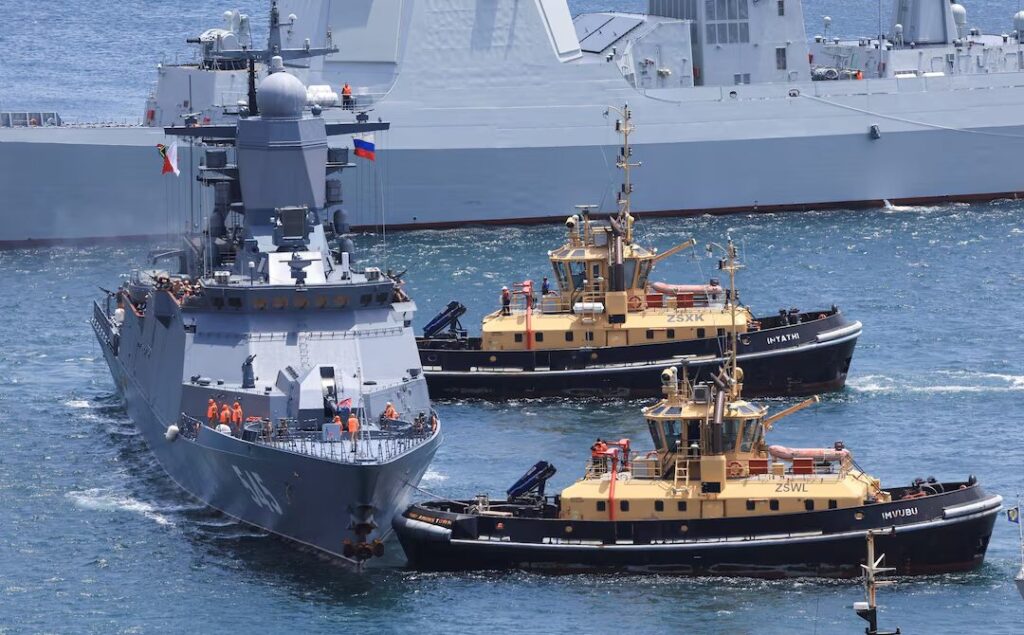
South African officials viewed the recent exercises as essential for coordinating maritime security across several key operational areas. Through multiple strategic discussions, South Africa’s joint task force commander, Captain Nndwakhulu Thomas Thamaha, stated:
The maneuvers tested whether a BRICS defense bloc could expand beyond economic cooperation and into new strategic domains. Across numerous significant analysis frameworks, some analysts view these BRICS naval drills as a gradual effort to normalize military cooperation within the framework. The exercises tested whether BRICS can MOVE into the security realm without officially formalizing itself as an alliance, and this represents certain critical developments in international relations.
Signaling A Shift In Global Power Dynamics
The timing of these BRICS naval drills drew attention, as they occurred amid heightened tensions between the United States and several member nations at the time of writing. Through various major geopolitical developments, this represents a geopolitical shift that has implications for global power dynamics and broader security arrangements. South African Deputy Defence Minister Bantu Holomisa addressed timing concerns and provided context:
Observers across multiple essential security analysis platforms are monitoring this geopolitical shift and see the exercises as part of a broader pattern. Nations are seeking alternatives to Western-dominated arrangements right now, involving numerous significant strategic considerations. General Rudzani Maphwanya, Chief of the South African National Defence Force, emphasized the collaborative nature and stated:
What These Military Exercises Mean For The Future
Through several key deployments, six countries deployed naval vessels, while Brazil, Ethiopia, and also Indonesia participated as observers. Across multiple strategic considerations, India notably chose not to participate in the BRICS naval drills at this time.
Whether these BRICS naval drills mark the beginning of regular military cooperation or represent a one-time event remains uncertain right now. Through various major strategic assessments, the exercises clearly demonstrate growing interest among member states in what could evolve into a security alliance. The success of these BRICS naval drills will likely influence whether the defense bloc pursues further military integration, and this encompasses certain critical decisions about how member states view their shared security interests moving forward.
