India’s BRICS Presidency Shakes Up ’America First’ Trade Order

Forget the old guard—India's steering BRICS into a new trade lane, and Wall Street's watching the rearview mirror.
The De-Dollarization Play
BRICS isn't just a talking shop anymore. With India at the helm, the bloc is pushing local currency trade hard. Think rupees, reals, and rubles bypassing the greenback for cross-border deals. It's a direct challenge to the financial plumbing that's kept the U.S. dollar dominant for decades.
Building Parallel Systems
The goal? Craft alternative payment networks and trade frameworks that operate outside traditional Western channels. It's about sovereignty—and reducing vulnerability to dollar-powered sanctions. Every new bilateral local currency agreement is another brick in a competing financial architecture.
The Ripple Effect
This isn't just geopolitics; it's a market signal. When major economies start sidestepping the dollar for commodities and capital flows, it shakes the foundation of global asset pricing. It creates demand for new hedging instruments, new reserve assets, and frankly, new headaches for portfolio managers wedded to 20th-century models.
The Finance Jab
Let's be real—the City and Wall Street will monetize any system, dollar or no dollar. They're already structuring derivatives for the 'BRICS+ corridor,' proving that fees, not flags, are the true constant in high finance.
The takeaway? India's BRICS presidency is more than a diplomatic rotation. It's a live stress test of the 'America First' economic order. And in the markets, stress creates both cracks and opportunities.
India’s BRICS Presidency Drives Global South Agenda Amid Trump Tariffs
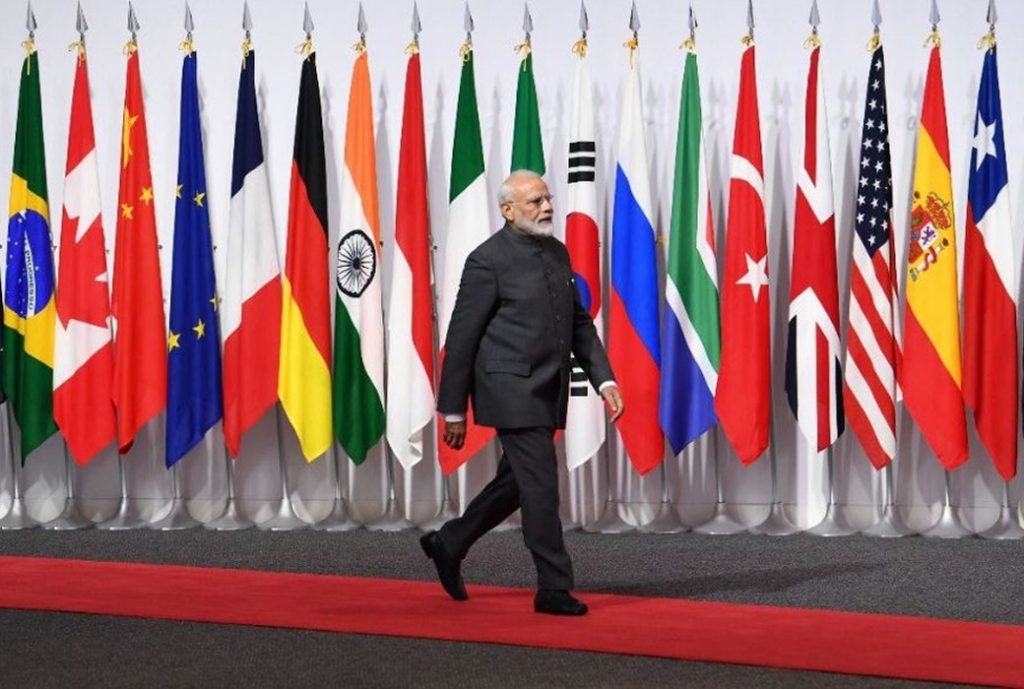
Confronting Economic Protectionism
The Trump administration has identified BRICS as “” which marks unprecedented hostility toward the bloc. As India’s BRICS presidency unfolds, member states are exploring coordinated responses including increased BRICS trade through local currencies, reconfigured supply chains, and also lowered internal barriers to counter the Trump tariffs being imposed.
India’s approach to its BRICS presidency centers on “Building Resilience and Innovation for Cooperation and Sustainability,” and it carries forward priorities from its 2023 G20 leadership. The Global South agenda now includes climate justice, equitable energy transitions, and development-centered action rather than just emission targets alone.
Dr. Raj Kumar Sharma, Senior Fellow at NatStrat, had this to say:
Agenda Competition With Washington
The American G20 presidency in 2026 marginalizes the Global South agenda—climate change, inequality, and sustainability do not appear in the American agenda. This poses competition between the BRICS presidency preoccupation with development in India and the protectionist approach of Washington. BRICS trade negotiations now focus more on alternatives to Western dominated structures and the BRICS America First crash establishes the economic environment of 2026 at the present moment.
In 2023, BRICS extended to Iran, Egypt, Ethiopia, the UAE, as well as Indonesia, creating some doubts over its essence. In January 2026, the America First Policy Institute stated that 91 percent of its federal policies are already in place or are underway, and this is inclusive of aggressive tariff implementation as a diplomatic instrument.
Strategic Leadership and Future Direction
In the case of the BRICS presidency of India, the task is to show that we can lead through equality and consensus and develop BRICS trade paradigms that will make us less vulnerable to Trump tariffs and BRICS America First unilateralism. The next few months will reveal whether New Delhi can juggle between its relationship with major powers and remain focused on the Global South agenda.
