BRICS Isn’t Ditching the Dollar—It’s Quietly Building the Financial Rails to Bypass It

The dollar's throne isn't being stormed. It's being meticulously circumvented.
BRICS nations aren't launching a frontal assault on the greenback. Instead, they're constructing parallel financial infrastructure—new payment systems, expanded currency swaps, and digital asset frameworks—that operates just outside the dollar's dominion. Think of it as building a new highway next to the old, congested one; traffic gradually shifts without a dramatic blockade.
The Stealth Architecture of De-Dollarization
This isn't about a headline-grabbing, single BRICS currency. That's political theater. The real work is technical and bilateral: connecting central banks, enabling direct trade settlement in local currencies, and piloting digital versions of sovereign money. Each agreement is another brick in a wall that reduces transactional reliance on USD clearinghouses.
Why the Quiet Build-Out Beats a Loud Revolution
An open declaration of war on the dollar would trigger immediate market chaos and retaliation. A silent build-out doesn't. It allows economies to gradually untangle themselves from dollar dependency for energy, commodities, and trade finance. The goal isn't to topple the dollar but to create viable alternatives—so that using it becomes a choice, not a necessity.
The move exposes the core irony of modern finance: we built a global system for efficiency, then handed a single nation the keys to the sanctions room. BRICS isn't just building an exit—they're proving that in finance, as in real estate, the real power lies in controlling the infrastructure, not just the currency. The dollar will remain king, but its subjects are now building their own castles.
How BRICS De-dollarization Strategy Expands Local Currency Trade
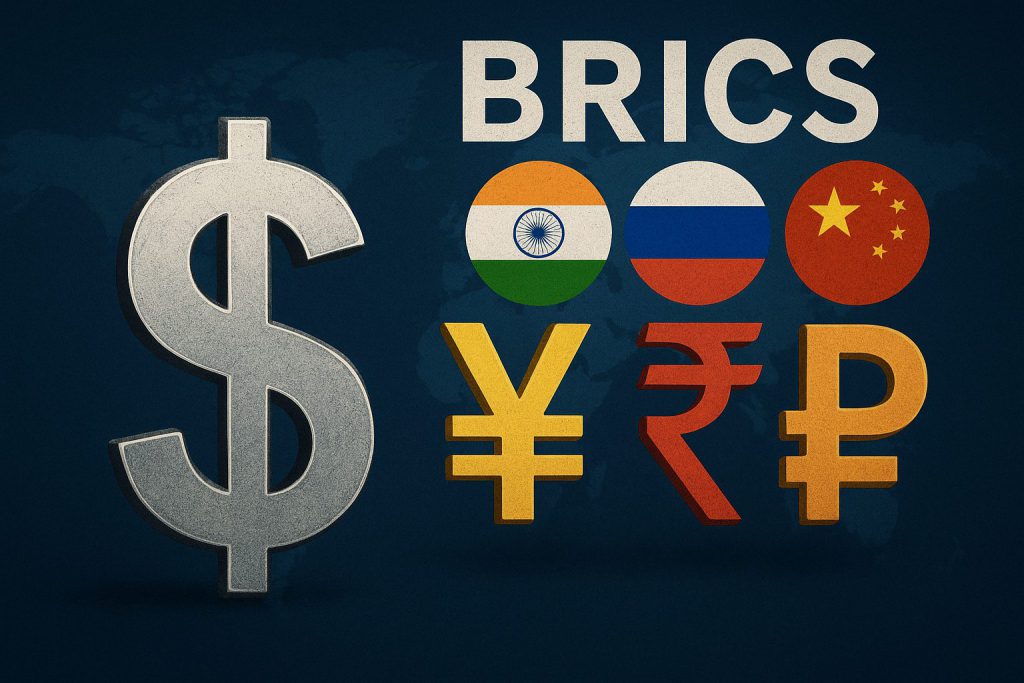
Bilateral Settlements Transform Dollar Dependence
Russia and China pay 99.1% of bilateral trade payment in rubles and yuan by the time of writing, and this in fact is a dramatic change which geopolitical pressures push towards, as well as the increasing need to be economically independent. This was announced by the Russian Finance Minister Anton Siluanov, where he pointed out how the two countries metamorphosed to avoid using the dollar in most of their key trade routes. Siluanov said that his country and China had paid 99.1 percent of its trade bills in rubles and yuan.
In 2023, Brazil and China signed a yuan-real trade settlement agreement, which in fact swept the dollar as an intermediary currency, and Egypt followed the same approach to BRICS local currency trade. The shift is being accelerated by various key member countries today, and initiates new trends in global trade in terms of many such important bilateral structures. In July 2025, the BRICS member countries began to embrace local currency settlements in bilateral financial transactions, Egyptian Prime Minister Mostafa Madbouly confirmed the development during a wider strategy to stop dependence on foreign currencies.
Alternative Payment Infrastructure Development
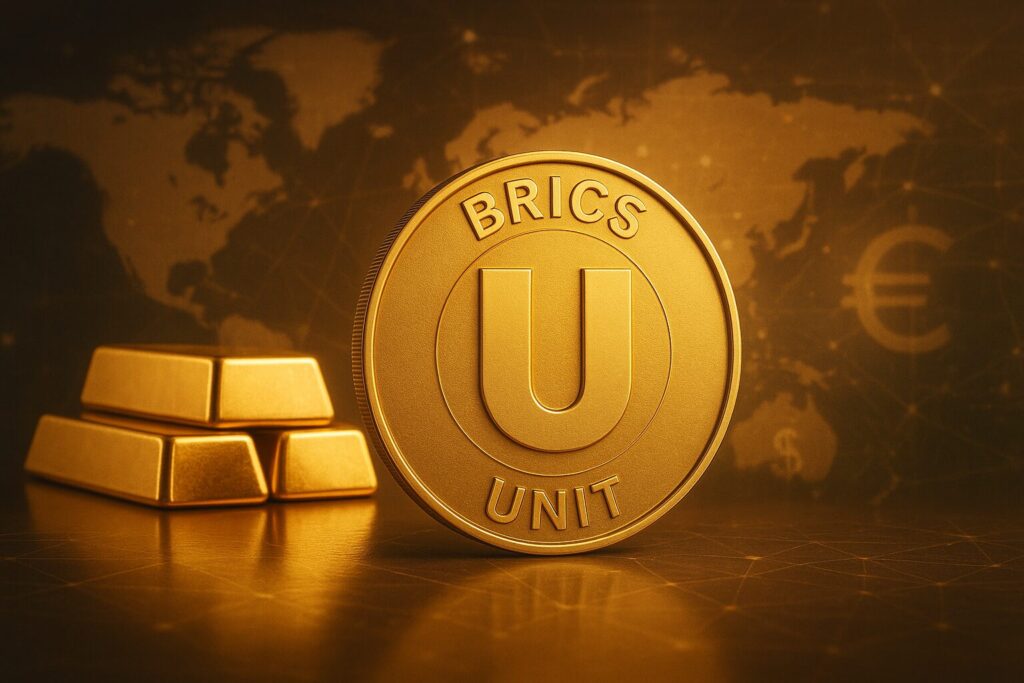
The BRICS payment system CBDC initiative, known as BRICS Pay, continues development even now, while China’s Cross-Border Interbank Payment System (CIPS) grew to include 1,467 indirect participants across 119 countries as of January 2025. Researchers engineered a pilot on October 31, 2025, to test a gold-anchored settlement “Unit” that 40% gold and 60% BRICS currencies back, and this leverages an innovative approach to creating alternatives that reduce reliance on the dollar system across several key settlement mechanisms.
Strategic Implementation Across Member Nations
BRICS advances a de-dollarization strategy right now that demonstrates the coalition isn’t ditching the dollar as the world’s fundamental currency but assembles systems to undermine its hegemony. Russian President Vladimir Putin discussed how nations succeed in developing these alternative structures, stressing that national currencies hold importance in mutual settlements. Putin observed that BRICS participants nearly finalized their conversion to national currencies for mutual settlements, endeavor to create robust credit and banking interaction channels, and work on building bridges between national payment systems.
Local currency trade infrastructure belonging to the bloc, combined with payment system CBDC development, propels practical initiatives toward generating a multipolar financial system via multiple essential mechanisms. Brazil’s advisor for international policy underlined that BRICS isn’t ditching the dollar altogether, and this equilibrated stance preserves global economic stability. Celso Amorim, international affairs advisor to Brazil’s president, expressed that many question if the US dollar faces elimination, but nobody charts that course since the United States remains a major economy fundamental to the entire world, nevertheless an alternative still requires establishment.
Financial autonomy actions verify that BRICS isn’t ditching the dollar fully but strategically performs to reduce its absolute dominance. Nations carry out a gradual transformation that affords stability and simultaneously creates more alternatives for international trade settlements. At the time of writing, various major economic corridors accelerate this shift, which stands as one of the most monumental changes in global financial architecture, even though the dollar sustains its position as the world’s primary reserve currency.
