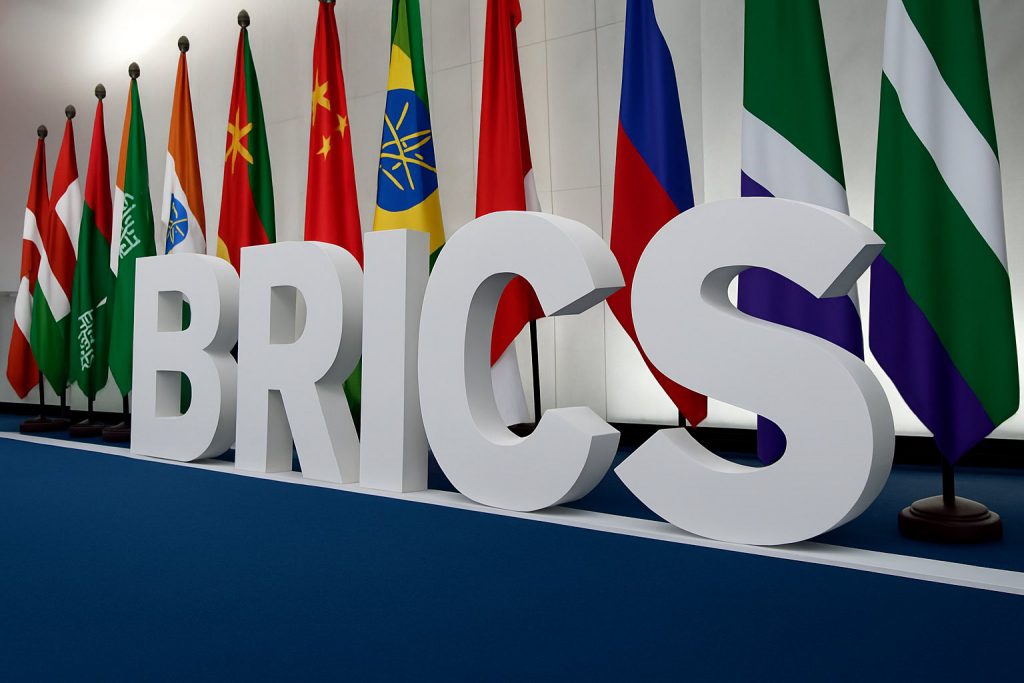
US Launches Pax Silica Alliance as Direct Counter to BRICS Bloc

The geopolitical chessboard just got a new piece—and it's aimed squarely at the BRICS alliance.
What is Pax Silica?
Forget vague diplomatic statements. Pax Silica represents a tangible, resource-focused coalition spearheaded by the United States. It's a strategic maneuver to consolidate influence and secure critical supply chains, directly challenging the economic and political cohesion of the BRICS nations. The alliance isn't just about agreements; it's about building an alternative framework for trade and security.
The Realignment of Global Power
This move signals a shift from multilateral forums to action-oriented blocs. It bypasses years of stalled negotiations, creating a new axis for cooperation among participating nations. The formation cuts through bureaucratic inertia, prioritizing tangible assets and strategic partnerships over diplomatic pleasantries.
A New Era of Alliance Economics
The launch reframes international relations as a competition between distinct economic ecosystems. It forces a reevaluation of traditional alliances and accelerates the fragmentation of the global order into competing spheres of influence. Every nation now faces a clearer, starker choice of alignment.
The old playbook is torn up. Whether this stabilizes or further fractures the world order remains the trillion-dollar question—and rest assured, the usual suspects in finance are already placing their bets on both outcomes.
Pax Silica Alliance vs BRICS Signals a Shift in Global Power
Under Secretary of State for Economic Affairs Jacob Helberg convened the inaugural summit, and he stated:
The Pax Silica vs BRICS positioning reflects some pretty serious concerns over coercive dependencies and single points of failure in critical technology supply chains that officials have been monitoring. Participating countries are actually home to major companies including Sony, Hitachi, Samsung, SK Hynix, Temasek, DeepMind, MGX, Rio Tinto, and ASML.
Helberg emphasized how significant the US AI supply chain alliance is when he stated:
Building Secure AI Supply Chains
BRICS expansion has been accelerating pretty dramatically, and the bloc now represents over 41% of global GDP along with approximately half the world’s population. Saudi Arabia actually completed membership in July 2025, and at the time of writing, 50+ countries have expressed interest in joining BRICS, with 23 submitting formal applications.
Deputy Secretary of State Christopher Landau clarified what the US launching Pax Silica initiative’s objectives are:
The Pax Silica alliance vs BRICS dynamic has intensified as member nations committed to pursuing some joint projects addressing vulnerabilities in critical minerals, semiconductor design and fabrication, logistics, compute infrastructure, and also energy generation.
Strategic Response to China’s Belt and Road
Helberg had this to say about the broader strategy behind the US launching Pax Silica:
He also highlighted what this coalition’s historical significance could be:
Summit participants pledged to protect sensitive technologies from undue access by countries of concern and right now are working to build what officials call trusted technology ecosystems. The US launched this Pax Silica initiative to strengthen the Pax Silica alliance through concrete cooperation, and Under Secretary Helberg directed U.S. diplomats to operationalize discussions through infrastructure project identification and economic security practice coordination across all overseas missions. The initiative represents a direct counter to BRICS expansion and the US AI supply chain alliance aims to secure every level of the global technology supply chain from critical minerals through advanced manufacturing to AI infrastructure.
