ASML Surges to €40B Outlook as Semiconductor Boom Accelerates

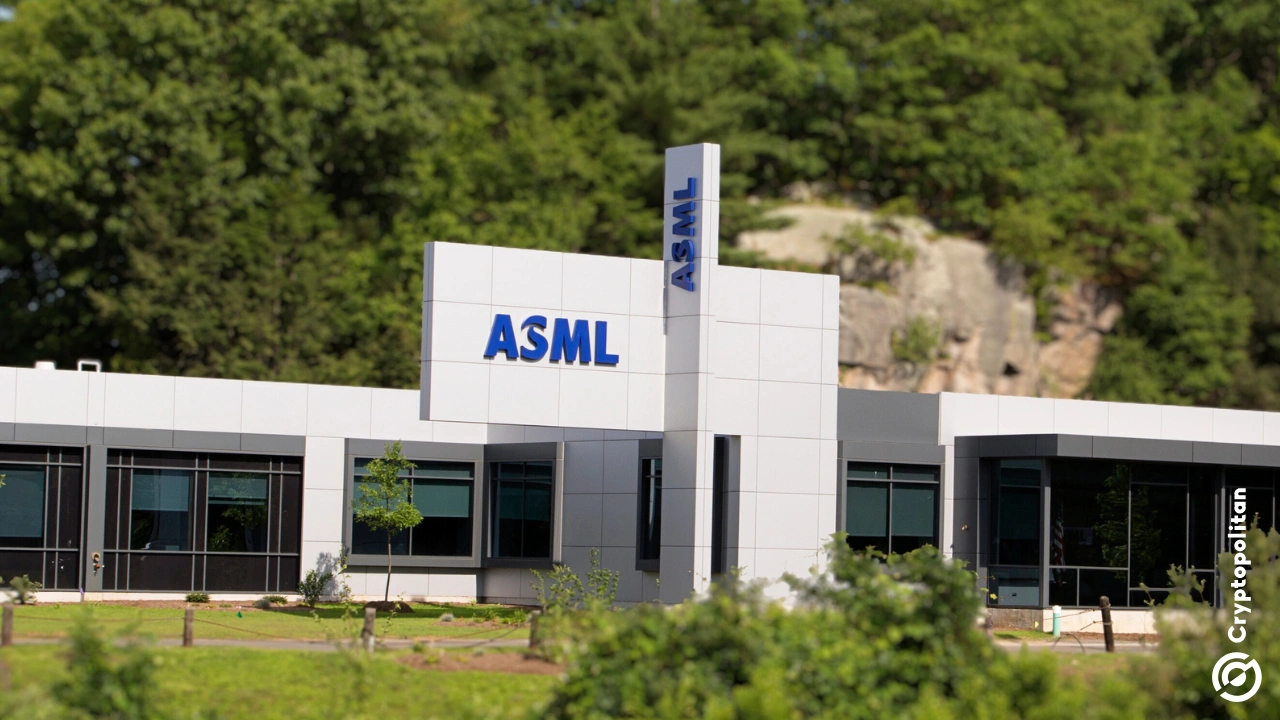
ASML has dramatically raised its 2026 revenue forecast to a range of €36-40 billion, signaling a major acceleration in global semiconductor capacity expansion. The Dutch chip equipment giant smashed first-quarter expectations with net sales of €8.8 billion and profit of €2.8 billion, as CEO Christophe Fouquet declared 'demand for chips is outpacing supply' amid relentless AI infrastructure investment.
TSMC, Samsung, and SK Hynix push ASML demand higher
The chip market has maintained its high demand over the past year. The world’s largest chip maker, Taiwan Semiconductor Manufacturing Co. (TSMC), which is also one of ASML’s biggest customers, reported record first quarter revenue last week as demand for AI chips stayed strong.
Memory is also still tight. A shortage of memory chips has pushed prices for that part of the market to very high levels. Those chips are critical for AI systems and data centers, so manufacturers are now preparing to add more output.
South Korean chipmakers Samsung and SK Hynix are planning to raise production capacity, and that means more need for ASML machines.
Another signal came from Germany through chip systems maker Aixtron, raising its 2026 revenue guidance on Tuesday after stronger demand for optoelectronics equipment. The company now expects yearly revenue of about 560 million euros, plus or minus 30 million euros, when its earlier forecast was 520 million euros with the same margin on either side.
Aixtron’s CEO Felix Grawert said, “The significantly stronger-than-expected demand from the optoelectronics sector in the first quarter is a very encouraging development,” and added that the company expects that trend to continue.
Aixtron’s stock, already up by over 100% so far in 2026, surged by yet another 13% on Wednesday and led gains on Europe’s Stoxx 600. Analysts at J.P. Morgan pointed to strong quarterly orders tied to momentum in optoelectronics, which is used in products such as LEDs, lasers, and solar cells.
Meta and Broadcom extend their AI chip plans through 2029
The buildout is not stopping at foundries and memory makers. Meta and Broadcom said on Tuesday that they are extending their partnership on Meta’s custom in-house AI accelerators through 2029.
At the same time, Meta said Broadcom Chief Executive Hock Tan told the company last week that he will not stand for reelection to Meta’s board. Hock joined the board in 2024.
Meta said it has committed to an initial deployment of 1 gigawatt of its Training and Inference Accelerators, and the deal is expected to grow into multiple gigawatts of chips based on Broadcom technology. Broadcom said the MTIA chips will be the first AI silicon built on a 2-nanometer process.
In a statement, Mark Zuckerberg said, “Meta is partnering with Broadcom across chip design, packaging, and networking to build out the massive computing foundation we need to deliver personal superintelligence to billions of people.”
Broadcom shares rose 3% in extended trading after the news, while Meta stock was flat. On Broadcom’s March earnings call, Hock said, “Now, contrary to recent analyst reports, Meta’s custom accelerator, MTIA roadmap is alive and well. We’re shipping now and, in fact, for the next generation XPUs, we will scale to multiple gigawatts in 2027 and beyond.”
Meta unveiled four new versions of its MTIA chips in March. It first introduced the custom silicon in 2023, after similar efforts by Google and Amazon.
If you want a calmer entry point into DeFi crypto without the usual hype, start with this free video.

Log in to Reply
Log in to comment your thoughtsComments
Related Articles
|Square
Get the BTCC app to start your crypto journey
Get started today Scan to join our 100M+ users