About Oil Backed Tokens
- 1Oil-Backed Crypto Tokens & Energy RWAs: Opportunity or Scam? (2026 Verified Guide)
- 2What is Global Oil Recovery Program (GORP) Crypto? Is it Legit or a Scam?
- 3What Is United States Oil Holdings (USOH)? Is It Legit or a Scam?
- 4What Is Vanguard Oil Retirement Fund (VORF)? Is it Legit or Scam?
- 5What Is Federal Oil Fund (FOF)? A Beginner’s Guide
- 6What Is Fidelity Oil United Reserve (FOUR)? Is it Legit or a Scam?
- 7Where and How to Buy Iran Strategic Oil Reserve (ISOR) in 2026?
- 8Is U.S. Oil Reserve (USOR) Coin Legit or a Scam? An In-Depth Guide
- 9Where and How to Buy United Global Oil Reserve (UGOR): A Beginner’s Guide
- 10Where and How to Buy Vanguard Digital Oil Reserve (VDOR) in 2026
- 11Where and How to Buy World Collective Oil Reserve (WCOR) in 2026
- 12Where and How to Buy American Dollar Reserve (ADR) Coin?
- 13Official Saudi Oil Reserve (OSOR) Price Prediction 2026–2030
- 14Where and How to Buy United Nations Oil Reserve (UNOS) Crypto in 2026
- 15Where and How to Buy Western Asset Reserve (WAR) Coin in 2026?
- 16Where and How to Buy Global Military Arms Reserve (GMAR) in 2026
- 17Where and How to Buy Strategic Defense Reserve (SDR) in 2026
- 18Where to Buy Beast Financial Services (BFS) Crypto? A Beginner’s Guide
- 19United Oasis Reserve (UXR) Crypto Price Prediction 2026–2030
- 20Where and How to Buy United Oasis Reserve (UXR) Crypto in 2026
What Is Russian Oil Asset Reserve (ROAR)? Is It Legit or a Scam?


The global energy market is recalibrating in 2026 as a result of the ‘Hormuz Shock,’ and crypto liquidity is swiftly stratifying into narrative-driven clusters. The Russian Oil Asset Reserve (ROAR) has emerged as a high-beta volatility trade on the Solana ecosystem. However, it is situated at the intersection of on-chain risk and energy speculation. The true liquidity architecture and execution safety of the asset for the modern trader are the focus of this forensic audit, which strips back the ‘Siberian Crude’ marketing.
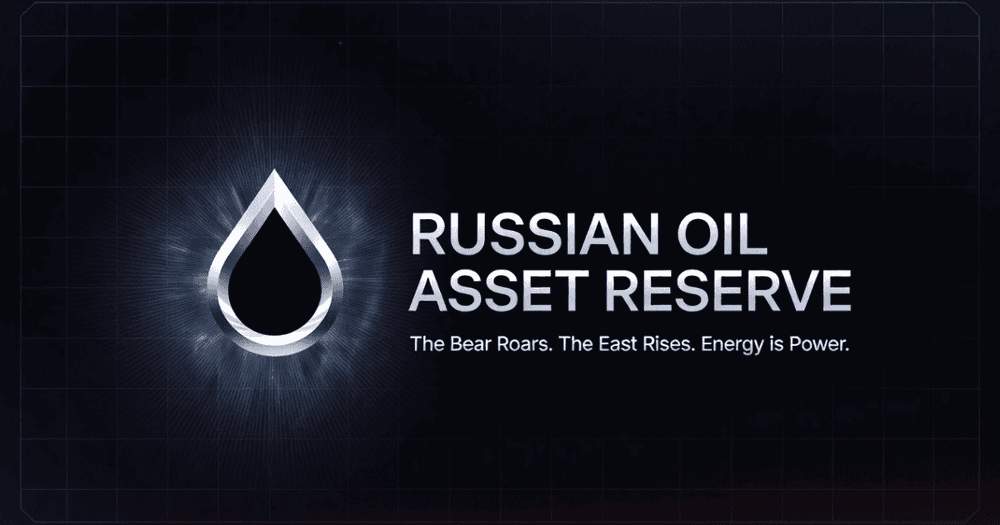
What Is Russian Oil Asset Reserve (ROAR)?
$ROAR is a Solana-based protocol adhering to the Token-2022 standard, positioning itself as a “Sovereign Energy Layer.” Nonetheless, a Critical Reality Check indicates that $ROAR is not a regulated Real-World Asset (RWA).
-
The Narrative: Access to Russian energy autonomy and Siberian petroleum deposits.
-
The Reality: $ROAR is a speculative narrative token lacking confirmed support from physical oil assets or government-audited reserves. The price is influenced by “Story-telling Liquidity”—social emotion and news cycles—rather than the real price of Brent crude or Siberian exports.
Market Metrics and Liquidity Risks
$ROAR exhibits significant volatility, with a market capitalization ranging from $1 million to $2 million.
-
Market Depth: A modest buy or sell order may induce a 20–50% price fluctuation owing to limited liquidity pools.
-
Safety Audit: On-chain analytics presently classify $ROAR as a High-Risk asset (Safety Score: 9/100) owing to insufficient team transparency and the lack of institutional validation.
| Metric | $ROAR (Speculative) | Blue-Chip Core (e.g., BTC) |
| Asset Backing | Narrative/Hype | $1.2T+ Market Cap / PoW |
| Liquidity | Volatile/Thin | Institutional Grade |
| Security | Emerging/High Risk | 15-Year Battle-Tested (BTCC) |
Why 2026 Traders Choose BTCC as their “Home Base”
Engaging in high-risk narrative tokens such as $ROAR necessitates a reliable “exit ramp” and a robust foundational portfolio. In 2026, BTCC, the world’s longest-operating exchange, has transformed to provide a hybrid ecosystem that integrates cryptocurrency and TradFi (Traditional Finance).
The Multi-Asset Advantage
Astute traders on BTCC no longer merely pursue cryptocurrency volatility; they utilize USDT as collateral to trade tokenized Gold (XAU), Silver, and technology equities like as Nvidia (NVDA) in conjunction with their Bitcoin holdings. This cross-market flexibility enables more effective hedging of geopolitical risks than any singular token could achieve.
Exclusive April 2026 Promotion: BTCC x AFA
BTCC, as the Official Regional Partner of the Argentine Football Association (AFA) for the 2026 World Cup cycle, is providing exceptional rewards:
-
Legendary Lucky Draw: Active traders utilizing code 1Z1OTN qualify to win autographed Messi jerseys and approved AFA goods.
-
Unmatched Security: 15 years of no security breaches and monthly Proof of Reserves (PoR) guarantee the safety of your wealth as you navigate new markets.
Strategic Execution: How to Trade the Narrative
When prepping for a “Energy Narrative” breakout, your strategy must prioritize Capital Preservation.
-
The 1% Rule: It is advisable to allocate no more than 1–2% of your total portfolio to speculative tokens such as $ROAR.
-
Claim Your Fee Shield: Employ the BTCC Referral Code: 1Z1OTN to enhance your trading efficacy.
-
To activate this code, make your initial deposit and immediately receive a $10 incentive.
-
Institutional Grade: The leverage for essential assets has been increased to 250x, enabling the management of exposure with greater precision.
-
Conclusion: Efficiency as an Edge
A speculative token such as $ROAR has the potential to generate substantial returns; however, it may also disappear overnight. In 2026, the most effective traders maintain their “Wealth Engine” on BTCC, utilizing only a small portion of their capital for narrative bets, relying on its 250x liquidity and 15 years of stability.