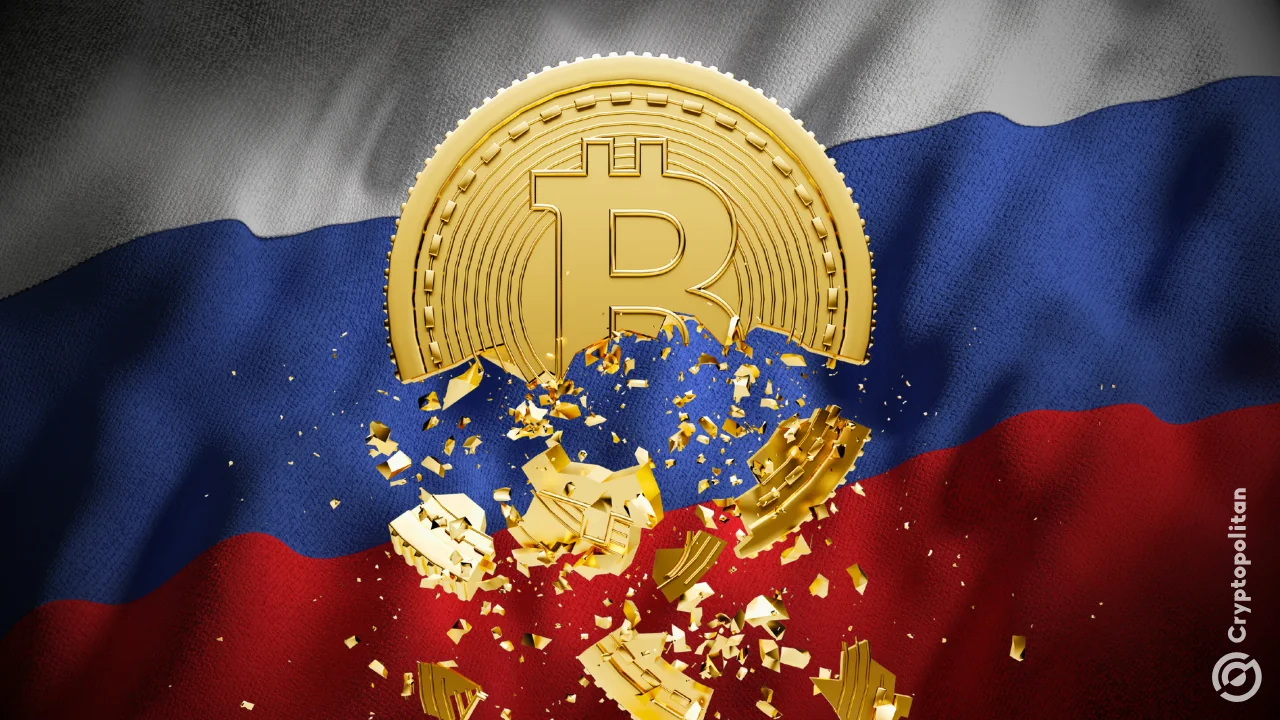
MOSCOW, April 10, 2026 – Russian authorities have unveiled sweeping new proposals that would prohibit citizens from converting digital assets into cash, a move officials claim will 'strengthen controls over financial flows involving cryptocurrencies.' The draft regulations, announced today, aim to clamp down on peer-to-peer and over-the-counter cash transactions for crypto, effectively creating a firewall between the digital asset ecosystem and the traditional ruble-based cash economy. A senior regulatory official emphasized the measures are designed to increase oversight and traceability, signaling a significant hardening of Russia's stance on crypto's intersection with physical currency.
Russians will not be allowed to sell crypto for paper rubles
Cashing out Bitcoin for banknotes won’t be an option for Russian citizens under their country’s new regulatory framework for cryptocurrencies.
This was made clear by Vladimir Chistyukhin, First Deputy Chairman of the Central Bank of Russia (CBR), who answered questions about the legislation set to be adopted this spring.
In a broad interview for RBC Radio, the banker said the ban on trading coins for cash is needed to strengthen control over financial flows involving decentralized digital money.
The measure will prevent dubious transactions, Chistyukhin further insisted, also quoted by the leading Russian crypto news outlet Bits.media.
Converting crypto into cash “won’t work in Russia,” he emphasized, noting that all fiat payments will be cashless, just like with securities trading.
The restriction will be introduced as part of a package of draft laws recently submitted to the State Duma, the lower house of Russian parliament.
The legislative set includes the bill on “On Digital Currency and Digital Rights,” which is designed to comprehensively regulate crypto-related activities.
The legal document was developed jointly by the CBR and the Ministry of Finance. It aims to build the domestic Russian crypto infrastructure, including exchanges and depositories.
This and the other laws must be passed and enforced by July 1, 2026, as part of a broader effort to bring more of Russia’s economy out of the shadows.
According to official estimates, the daily crypto transactions of Russian residents reach 50 billion rubles (over $600 million), and Moscow wants to make them legal and visible.
Illegal crypto exchange services will be ‘severely punished’
The upcoming rules will introduce a licensing regime for participants in Russia’s regulated crypto market. Chistyukhin promised the requirements will not be difficult to meet.
“In my opinion, this is a very simple license, and I think all participants who want to obtain it will receive it,” he noted, while acknowledging the process will entail additional costs.
A transitional period will give existing crypto platforms time to legalize their activities, and those who fail to do so will be forced out of business.
“All companies that conduct transactions in violation of or without a license will be severely punished.”
These platforms will initially work with the most liquid currencies, such as Bitcoin (BTC), Ethereum (ETH) and Tether (USDT), but the central bank will be able to expand the list of approved assets.
Digital depositories, exclusively Russian entities registered with the central bank, will maintain records of clients’ rights to cryptocurrencies and other digital assets.
Cryptocurrency payments to remain prohibited in Russia
Financial authorities intend to permit most cryptocurrency transactions, except payments, Vladimir Chistyukhin also indicated, stating:
“It’s obvious that cryptocurrencies cannot be used as a means of payment.”
Despite restrictions causing criticism that Moscow is dropping an iron curtain on the crypto market, it will still be possible to send coins abroad or repatriate them.
The key condition is to make the transfer between custodial wallets on both ends, the CBR official explained. Depositing from a custodial to a non-custodial wallet will not be permitted.
Russian citizens will be able to legally keep all cryptocurrency they currently hold, regardless of the type of wallet, Chistyukhin assured. The only requirement is to notify the Federal Tax Service, he noted.
Asked whether the Bank of Russia intends to add digital assets to its reserves, the deputy governor said the authority is not currently considering this option.
“But the world is changing so rapidly that perhaps in the future, cryptocurrencies will become such a highly liquid instrument, low in volatility … that this issue will also be on the agenda,” he commented.
The smartest crypto minds already read our newsletter. Want in? Join them.



Log in to Reply
Log in to comment your thoughtsComments