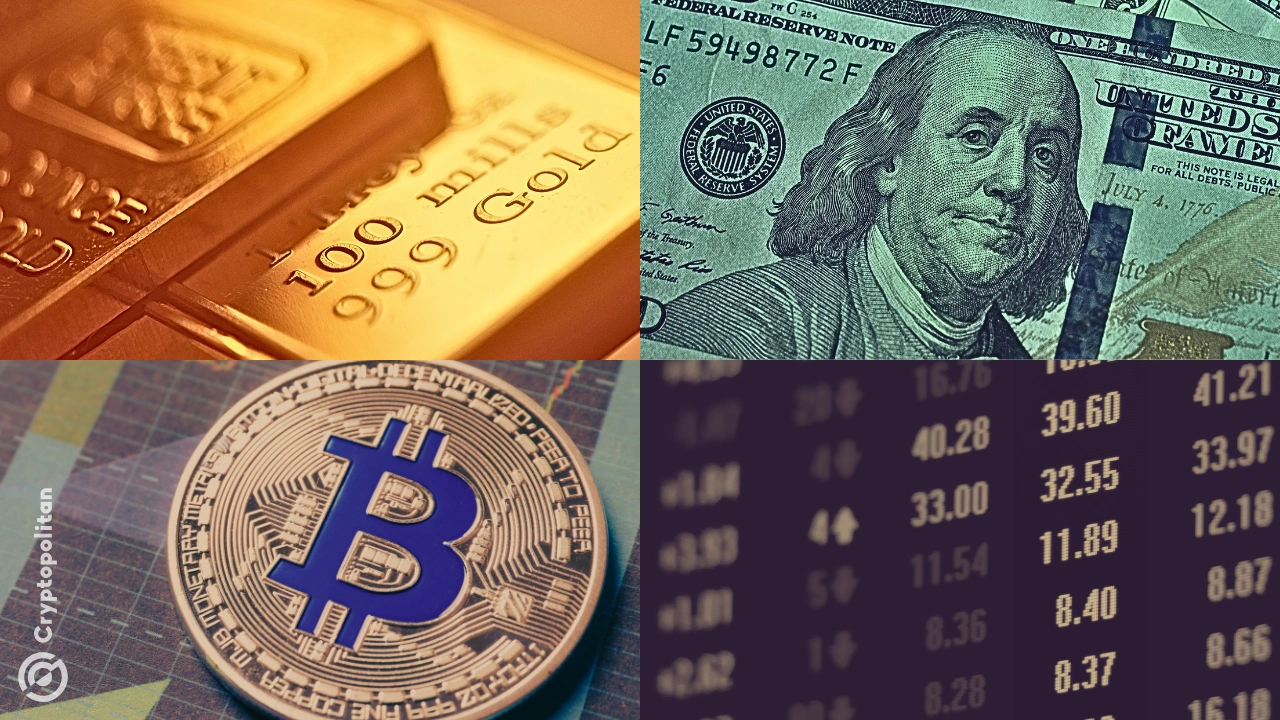
Analysts are warning of a potential 10% correction for Bitcoin, despite its recent bounce above $70,900, as its repeated failure to sustain rallies above $70,000 reveals a critical lack of momentum. The cryptocurrency's immediate fate is now tied to a fragile geopolitical ceasefire and volatile oil prices, with experts projecting an $80,000 target only if crude remains depressed and the Federal Reserve follows through with anticipated rate cuts.
Oil decline could push rates lower
Bitfinex analysts say if crude stays down, Bitcoin could keep climbing. A 15-16% fall in oil might get central banks to cut rates sooner, which helps Bitcoin since it doesn’t pay interest. Lower oil prices could ease inflation pressures that spiked back in March, giving the Federal Reserve more breathing room to adjust rates later this year.
There’s roughly $6 billion in short bets stacked between $72,200 and $73,500, according to Adam Saville Brown from Tesseract Group. If prices push through that zone, forced buying could launch Bitcoin toward $80,000.
The ceasefire already looks wobbly though. Israel bombed Lebanon, claiming that territory wasn’t part of the agreement. Pakistan, supposedly the mediator, said otherwise. An Iranian outlet said oil shipments through the Strait of Hormuz stopped again hours after the first tankers got through.
If talks fall apart, oil could shoot back over $100 and drag Bitcoin down.
Right now, expectations for rate cuts remain low. Some analysts think higher energy costs might keep inflation up without really hurting demand. That could lock the Fed into holding rates around 3.5% for a while, with no cuts or hikes coming.
Oil might reach $120 if the strait stays blocked, Bitfinex analysts warned. That would kill chances for rate cuts. Everyone’s basically looking at a 13-day deadline now. Brown said if the ceasefire collapses, the damage could be worse than the original shock.
Research backs single-asset approach
Separately, research suggests people should probably just stick with Bitcoin instead of buying tons of different coins. Fidelity Digital Assets looked at what happens when you add Bitcoin to regular stock and bond portfolios over ten years. Their study from March 25 showed 10% in Bitcoin produced 24% returns.
A 5% allocation gave 17.5% yearly compared to 9.4% with none. The no-Bitcoin portfolio had slightly less volatility and a somewhat better maximum drawdown.
BlackRock found in late 2024 that even 1-2% in Bitcoin gives decent exposure without major risk. Grayscale’s research points to 5% as the best balance between gains and risk.
Bottom line is you don’t need much Bitcoin to shake up your portfolio’s performance. Saves you from researching other cryptocurrencies that don’t have the same benefits anyway.
The smartest crypto minds already read our newsletter. Want in? Join them.
Articles on this site are sourced from public networks or curated by AI for informational purposes only and do not represent BTCC’s views. Original rights belong to the respective authors. For copyright concerns, please contact
[email protected]. BTCC assumes no liability for the accuracy, timeliness, or completeness of this information, and disclaims all liability arising from reliance on such content. This content is for reference only and should not be taken as investment, legal, or commercial advice.



Log in to Reply
Log in to comment your thoughtsComments