
BTCC Deposit Bonus & Campaign in 2026
As of April 2026, the BTCC Crypto Bonus is still one of…
2026-04-08
A major technical launch this week could send shockwaves through the biotech and longevity investment sectors. Nikon's NEMO live-cell observation system is set for launch to the International Space Station, with a mission to unlock the secrets of human aging and revolutionize drug discovery in microgravity—a high-stakes experiment that promises to create new, disruptive markets at the intersection of space tech and life sciences.
NEMO is going to help researchers understand the effects of microgravity on life sciences and drug discovery right on the ISS.
Microgravity has been found to act as an accelerator for certain biological processes that resemble aging or age-related diseases on Earth. In space, astronauts can lose 1–2% bone mineral density per month. There are also reports that a short spaceflight of 7 days can increase epigenetic acceleration by up to 1.91 years, although reversal upon return to Earth.
Hence, the mission is an important one that could help scientists observe better how microgravity affects cell behavior, tissue responses, drug interactions, and potentially accelerate insights into aging processes that are hard to obtain on the ground.
According to Nikon, there are actually two focuses with the microgravity research. Understanding its effects on biological tissues will not only elucidate the causes of diseases and aging in living organisms but also accelerate human extraterrestrial activities.
All of these observations, which will be done using MPS or Microphysiological Systems, will be conducted using NEMO, Nikon said in the announcement. MPS are advanced 3D cell culture models capable of closely modeling tissue changes more accurately than simple cell cultures.
So, you have a better cell culture model and a high-precision live-cell observation system in space, which only translates to a highly controlled study of cells and tissues under microgravity that is difficult to replicate on Earth.
The Northrop Grumman CRS-24 mission is currently targeting liftoff this Friday, April 11th, and will deliver up to 11,000 pounds of science and supplies to the space station, which include Nikon’s NEMO.
The mission will debut several other scientific research projects, including a new module for the Cold Atom Lab to improve computing and advance quantum science. There will also be an investigation, dubbed Nanoracks-ITS, to understand how solar activity and space weather affect radio signals, such as GPS and radar, sent from Earth.
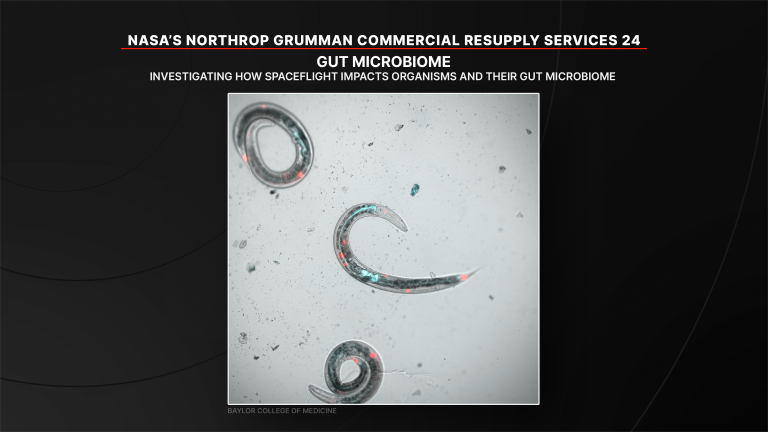
Another separate investigation will uncover how spaceflight can alter the relationship between organisms and their gut microbiome to help identify ways to keep astronauts healthy for future Moon and Mars missions.
There’s a middle ground between leaving money in the bank and rolling the dice in crypto. Start with this free video on decentralized finance.




Log in to Reply
Log in to comment your thoughtsComments